Tai Chi Kick Leg Technique: Explained in Detail – Don't Say You Don't Understand
Kicks are about proper kicks, sideways kicks, outward-facing kicks, and inward-facing kicks, with at least 36 repetitions for each. Practicing kicks strengthens the quadriceps muscles!
Note:Outward-facing kicks are single-swing lotus postures, also known as Chen style Tai Chi's lotus foot. Chen style Tai Chi's lotus foot involves the feet making a circular outward sweep while kicking, inward-facing kicks are when the left leg kicks towards the right hand, i.e., the left leg seeks the right hand.
Proper kicks
Kicking is the most important step in legwork flexibility training, it consolidates pressure kicks, split kicks, and hanging leg effects, also laying a solid foundation for practical leg techniques.
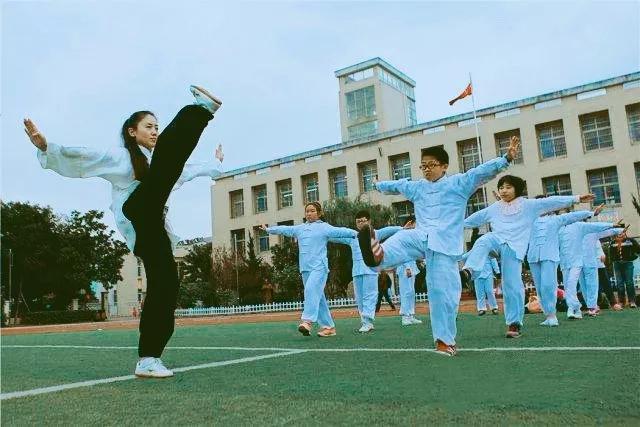
Common problems with kicking occur:
1Unstable center of gravity, even falling;
2The supporting leg's heel rises or the supporting leg's knee bends;
3Bending over and protruding the back.
To solve the above problems, when kicking, you should pay attention to the following points:
1Leg lift gently
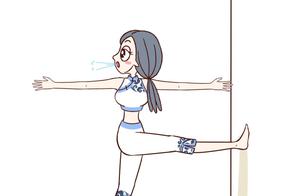
When the leg is about to be raised, quickly shift the body's center of gravity to the other leg, relaxing the muscle of the leg that is about to be kicked. This is how you lift the leg gently and kick quickly like the wind. To prevent falling, you can lean against a wall or a balance beam for practice.
2Kick quickly
The leg quickly swings from bottom to top towards the face. There is an acceleration process here.
When kicking, the hips should be seated backwards, and the leg should swing with a . When practicing kicking, you must maintain the regularity of the action, even if it means kicking just past the chest, don't raise the heel of the supporting leg, don't bend the supporting leg's knee, or bend over and protrude the back, or use your head to hit your feet.
All of this indicates that leg flexibility training is not up to par, and the tendons have not been stretched.
As long as you persist with pressure kicks combined with kicking, practice diligently, you will surely reach where your feet touch your forehead.
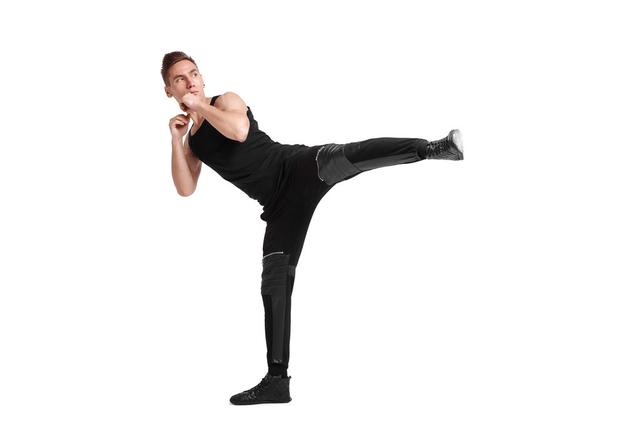
3Landing gently
Beginners often kick up their legs and immediately kick out to the other leg, leading to clumsy leg exits and a tilted body.
This is because when the kicked leg lands, the body's center of gravity is still on the original supporting leg, and when the leg lands, the transfer of the center of gravity will inevitably lead to the above phenomenon.
The correct approach is to wait for the leg to settle before kicking out to the other leg. Practicing in this way is also beneficial for applying sequential leg techniques in combat.