Can Jump at 170, Do You Know?
How to practice jumping ability, (approximately how long does it take to practice)
1. Comprehensive targeted full-body strength training is the foundation for increasing jumping ability. Sports biomechanics research shows that the leg muscle burst power, especially the calf muscle burst power, has the greatest impact on jumping power; secondly, the waist and abdomen muscle burst power, because you must have a strong waist to push your entire body to synchronize with your legs to increase, if the waist and abdomen strength is too poor, when you jump
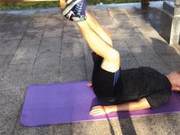
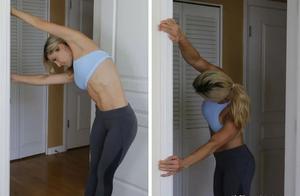
2. Jumping power starts like a willow branch, it will absorb and soften your strength, rather than propelling you upward; thirdly, the shoulder muscle burst power, active upper limb upward swing has 20% influence on increasing jumping power, improving jumping effect and improving movement quality. Therefore, strength training should be dominated by legs, waist and abdomen as auxiliary. Use crunches, back extensions, unilateral hip raises, seated neck presses, and weighted side bends to develop your waist and back muscles and shoulders, so that you can maximize the burst power of your legs.
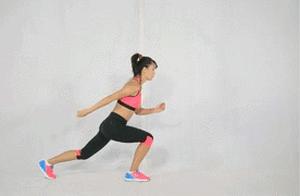
3. For lower limb strength training, focus on the calf muscle, quadriceps, so you must spend a lot of time on squats, heel raises, full squats, weighted deadlifts, delayed lowering and seated squats, to achieve better results.
4. When doing squats, heel raises, full squats and weighted deadlifts, you must follow the X-Y-0 time allocation principle, that is, in the eccentric contraction (squatting process, represented by X, time should be within 2 seconds to 6 seconds), and maintaining the contraction (the process before standing up from the squat), artificially extend the process of the movement, overcome the contraction (standing up process, represented by 0) to try to make it as short as possible, the shorter the time, the better the effect. X+Y should be between 2 and 6 seconds, most of the practice should maintain X+Y as 3-4 seconds. And X and Y should be different, try not to let X=Y, for example, you can allocate proportions as follows: 4-1-0, 3-1-0, 2-1-0, 1-3-0, 1-2-0 etc.
5. Delayed lowering is artificially dividing the squatting process into several heights and staying at each height for a certain time, the total staying time should not exceed six seconds, after reaching the lowest point, the explosive rise with maximum power is the completion of the movement. For example, you can divide it into four levels (1-1-1-2) or two levels (2-4).
6. When sitting squats, place a barbell on the bench, so that the leg muscles transition from a relaxed state to a burst contraction state, complete the standing up as quickly as possible.
7. Due to the physiological structure of the human body, in the above exercises, the calf muscle extension range is limited, which cannot give the calf muscle stronger stimulation, affecting the training effect. If you lift your feet and maintain your heels off the ground during training, you will get unexpected effects.