Football Basics 06: How to Break Through Tight Defenses
In the previous article, we discussed the three points of off-ball running. This time, we continue to explain two key questions regarding off-ball running.

Does he really need me?
As we repeatedly emphasized in the previous article, the importance of passing should not be ignored. Given the importance of passing, should you never stop passing to your teammates? The answer is obviously no. For every player who wants to help his teammates on the field, they sometimes don't realize when they should run to a teammate for passing. This might miss some opportunities to achieve breakthroughs.
Imagine that when your teammate is being surrounded by two strong players, he looks panicked and struggles to protect the ball. You should immediately avoid the defensive players and appear in a suitable position so that he can see you and pass the ball to you.
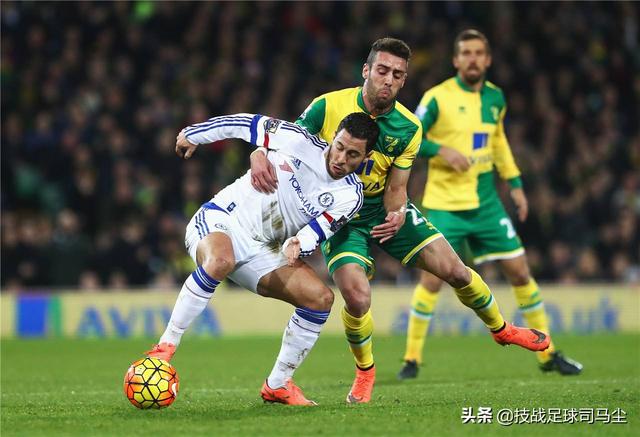
But if the opponent is not actively pressing—maybe they are tired or have other arrangements, and your teammate is calmly controlling the ball, observing the surroundings, then don't blindly run over to pass. He doesn't need a safe passing point, he needs a passing point that creates a threat. If you think your teammate's footwork is good, you can try some weaving runs. If you think your teammate's footwork isn't good, then move to a position that can help the team advance the ball. These are much more effective than getting closer to your teammate.
Counter-fake run
In football matches, every player switches between defensive and offensive roles. Most of the time, you need to defend one player or be defended by one player. When you are on the defensive side, you always need to keep an eye on your opponent to prevent him from escaping your control. When you are on the offensive side, you need to do is to get rid of his defense. How can you effectively evade the opponent? Counter-fake run might help you.

When a defensive player is defending you, his attention is not all on you. He needs to coordinate with his teammates' runs to achieve better defensive effects, either to ensure the density of the formation or to create a offside trap. Therefore, when they conduct one-on-one marking, they often just glance or spend a few seconds to confirm your position, that's it.
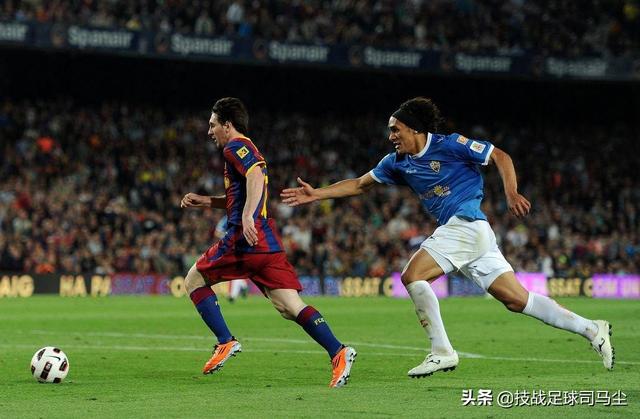
So, as a smart offensive player, you should do is to make a fake run when he confirms your position, such as you want to attack his rear, you first fake retreat to bring him out, then a quick counter-acceleration to quickly evade, just like what Messi did in the picture.
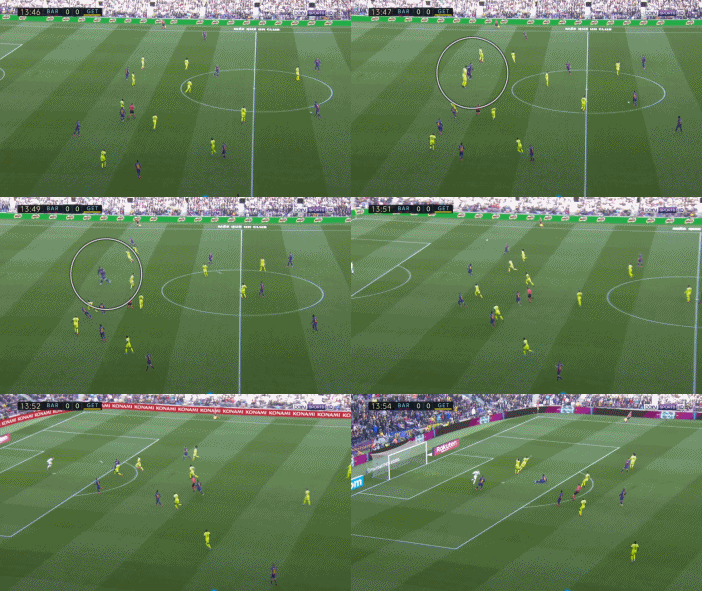
This technique can be applied in various offensive situations. For example, when your teammate is receiving the ball on the wing and is preparing for a cross, you can first fake a sprint to the front point. When the defensive player is fooled, you can quickly move towards the back point. In most cases, unless the defensive player is prepared, he will be deceived by your run.
In the recently concluded Italian Cup match, Cristiano Ronaldo demonstrated a similar run. As you can see, he accelerates forward to the front point and turns back to attack the back point. This operation allowed him to evade all of Milan's defenses and stand alone at the back point.
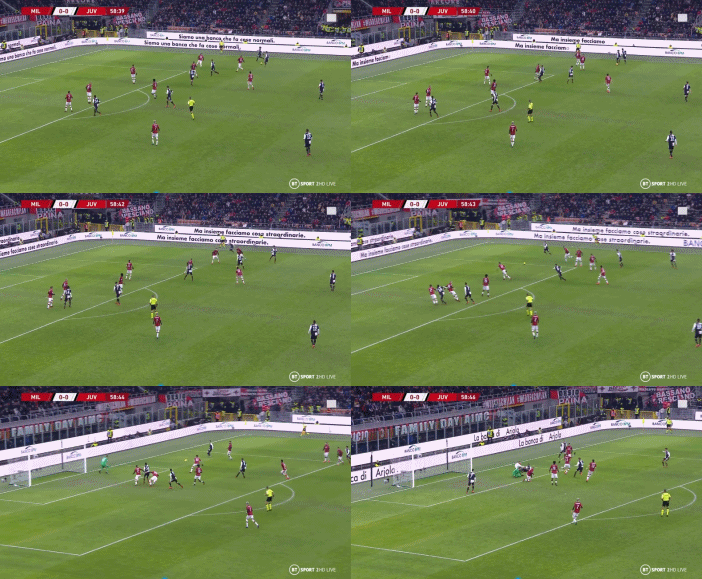
This technique is really easy to use, and every world-class attacking player will include it in their weapon library. Cristiano Ronaldo especially loves this technique. He often uses this counter-fake run, sometimes combined with multiple changes of direction.
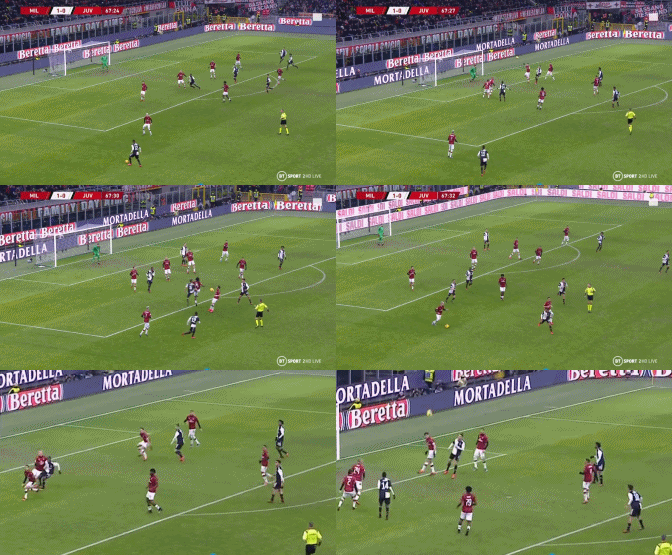
If the defensive player is clever and likes to leave enough buffer distance between you and him, don't panic, you can also try to use the counter-fake run to force him to change. For example, when you receive the ball before you rush towards him, he will retreat to maintain distance, after he retreats you quickly retreat to take the ball. Do this several times, he will give up the buffer distance to let you take the ball comfortably. At this time, you can use the counter-fake run to attack the rear gap.
Of course, when we use the counter-fake run, we need to give our teammates enough prompts, you can use body language to express your intentions, for example, after the fake run, point with your finger to indicate the direction you want to receive the ball. Otherwise, your run might mislead your teammates.
Closing remarks
Compared to most football techniques, counter-fake run is the most difficult to learn, because most players don't grasp the timing of running well, of course some players 'don't bother' to run, and don't try it in the actual game. So when you have learned this item, you have taken one step further, you are closer to victory.