Forget Your Pace: Two Training Methods to Become a More Stable, Comfortable, and Faster Runner
I recently took a look at my running records over the past three years, and I realized that my average pace increased over time, which was surprising. In the first year, my average pace was 6 minutes and 5 seconds; my best 3km, 5km, and 10km records all came from that first year. In the second year, my average pace was 6 minutes and 13 seconds, and my longest distance was refreshed to 21.27 kilometers. In the third year, my average pace was 6 minutes and 29 seconds, and I refreshed the longest time and distance to 25.26 kilometers. It's puzzling how my pace could get slower over time, isn't it?

Some runners, like me, find that their pace enters a 'bottleneck period' as they accumulate more mileage. How can we overcome this bottleneck and run more steadily, comfortably, and faster, successfully passing this hurdle? In my opinion, both marathon-affiliated runners and cell division training methods can achieve this.MAF180 Training MethodThe core of the MAF180 training method is to subtract age from 180 to get your maximum aerobic heart rate. During running, you should avoid exceeding this heart rate for too long, allowing for small fluctuations. If you experience any of the following situations, you need to make appropriate adjustments: ♦ If you have a disease or have recently recovered, your maximum aerobic heart rate is 180 minus age minus 10; ♦ If you haven't exercised before, your training is irregular, or you've been injured or training irregularly, or your physique is poor, your maximum aerobic heart rate is 180 minus age minus 5; ♦ If you consistently exercise every week, then adopt 180 minus age as your maximum aerobic heart rate; ♦ If you have participated in marathons in the past two years, without the above symptoms and with consistent improvement in race results – adopt 180 minus age plus 5 as your maximum aerobic heart rate. For example, a 30-year-old person, according to the above method: Maximum aerobic heart rate = 180 – 30 = 150 bpm. According to health conditions, if you have a disease or have recently recovered: Maximum aerobic heart rate = 180 – 30 – 10 = 140 bpm.
Other methods should be followed accordingly.

Notably, during training, you should maintain a heart rate that is no more than the maximum aerobic heart rate minus 10. For example, if your maximum aerobic heart rate is 150 bpm, you should control your heart rate within the range of 140-150 bpm, and as close to 150 bpm as possible. In the basic training stage, to achieve the best training effect, all training should be maintained below the maximum aerobic heart rate.Cell Division Training Method
The principle of cell division training method is to maintain nose breathing at a native running speed for daily aerobic training. By controlling breathing, letting muscles relax completely, and thus achieving the maximum potential of the human body in running – running faster and farther. Most runners experience fatigue in the second half of a marathon, often resorting to walking or a combination of walking and running to barely complete it. This is what is known as 'running a half-marathon', but if you persist in using native speed running, you will lay a solid foundation for endurance, allowing you to run a full marathon at a consistent speed.
What is 'native speed'?
'Native speed' refers to the basic speed that can be used to complete a marathon.
This speed is generally around 50% of the maximum oxygen uptake, which is a classic indicator of endurance. Runners can find their 50% maximum oxygen uptake through a simple calculation. The percentage of maximum oxygen uptake and the maximum reserve heart rate percentage are one-to-one corresponding. So 50% maximum oxygen uptake corresponds to 50% maximum reserve heart rate. The calculation steps for reserve heart rate are as follows:

♦ First assess your maximum heart rate, usually using 220 minus age, of course, if you've tested your maximum heart rate accurately; ♦ Assess your reserve heart rate, subtract your resting heart rate from your maximum heart rate to obtain the reserve heart rate; ♦ Use the reserve heart rate multiplied by 50% plus your resting heart rate to obtain 50% maximum reserve heart rate. For example, a person with a resting heart rate of 60 bpm and aged 30, according to the above method: Maximum heart rate = 220 – 30 = 190 bpm. Reserve heart rate = 190 – 60 = 130 bpm. 50% reserve heart rate = 130 × 50% + 60 = 125 bpm.
Using 50% maximum oxygen uptake to maintain nose breathing at native speed is the core of cell division training method.
Proven MAF180 Training Method
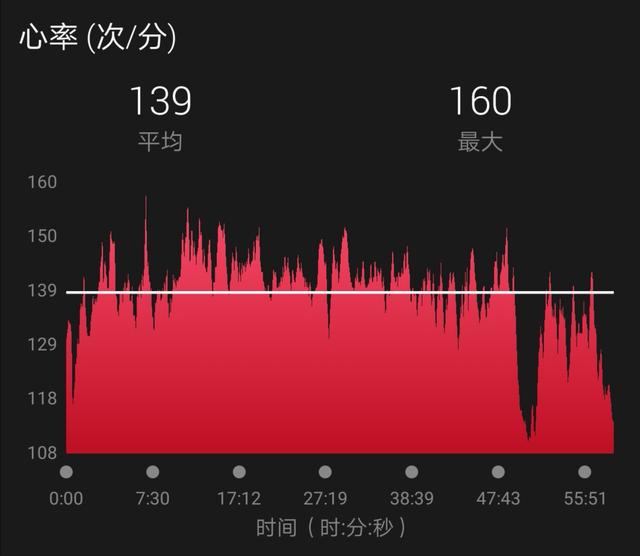
I originally thought an average pace of 6 minutes and 20 seconds was my maximum aerobic heart rate. However, after practicing the MAF180 training method, I found that 7 minutes and 57 seconds was actually my maximum aerobic heart rate under my current maximum aerobic heart rate. I haven't had a chance to test the cell division training method yet, and I'll update it later.
How can we become a more steady, comfortable, and faster runner? You're missing three steps.
01 Forget your previous pace.If you go by any of these methods, you may not be able to tolerate a slow pace. The first thing you can do is forget your previous pace. What matters is that you run slowly now for a better future fast pace. Only by laying a solid foundation for slow running can you run steadily, comfortably, and faster in the future.02 Choose a method that suits you best.
If you stick to practicing with your maximum aerobic heart rate, you will be able to run more steadily, comfortably, and faster at the same heart rate.

If you practice with native speed, you can gradually increase your maximum oxygen uptake – you will always maintain your speed with nose breathing, and you will become more and more comfortable running, and you will be able to run farther and farther. The more you run, the more comfortable you will become. Finding the method that suits you best is the best. How to know which method is better for you? First, try one method for 90 days. Practice is the only criterion for verifying truth.

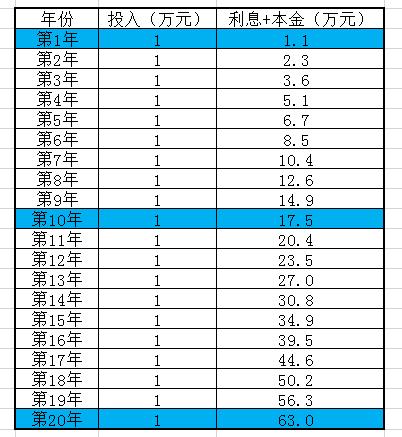
03 Persistence, persistence, persistence.In the short term, it may not have much effect. But over a long period, you will see new heights the body can reach. I like a saying from the Time Management Master: 'Consistency is success.' This is the hardest step. Simple calculation: if you invest 10,000 yuan per year, and the annual interest rate is 10%, the principal and interest after one year are 11,000 yuan. After 10 years, it's 17.5 million yuan, and after 20 years, it's 63 million yuan. I believe it's easy to invest 10,000 yuan every year for many families. It's hard to persist for 10 years or 20 years, or even longer. Simply calculating, Time Management Master's final sentence: 'Daily progress of 1%, become 1% of the people.'50%50%50%50%
♦ 220
♦
♦ 50%50%
60/30
22030190/
19060130/
50%130×50%60125/
50%
MAF180
620MAF180757

01
02
90
03
110%11.11017.5206311020
1%1%