Squatting Against a Wall for 10 Minutes Can Keep Your Knees Healthy, But You Need To Do This
When we realize the importance of protecting our knee joints, the wall squat action will be understood and familiar to us, because it is a simple and effective way to protect the knee joint, because squatting can effectively exercise the quadriceps muscles, and strong quadriceps muscles can make the knee joint more stable, while the static exercise can reduce the pressure on the knee, it is an effective and safe way to exercise. In addition, wall squat will not be affected by the venue, as long as there is a wall, we can complete such training.

However, wall squat can effectively protect the knee joint, but it is also necessary to base the action on the standard, incorrect squat not only will not play a protective role in the knee joint but may also cause damage to the knee. So, below we will learn about the squat action from several aspects.
First: action technique
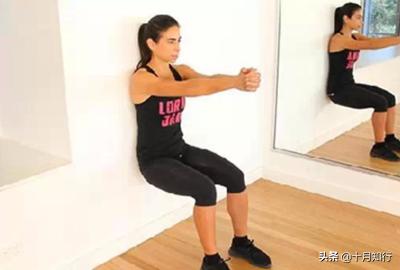
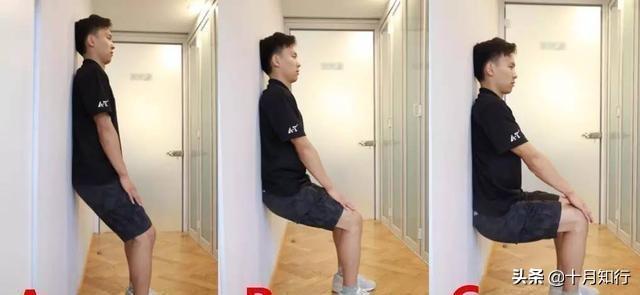
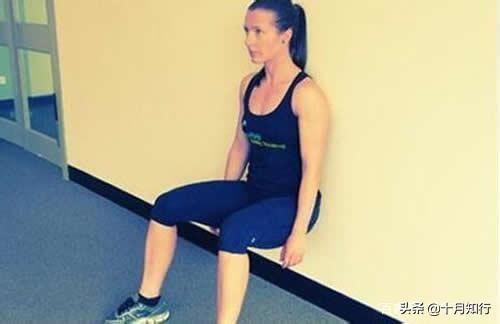
- Lean against the wall, pay attention to let the knees and shoulders be at the same width, the feet are about one foot away from the wall, evenly distribute the weight on both legs, slowly squat down, until the thighs and calves are at a 90-degree angle
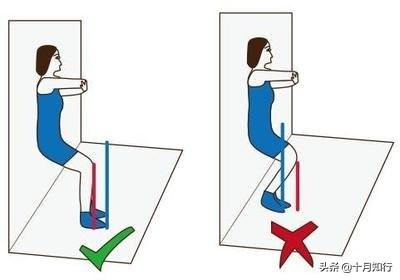
- Maintain this angle, then gradually move the feet forward, so that the ankles are vertical to the ground, that is, make the thighs and ankles vertical, the ankles and the ground vertical
- Precautions, keep the back close to the wall, pay attention to the knees and shoulders being at the same width, and the knees should not be inward
Second: common mistakes
Common mistake one: Knees exceed toes
During the wall squat, we require that the ankles and the ground be vertical, the body presses close to the wall, if the knees appear to exceed the toes in the action process, it will lead to an increase in knee pressure, which will not only play a protective role in the knee joint but will also be counterproductive.
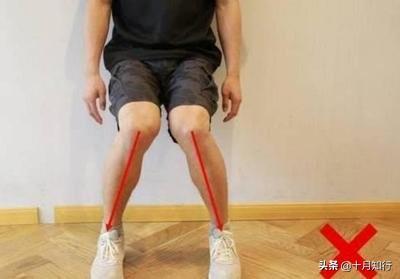
Common mistake two: Knees inward
Whether it is wall squat or deep squat, knee inward is a common mistake, and knee inward will accelerate the wear and tear of the knees or even cause knee injuries, so, if the action is completed with a knee inward posture, it will also be counterproductive.
Third: Depth of squatting
Although we mention in the action technique that the thighs should be vertical, that is, squat down to a 90-degree angle, but according to the individual's physical condition and exercise purpose, we also need to adjust according to the individual's circumstances, it can be divided into three types:
- Shallow squat, that is, let the thigh angles, about 120 degrees, is suitable for friends with insufficient leg strength and obvious knee pain
- Half squat, that is, let the thigh angles between 90-120 degrees, is suitable for friends with mild knee pain and relatively weak legs due to lack of exercise
- Deep squat, that is, let the thigh angles are about 90 degrees, that is, the thighs are vertical state, is suitable for people with better leg strength
Of course, during the specific wall squat process, you should make fine adjustments according to your own body feeling, instead of having to squat to a certain degree.
Fourth: How long to squat
As for how long to squat, there is no fixed answer, because the specific situation varies from person to person, and the time each person can persevere will inevitably be different, so, in the whole process, you should listen to the body, when the thighs feel sore, continue to persevere until the legs tremble,
However, when we first perform this action, we do not suggest persisting until we cannot persist, but rather to have a gradual process, generally starting with each time 10-15 seconds, action interval rest 30 seconds, each time perform 3-5 sets, then as your ability improves, you can appropriately increase the time.
Summary:
Wall squat is a good action, we use this action to exercise the quadriceps muscles to play a protective role in the knee joint, but in order for the action to have an effect, you must complete the action with the correct posture, and you must adjust the action range according to your own circumstances, and you should adjust the time you persevere in each wall squat process according to your ability.
Finally, in addition to the above aspects, long-term persistence is the most critical.
Author: Ten Month Knowing Line