If you eat less and exercise more, your weight doesn't decrease? Try these methods to lose weight every day!
In a few months, summer will be here, and many of my friends have already started to lose weight in preparation for the summer. However, recently many people who are losing weight say that no matter how little they eat and how much they exercise, their weight is not going down. Let's analyze the common problems of weight loss in detail.
I. Diet
Many people say they eat very little, but their weight is not going down. First, eating less doesn't necessarily mean you're consuming fewer calories. Different foods have different calorie densities. For example, 100g of purple sweet potato has only 80 calories, while 100g of steamed white rice has about 240 calories. If you can reduce your daily calorie intake by 1200 calories, you can eat 1500g of purple sweet potato, but only 500g of white rice.
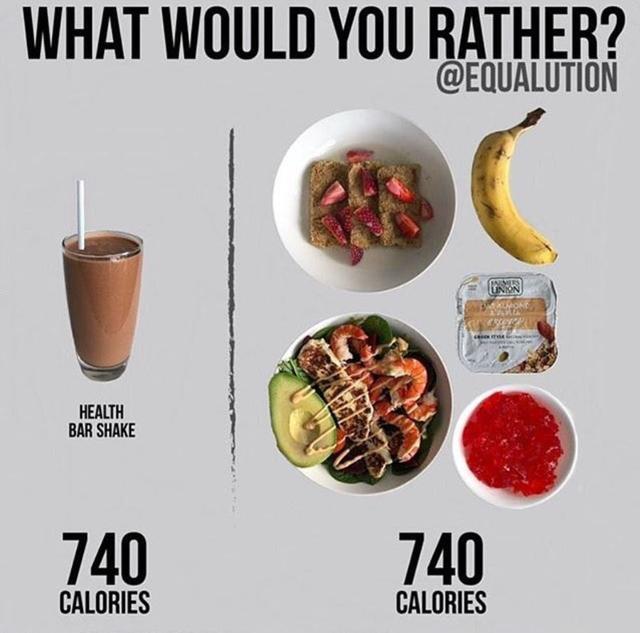
Choosing these two types of food will result in either gaining or losing weight depending on how you eat. In reality, it's impossible to only eat one type of food. This is just to illustrate that eating less is more important than eating less, and that if you make your body constantly hungry, it will relentlessly convert food into fat to store for later, fearing that there won't be food the next day. In this state, it will inevitably reduce your daily calorie expenditure, because you're constantly hungry. So, let's learn how to plan your daily diet while maintaining a calorie deficit without feeling hungry.
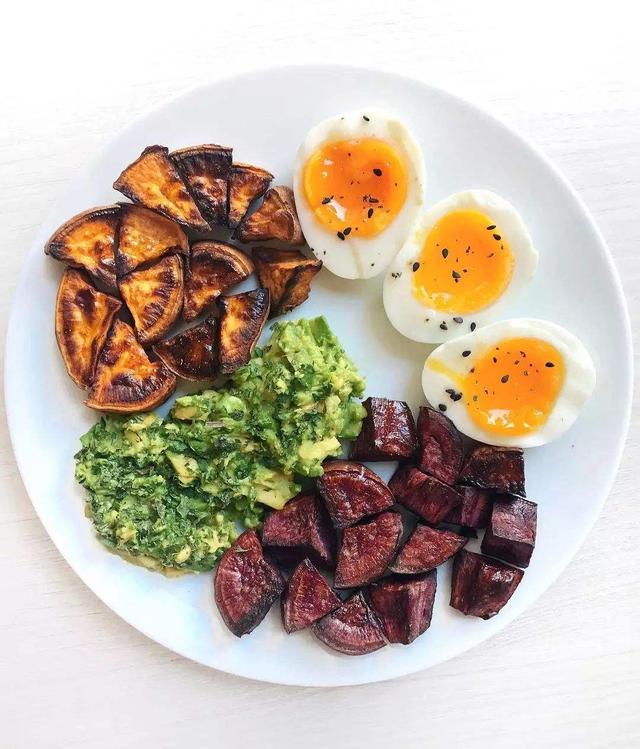
1. Understand your daily calorie needs:
Simply put, losing weight means consuming fewer calories than you burn. Therefore, we first need to understand your daily calorie expenditure, and then clearly formulate a daily calorie intake plan for weight loss. Let's teach you how to calculate your total daily expenditure.
Total Daily Expenditure (TDEE) = Basal Metabolic Rate (BMR) + Food Effect + Activity Expenditure + Growth (during growth periods)
Basal Metabolic Rate (BMR):
Mifflin-St Jeor Equations (MSJE) is considered to be more accurate and has smaller deviations.
Male: BMR (kcal) = 9.99W + 6.25H - 4.92A + 5
Female: BMR (kcal) = 9.99W + 6.25H - 4.92A - 161
Note: W-weight (kg), H-height (cm), A-age (years)
Food Effect:
This refers to the energy required to digest food, which is generally 10% of the total calorie intake. Increasing protein intake can increase the food effect.
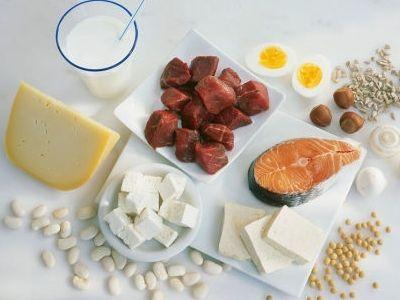
Total Daily Expenditure (TDEE) = BMR x Activity Level
Sedentary/No exercise habits: 1.2
Light exercise/Exercise once or three times a week: 1.375
Moderate exercise/Exercise three to five times a week: 1.55
Intense exercise/Exercise six to seven times a week: 1.725
Very intense exercise/Physical labor/Train twice a day: 1.9
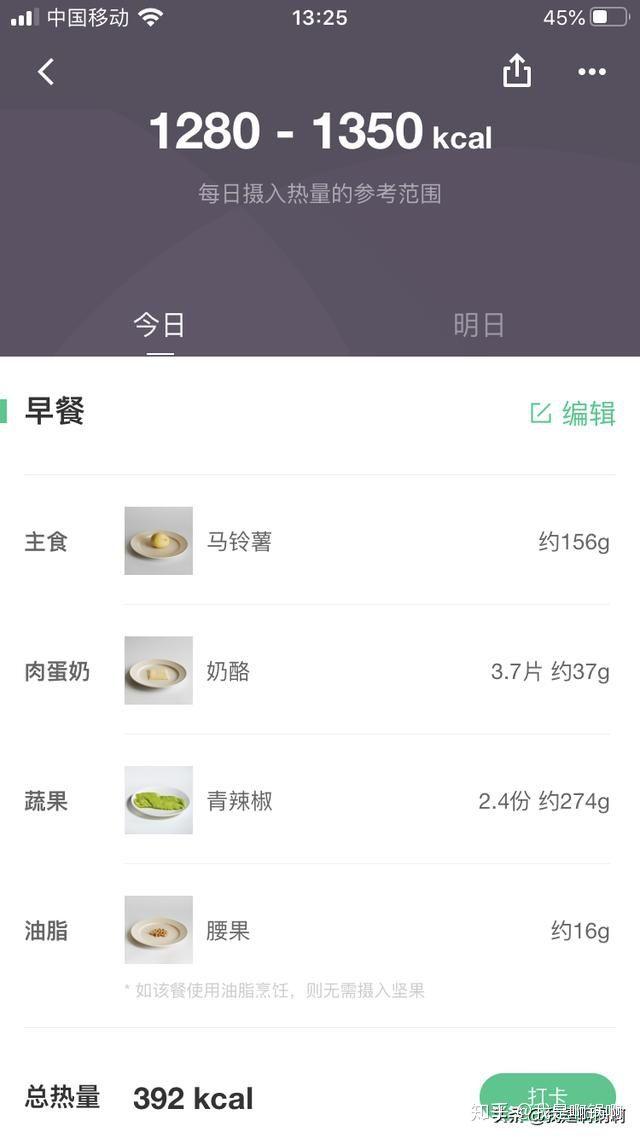
For example, a friend who is currently losing weight has a BMR of 1300 kcal and engages in light exercise, so her daily expenditure is about 1900 kcal. I set her daily calorie deficit at 500 kcal, so she needs to consume about 1400 kcal per day.
Note: It doesn't need to be precise to the single-digit, and the deviation is controlled within 100 kcal.
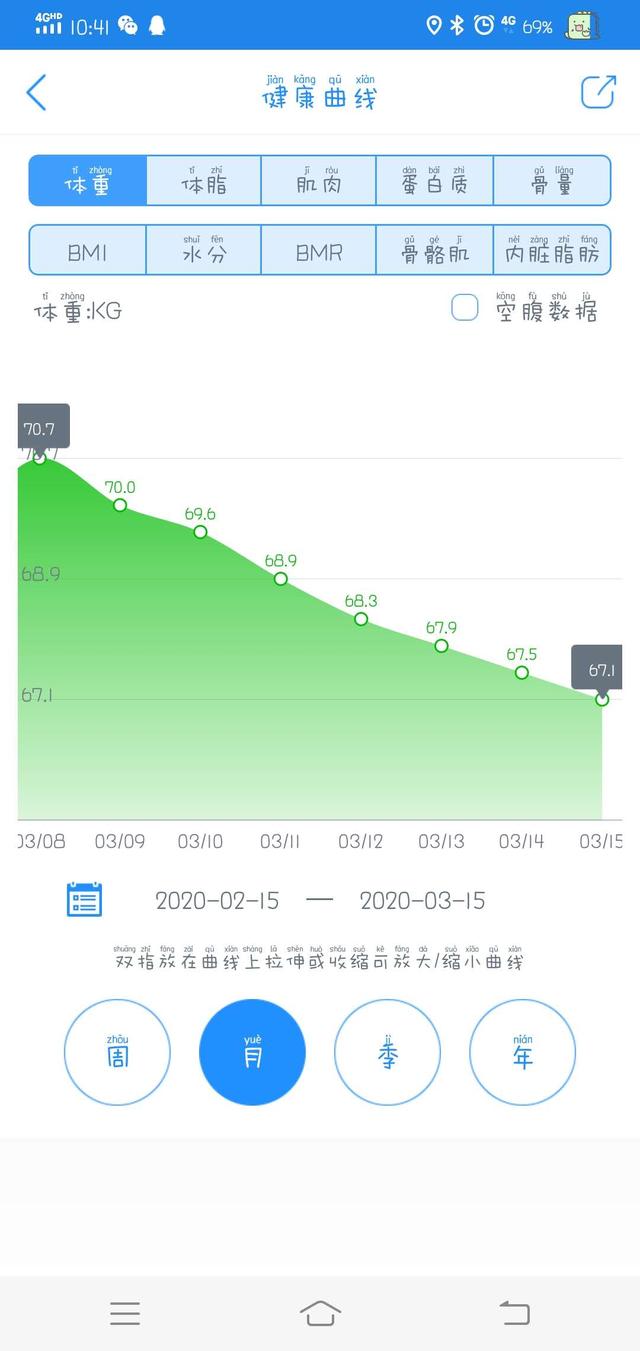
Planning a one-week weight loss control
2. Create a daily diet plan:
After knowing your daily calorie intake, you can start creating a daily diet plan. Before creating the plan, you need to understand the basic principles of weight loss diets.
1. Don't starve yourself! Don't starve yourself! Don't starve yourself!
2. Eat more vegetables and less grains. Control the amount of grains and cereals, and eat plenty of vegetables.
3. Increase the intake of high-protein foods such as fish, milk, lean chicken or beef, seafood, etc. High-protein foods have a strong food effect and low calorie density, which is suitable for weight loss.
4. Drink plenty of water, unsweetened black coffee or tea are also good weight loss drinks. Eat small meals and snacks, and eat a moderate amount of fruit as a snack.
5. Reduce salt, oil, sugar, spices.
6. Eat slowly and chew your food thoroughly, which can make you feel fuller sooner.
7. Don't skip breakfast.
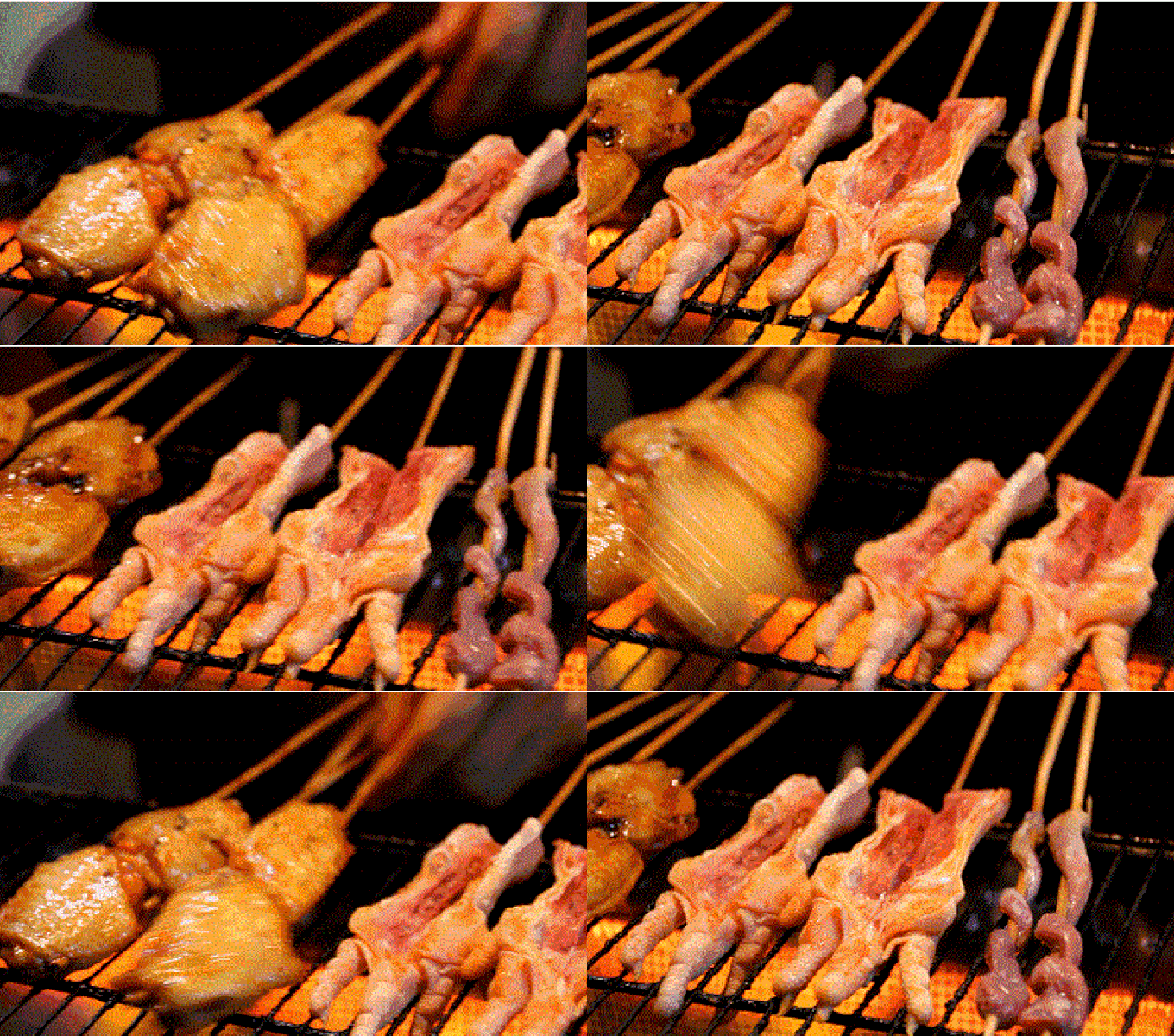
A simple introduction to the difference between cardio and strength training
The fundamental difference between cardio and strength training lies in the energy systems they utilize.
The human energy systems include: Phosphagen system (CP system), Glycolysis, Aerobic oxidation system.
Phosphagen system: In short-term, high-intensity exercise, the phosphagen system is the primary energy system. The output power of the phosphagen system is the strongest, and is the primary energy system for short-duration, high-intensity activities such as 50m sprints, jumping, and lifting weights.
Glycolysis: In medium and high intensity exercise, glycolysis is mainly driven by glycolysis. Glycolysis is divided into fast glycolysis and slow glycolysis. Fast glycolysis is anaerobic reaction, slow glycolysis is aerobic reaction. Fast glycolysis and slow glycolysis are distinguished by the destination of the product 'pyruvate' generated. The output power of the former is the strongest, and the latter is the weaker. In short, the fast glycolysis is anaerobic reaction, and the slow glycolysis is aerobic reaction. In short-term, high-intensity exercise, the muscle cell is short of oxygen, so it's fast glycolysis. If there's enough oxygen, it's slow glycolysis.
Aerobic oxidation system: Requires a large amount of oxygen to participate. The output power of the aerobic oxidation system is the weakest, but can be sustained for a long time at low intensity. The aerobic oxidation system is a slow but sustainable energy system, mainly using fat as fuel. The aerobic oxidation system is sustained for a long time at low intensity.
Regardless of the type of exercise, the proportions of these energy systems are different.
For example, when walking, the proportion of the aerobic system is very small, so it's considered cardio exercise.
Note: It is important to understand the difference between cardio and strength training depending on the individual's physical condition and training level.
150g(150K
200g80K
100g(120K
75K
100g100K
200g(50K
100g(85K
1350K

KEEPAPP
KEEP
.:
1.
hiit60%80%2040
220-x60%~80%
= {220 - - } ×50% - 60% +

2.
40
1.
2.
3.RMRMRepetition Maximum“RM”RM"repetition maximum""""6RM""6"
1-5RM
6-15RM
16RM
30-902530s
1.x2
2.x2
3.x1
361015

,
cp
50m
30s2min