Tai Chi with the Waist as the Center: How to Achieve It
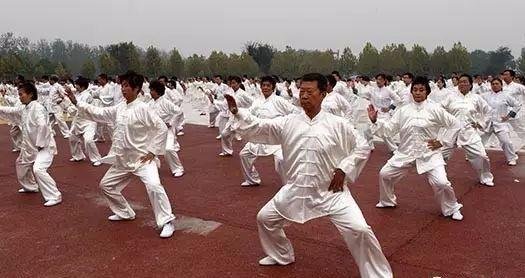
One, practice Tai Chi with the waist as the center.
1. Understand the importance of the waist in Tai Chi movements.
All movements in Tai Chi originate from the waist radiating outward to the limbs, coordinating and harmonizing all parts. During movement, the waist adjusts the center of gravity and stabilizes the changes in movement throughout the body. The waist is the main controller and axis for generating and transmitting force. Many descriptions in Tai Chi theory relate to the waist, such as ‘waist as the master,’ ‘turning the key at the waist,’ ‘the source of intention is at the waist,’ and ‘pay close attention to the waist.’ The waist is the central hub of the entire body. If the waist is relaxed, it will affect the integrity of the inner energy. If we compare Tai Chi to a long dragon dance, the waist is the dragon’s head, and the other joints move slowly and rhythmically behind it. This means ‘waist as the master’ and ‘every movement is connected.’ Persistent practice can achieve ‘waist like an axle,’ ‘flexible like a wheel’ effects.
2. The waist plays a very important role in Tai Chi.

The waist is the key to rotating the body up and down. It plays a major role in changes in body movement, adjusting the center of gravity, and transmitting force to various parts of the body. The inner energy of Tai Chi operates through the spine of the waist guiding the movement of the limbs. Many descriptions in Tai Chi theory relate to the waist, such as ‘waist as the master,’ ‘turning the key at the waist,’ ‘the source of intention is at the waist,’ and ‘pay close attention to the waist.’ The waist is the central hub of the entire body. If the waist is relaxed, it will affect the integrity of the inner energy. When practicing Tai Chi, imagine it as a long dragon dance, the waist is the dragon’s head, and the other joints move slowly and rhythmically behind it. This means ‘waist as the master’ and ‘every movement is connected.’ Persistent practice can achieve ‘waist like an axle,’ ‘flexible like a wheel’ effects.
3. Value the activity of the waist.
Tai Chi requires the waist to move first, leading the limbs. However, many people are influenced by their daily habits and only practice on their hands, rarely thinking about using their waist to practice, which makes it difficult for the upper body to get a gentle workout. The chest and shoulders are difficult to move flexibly. If the waist is flexible, the leverage of the arm will extend from the hand to the shoulder and then to the waist, combined with the legs constantly adjusting the center of gravity, which can achieve the effect of winning small victories with soft strength and overcoming hard strength with softness.
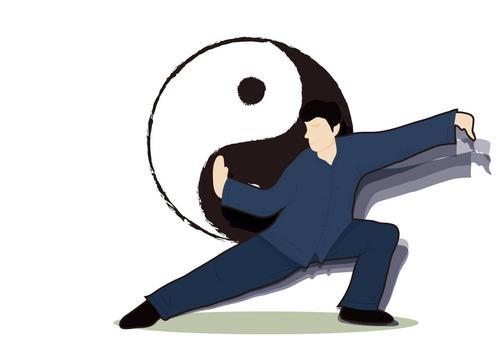
Two, how to practice the waist
1. Practice with intention.
When forming a posture, you must sink your internal energy into the dantian (lower abdomen), open the legs, and lift the hips. The spine should be naturally relaxed and sinking. The vital points should rise, and the turbid energy should descend. Only when the force is released at the moment of exertion should the waist tighten immediately, and it should immediately relax after exertion.
2. Waist practice.
You should move the waist in accordance with the external shape, or rotate left and right, or turn the sides, or stand in a circular folding movement. First, quickly coordinate the waist movement with the external shape, then accelerate the waist practice, ensuring that the waist is the main driver, the waist controls the spinning of the other parts, and the waist spins around the silk to wrap the limbs. Ultimately, the goal is to achieve a soft force.
3. Twist the waist.
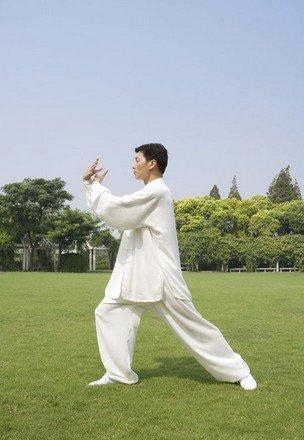
This is the accelerated action of releasing force in a circular motion. First, practice the specific release of force in the Tai Chi form, such as ‘Shield Hand Fist Form,’ ‘Ground Impact Form,’ and ‘Heart Guardian Form.’ When practicing, pay attention to the starting point, middle point, and landing point. The starting point of the waist should be relaxed, with focused intention, and the force is accumulated in the dantian. The middle point is based on relaxation, and the waist and abdomen should distinguish between emptiness and fullness. The landing point is the leg extension, waist tension, abdomen full, and the action should be as fast as lightning, with the waist generating two functions: transmitting force and stabilizing the center of gravity.
4. Single-person practice rotating the waist.
First, start with the No. 1 form, stepping to the side to the left, with the legs slightly wider than the shoulders, knees bent, and hips raised in a circular fashion. The lower body is lowered, with the knees and hips at a 90-degree angle. This is suitable for those with weak constitutions. The head is raised to the hundred meetings acupoint, looking straight ahead, with the arms bent and held at the wrists, bringing them together in front of the abdomen. The fingertips point towards each other, and the distance between the fingertips and the abdomen is about 20 centimeters. The shoulders are relaxed, the waist is lowered, and the hips are moved sideways. Then, following the rotation of the waist, the two hands move with the chest rising and the abdomen expanding, moving to the left, back, and right in a circular manner. The distance between the two hands remains constant, the eyes look into the dantian, the outer hands move to the palm, and the turning movement is 20 times.
5. Single-person practice rotating the waist.
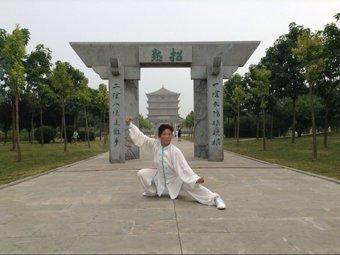
Starting with No. 1 form, requires the left leg to move half a step to the left, knees bent, lower body, upper body leaning forward, head slightly lowered, hands clenched and extended to the right front bottom. Then, the upper body rotates the waist with the force of the waist, the right arm extends upward and outward, and the left leg moves forward and upward. Continue to rotate the left arm to the left, lower the right hand to press the left hand, and the left leg moves downward. Continue to rotate the left arm to the left, straighten the right hand, and move the right hand back. Lower the left leg, straighten the right hand, and move the left hand down. This is 20 times, then turn back in the opposite direction. The range of movement should start small and gradually increase, the speed should be slow and steady, the whole body is relaxed, and 20 times to complete the process.
6. Single-person practice standing circular folding form.
Starting with No. 1 form, two hands hold the fists in front of the chest, with the distance between the fists equal to the width of the shoulders, step forward with the left foot to the tip of the foot, the upper body leans forward, and the hands turn into a fist, which is 1 time, and then repeat 15 times; then do the right form, which is the opposite of the left form, also repeat 15 times.
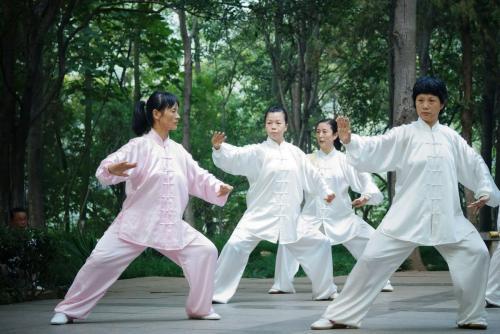
Therefore, with the waist as the center, with the waist movement to drive the movement of the upper and lower limbs, to achieve the eyes, posture, step and hand all support and assist the hand to complete the attack and defense tasks.
Three, conclusions and suggestions
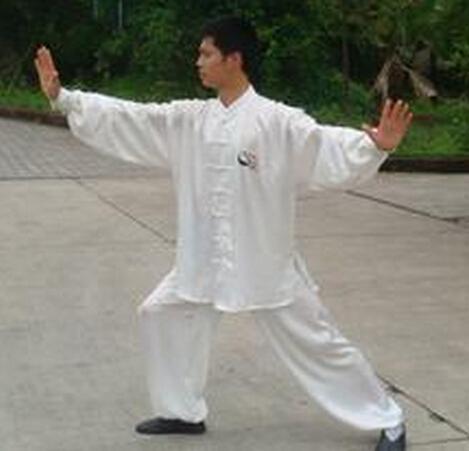
During the practice of Tai Chi, it is truly necessary to understand the meaning of ‘Tai Chi’ – ‘the waist is the center, and the upper and lower limbs move in accordance with it.’ The key is to ‘hold the dantian and practice.’ Beginners should maintain the center of the torso, sink their internal energy, straighten their heads and shoulders, and relax their shoulders and hips. They should maintain a steady and stable posture during forward and backward movement, pressing the dantian to drive the body to rotate in a whole-body, holistic manner. When the force is released, the legs naturally follow the dantian to reach the ‘should’ position. At this time, the practitioner will understand the meaning of ‘the source of intention is at the dantian’ and ‘the upper and lower limbs move in accordance with it.’ Persistent practice can achieve ‘waist like an axle,’ ‘flexible like a wheel’ effects.
3.1“”“”23
1.
“”
2.
“”
“”
“”“”“”“”“”“”“”“”