High-Quality Shoulder Training, Pay Attention to Details: 6 Exercises to Improve Narrow Shoulders and Achieve Fullness
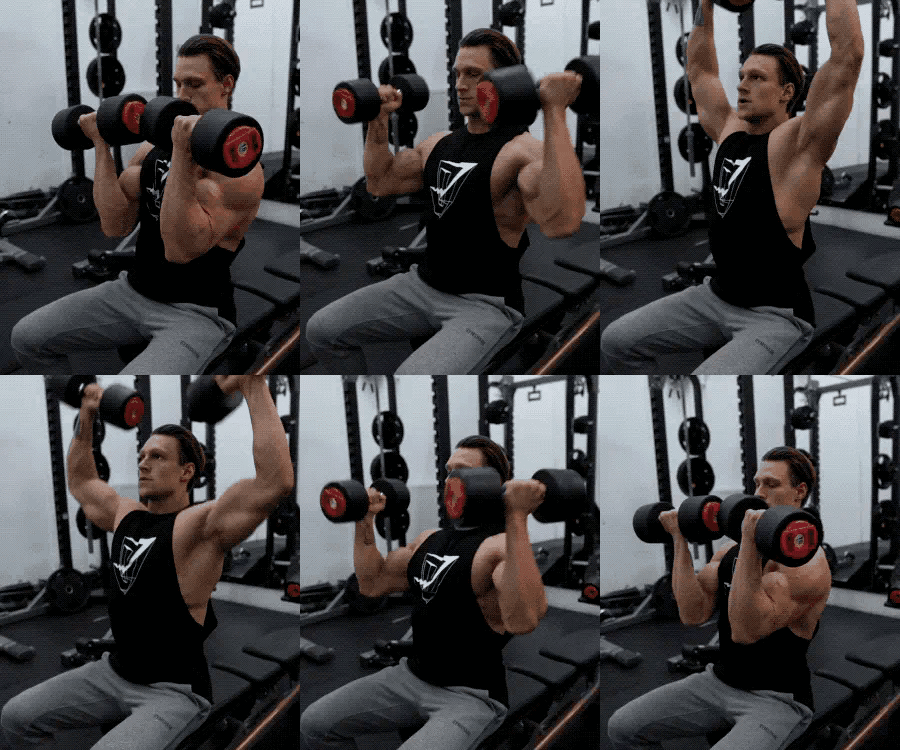
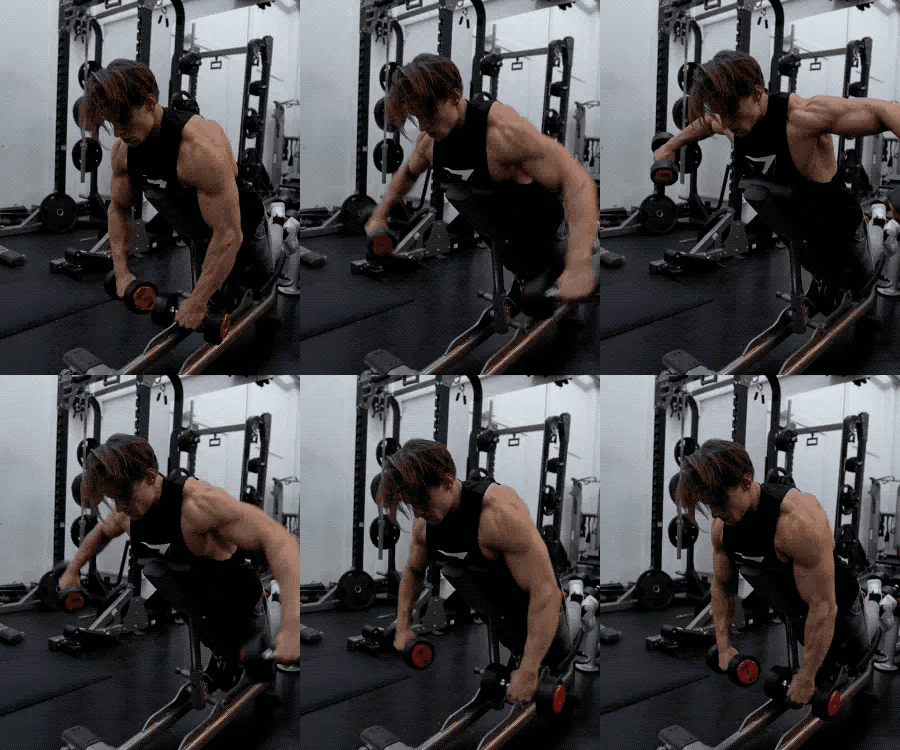
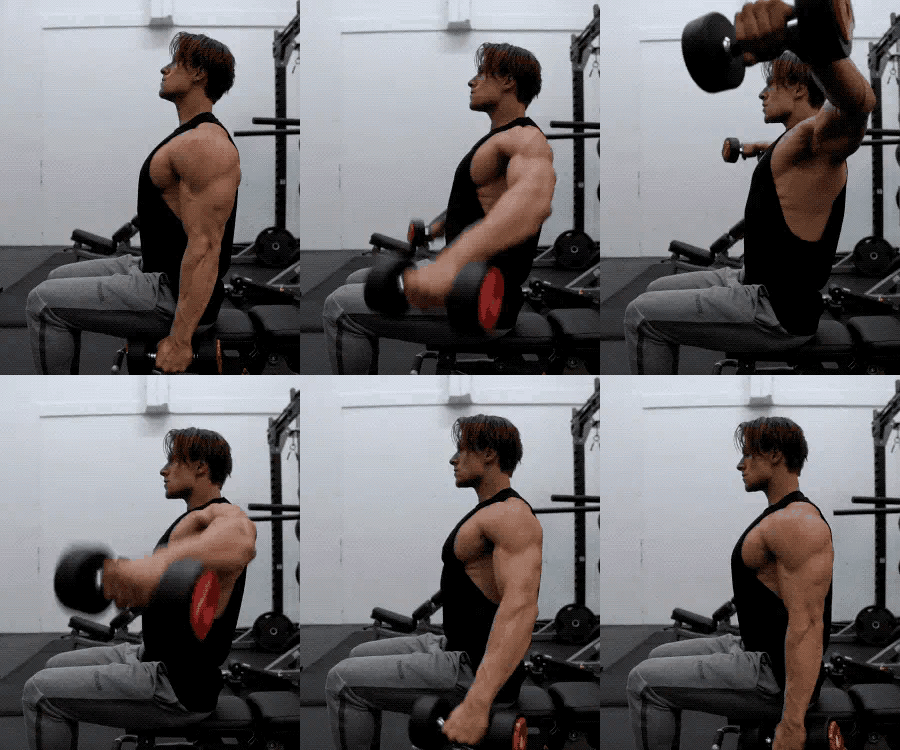
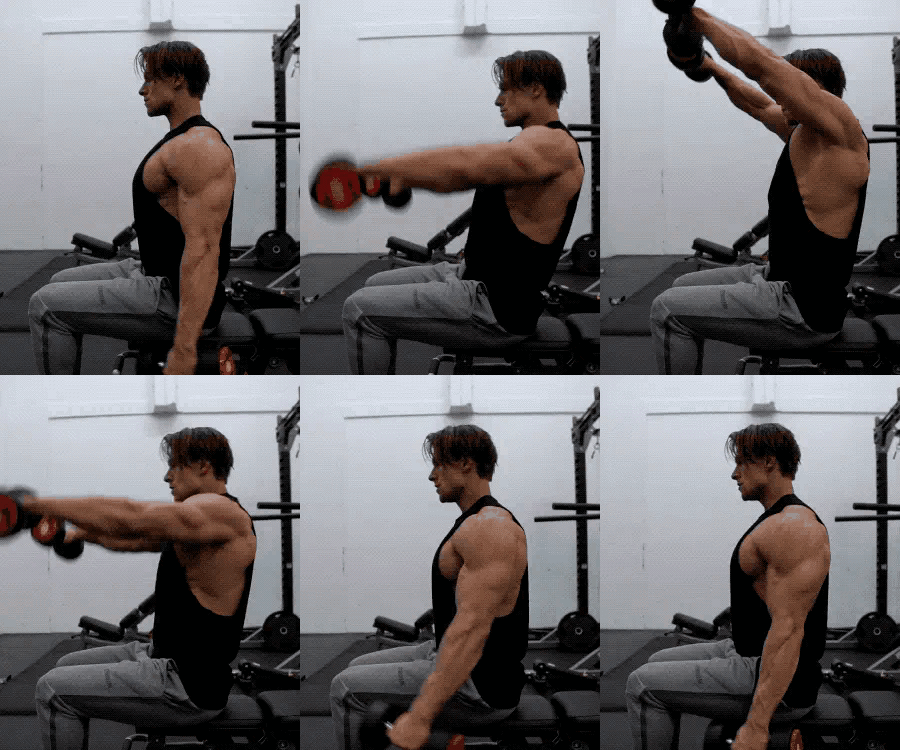
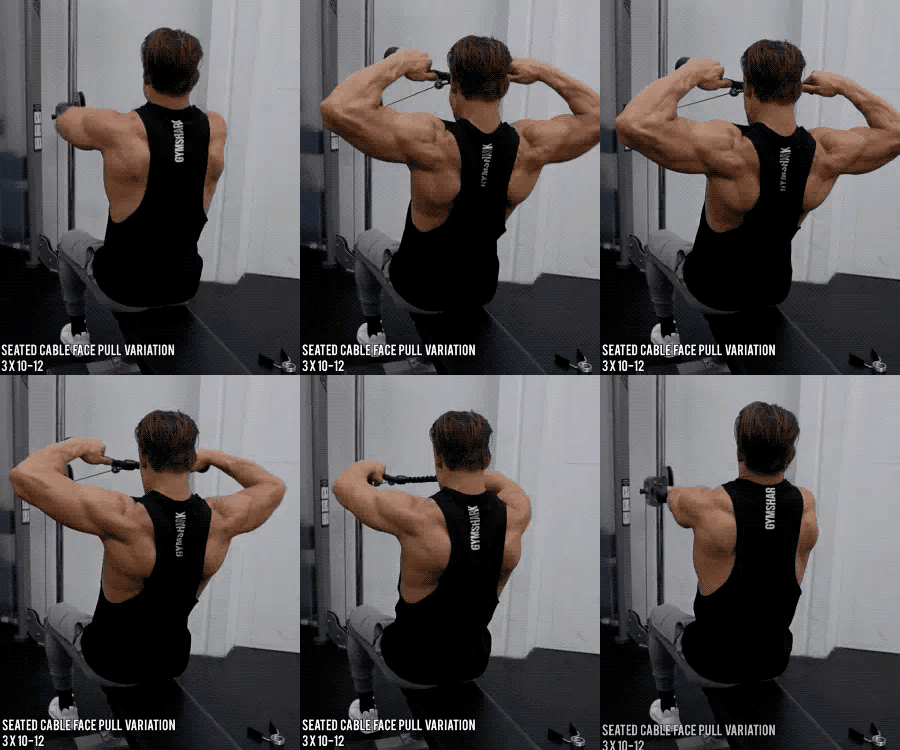
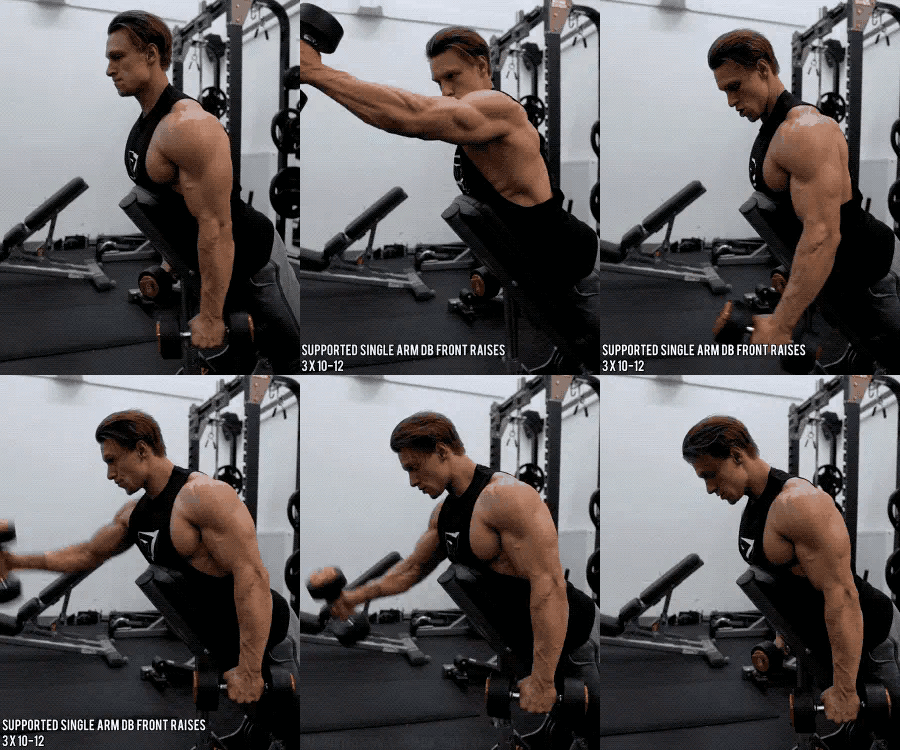
Consistent shoulder training can not only help us shape a V-shaped physique, but also improve the overall efficiency of upper limb training. Because the deltoid is a small muscle group, but plays an important role in the overall upper limb, a full deltoid can effectively improve congenital narrow shoulders, thereby effectively increasing the width of the shoulders, and wide shoulders are the key to shaping the back, and a strong deltoid will also effectively modify the arm lines, making the arm contours clear and beautiful. In addition, a strong and developed deltoid can effectively improve the efficiency of chest and back training because the deltoid will participate more or less in chest and back training. If the deltoid is underdeveloped, it will affect the efficiency of the chest and back training. That is, the deltoid may be small, but it plays a very important role, so we should also pay attention to the training of the deltoid. To maximize the stimulation of the deltoid during training, in addition to having a certain understanding of the structure, characteristics and related movements of the deltoid, we also need to adjust the training plan according to the development status of the deltoid and the training purpose, for example: The anterior head of the deltoid is relatively developed because of the training in daily life and other body parts, so there are always friends who say that the anterior head does not need to be trained alone. Of course, whether to train or not still depends on the individual circumstances. The development of the medial head of the deltoid directly determines the width of the shoulders, which is effective for people with congenital narrow shoulders to improve narrow shoulders and widen their shoulders. The posterior head of the deltoid is connected to the back, although it will be trained during back training, but it is the weakest part among the three heads, because based on the principle of coordinated development of the deltoid, we also need to pay attention to the training of the posterior head of the deltoid. After understanding the deltoid, we also know that the shoulder has strong flexibility, and because of this, its injury risk is also high, so during training, in addition to pushing, it is not recommended to use large weight and small number of sets, but it is more recommended to use small weight and multiple sets of training. Therefore, the following set of practical shoulder training plans are shared, it is necessary to say that Arnold push also belongs to the category of push, but the action is relatively difficult, so for beginners it is not recommended to use large weight. Action one: Arnold push Exercise goal: anterior head of the deltoid and medial head of the deltoid Sitting posture, feet firmly on the ground, back straight, core tension, each hand holding a dumbbell, arms bent at the elbows raised to the chest, palms facing inward Maintain stable body, maintain straight back, deltoid muscle contraction to push the dumbbell upward, while rotating the wrist, to the arm extended, elbow slightly bent, palms facing forward Pause slightly, contract the deltoid muscle, then control the speed to return in reverse Action two: Reverse flying bird with dumbbell Exercise goal: posterior head of the deltoid Leaning on the inclined bench, kneeling on the bench, waist and abdomen close to the bench surface, keeping the lower limbs fixed, maintaining the stability of the upper limbs, keeping the lower body fixed, maintaining the stability of the upper limbs Each hand holding a dumbbell drooping in front of the body, maintaining stable body, maintaining elbow slightly bent, deltoid muscle contraction to raise the arms upward to the side To the height of the arm and shoulder, pause slightly, contract the deltoid muscle, then control the speed to slowly return Action three: Dumbbell lateral raise in a sitting position Exercise goal: medial head of the deltoid Sitting posture, legs bent and separated, feet on the ground, back straight, abdomen tightened, each hand holding a dumbbell drooping to the side Maintaining stable body, maintaining elbow slightly bent, deltoid muscle contraction to raise the arms upward to the side, to the height of the arm and shoulder Pause slightly, contract the deltoid muscle, then actively control the speed to slowly return Action four: Dumbbell front raise in a sitting position Exercise goal: anterior head of the deltoid Sitting posture, legs bent, feet on the ground, back straight, abdomen tightened, each hand holding a dumbbell drooping to the side Maintaining stable body, maintaining elbow slightly bent, deltoid muscle contraction to raise the arms forward and upward To the height of the visual, pause slightly, contract the deltoid muscle, then control the speed to slowly return Action five: Rope lat pull Exercise goal: posterior head of the deltoid Facing the rope sitting upright, feet firmly on the ground, chest straight, abdomen tightened, arms extended forward to the hands, hands holding the handle, elbow slightly bent Maintaining stable body, deltoid muscle contraction to raise the arms upward to the side along the rope Pause slightly, contract the deltoid muscle, then control the speed to slowly return Action six: Dumbbell alternating front raise Exercise goal: anterior head of the deltoid Leaning on the inclined bench, kneeling on the bench, abdomen close to the bench surface, each hand holding a dumbbell drooping to the side Maintaining stable body, maintaining elbow slightly bent, deltoid muscle contraction to raise one arm forward and upward To the height of the visual, pause slightly, contract the deltoid muscle, then control the speed to slowly return, then perform the other side Before starting the training, perform sufficient warm-up for the shoulder joint muscle group, ensure the quality of the action during the action, use small weight, each action 12-20 times, 3-5 sets each time, after training stretch and relax. Pay attention to concentrating on feeling the contraction and expansion of the target muscle during each action, rather than completing the action on performance. It is the key to improving training efficiency. Author: Ten Month Knowing
@LoveKangWeibin
- @Head Tian Zhao Kang Health
12-203-5