Details Determine Success or Failure! 4 Exercise Details to Master During Fitness Training?
Original content only, plagiarists will be held accountable!
As the saying goes: details determine success or failure.Sometimes, a grain of sand in your shoes can ruin your journey of a thousand miles.A butterfly flapping its wings can cause a tsunami. Similarly, the same applies to fitness training. We often say that when we train, we need to pay attention to the details of our movements. So, what exactly does 'movement details' encompass?

Today, let's specifically explore the various aspects that make up movement details,
Movement details mainly include exercise selection, variation, movement speed and rhythm, and our breathing. We are primarily focusing on muscle training,
1. Target Muscle and Exercise

Each of our exercises is targeted at a specific muscle group. Therefore, before selecting an exercise, we must first clarify which part of the muscle we want to train. The weight and intensity we choose should also be in line with the goal,
Generally speaking, 1-5RM is for strength training, 8-12RM is for muscle building, and 15RM+ is for muscle endurance. Besides weight, another very important thing is the variation of our movements,
The best example is push-ups. We can use different variations to target different parts. A wider hand spacing – targeting the chest muscles, a narrower hand spacing – targeting the triceps.
2. Speed and Rhythm
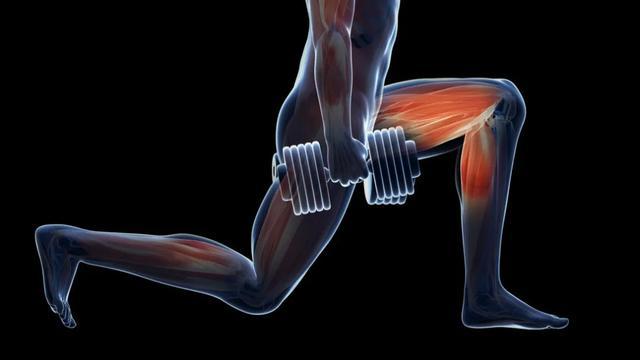
I'm sure many of you have heard your neighbors in the gym say, 'You need to slow down when you lift up, and you need to speed up when you lower down.' So, to what extent should we slow down and how fast should we go?
Regarding rhythm, we use a method similar to 'slow down when lifting up and slow down when lowering down.' Generally, this refers to 'two seconds up, two seconds down,' which corresponds to the year 2020—the '2' indicates the eccentric contraction time, and the '0' represents the isometric contraction time. The second '2' represents the concentric contraction time, and the '0' represents the isometric contraction time. In simple terms, we can use this method to control our movement rhythm.
3. Breathing Rhythm

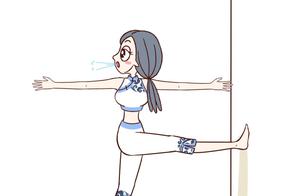
Synchronized breathing is also an important part. Breathing irregularities can affect our performance. A common practice is to exhale during exertion (concentric contraction) and inhale during relaxation (eccentric contraction). We must remember that we cannot hold our breath for a long time, because holding our breath is dangerous, but when we are performing heavy weight exercises, we can hold our breath to exert more force.
4. Muscle Proprioception
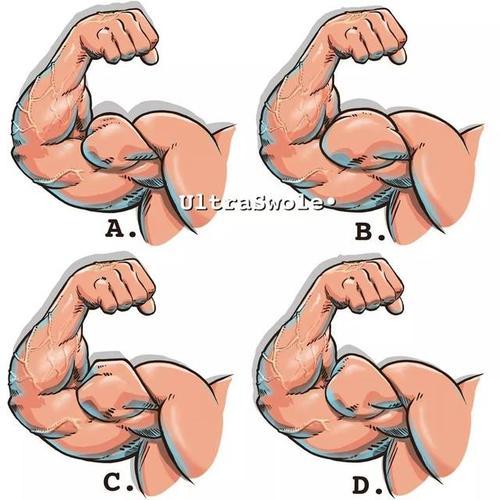
Muscle proprioception is complex. Here, I simply summarize it as the ability to use a particular muscle. That is to say, the better our muscle proprioception, the more we can concentrate our efforts on one muscle. For beginners, this may not be so important, but for experienced players, improving muscle proprioception is key to breaking through plateaus.
The above points are the movement details we need to pay attention to when training. These concepts, broken down from the overall concept, can be understood and internalized by everyone.