Boxing Crabs and Sea Anemones: A Cruel Secret
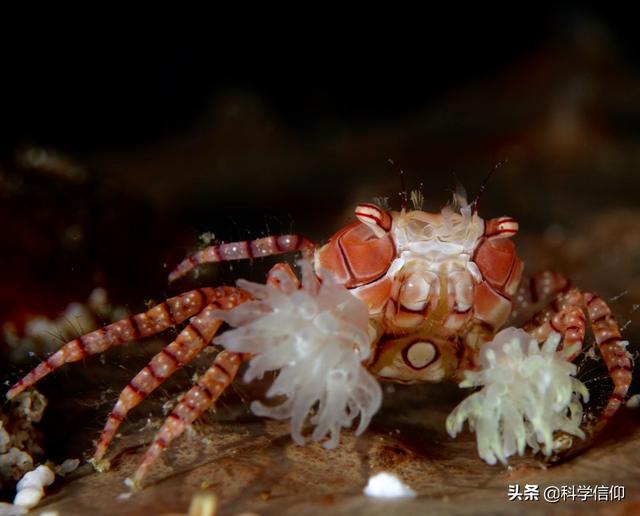
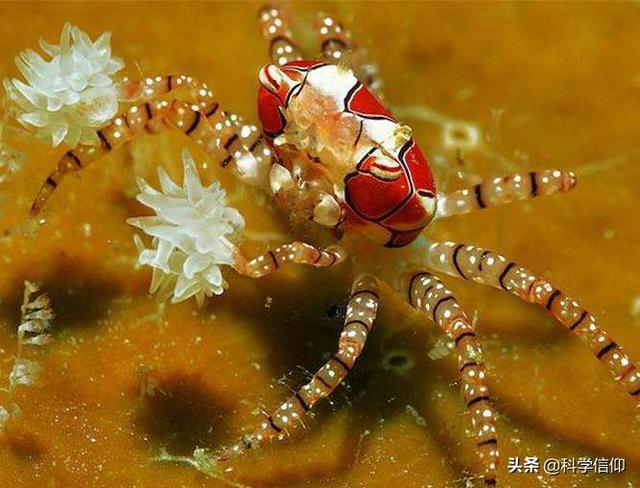
The boxing crab is a small crab that lives in tropical oceans. It is named 'boxing crab' because of its appearance. At any time, the 'hands' of the boxing crab always have two sea anemones, just like wearing boxing gloves.
Sea anemones are simple, slow-moving marine carnivorous animals with tentacles that have stinging cells capable of releasing toxins for hunting. This is an unrelated pair of animals that interestingly combined with boxing crabs. For boxing crabs, their crab claws are very weak, let alone fish and shrimp, even small worms cannot catch them, so they need to bring 'sea anemone' gloves to use the tentacles of sea anemones to collect food, while the tentacles that secrete toxins also become a powerful weapon for boxing crabs to defend against enemies. For sea anemones, they can be carried around by boxing crabs, which seems to have more food and more hunting opportunities, which is a win-win situation.
For a long time, there have been three puzzling questions about boxing crabs and sea anemones.
The first question is why the sea anemones on the boxing crab's 'hands' are always of a size that is appropriate for the boxing crab's body. Large boxing crabs have sea anemones, small boxing crabs have small sea anemones, you will never see a boxing crab's crab claws holding sea anemones that are not commensurate with its body size.
The second question is why every boxing crab has a pair of 'gloves'. Whether it is a 2 cm adult boxing crab or a newly born boxing crab with only 1-2 millimeters, it has sea anemones on its hands. You will never find a boxing crab without sea anemones. The third question is, the species of sea anemones on the boxing crab's crab claws are different from the sea anemones that exist around them. This is truly amazing. If the sea there is not this kind of sea anemone, then how could they have sea anemones on their claws?
Boxing crab's enslavement of sea anemones
As scientists have collected and studied boxing crabs, the secrets between boxing crabs and sea anemones have been gradually revealed. The relationship between boxing crabs and sea anemones is not a win-win situation of mutual growth, but a master-slave relationship. Boxing crabs enslave sea anemones. Observation shows that boxing crabs use sea anemones to collect food, but they don't let sea anemones eat enough. Whenever boxing crabs find sea anemones about to eat food, they will kick the food away with their front legs. For more than half the time, sea anemones can't eat anything, and in the other half of the time, sea anemones can only eat the head of a grub.
It is through this method that boxing crabs always suppress the growth of sea anemones so that the size of sea anemones can be exactly matched with their own size. Sea anemones are relatively fast-growing organisms, and in natural conditions, the size of sea anemones can increase by more than twice a month. Boxing crabs enslaved sea anemones are usually two or three months without any changes in size, how can they grow if they can't eat enough?
A cruel secret
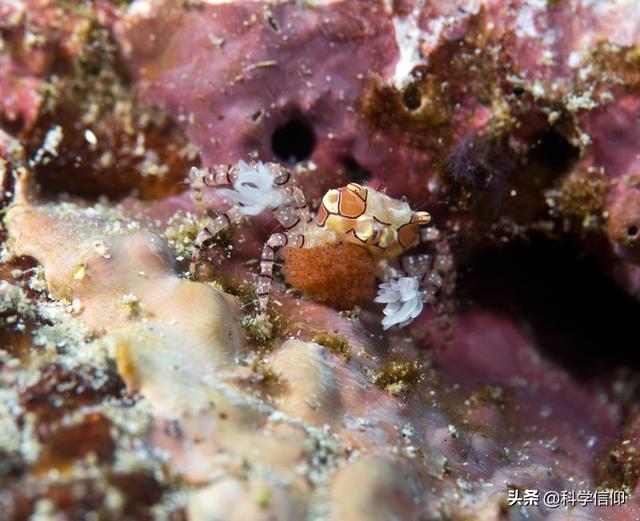
The first question has an answer, and the other two questions contain a cruel secret. Why does every boxing crab have sea anemones, no matter its size? Why the sea anemones on the boxing crab's crab claws are different from the sea anemones that exist around them? Although boxing crabs are weak, they have a hook on their crab claws that can firmly grasp the sea anemones, so in the natural environment, boxing crabs will never lose sea anemones on their claws.
Therefore, researchers spent more than an hour to peel sea anemones from one of the boxing crab's crab claws, and the answer surfaced. Only one 'glove' is inconvenient for the boxing crab, so it starts to allow sea anemones to eat and drink. After a week, there are two sea anemones with a size commensurate with its body.
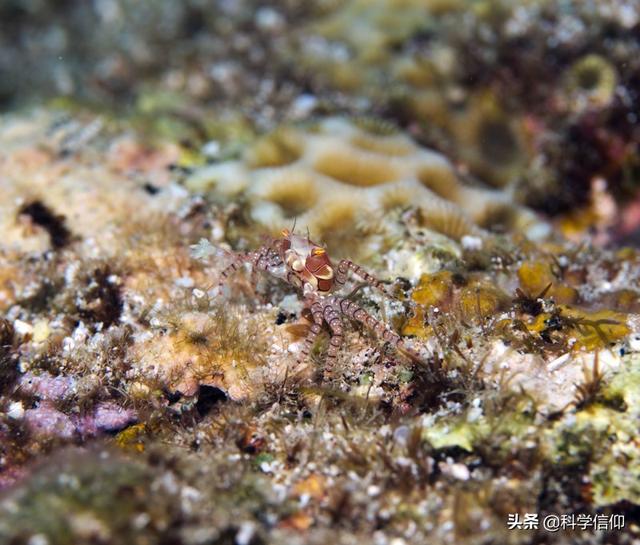
This tearing of sea anemones not only happens between its left and right hands, but also if the boxing crab has no sea anemones, it will snatch other sea anemones. For example, a 1-2 millimeter juvenile boxing crab will not hesitate to attack a much larger adult boxing crab. As long as it gets a little bit, it will take a short time for a pair of sea anemones with a suitable size to be born.
For one day being a slave, it is not only oneself but also the descendants are slaves, this is the cruel secret between boxing crabs and sea anemones. Boxing crab's sea anemones all come from other boxing crabs, so they won't be the same as sea anemones in the surrounding sea area, and researchers randomly detected six pairs of sea anemones from eight boxing crabs, which means that the DNA of 12 sea anemones are the same.
812DNA