National List of First-Class Protected Animals No. 5 – Leaf Monkeys
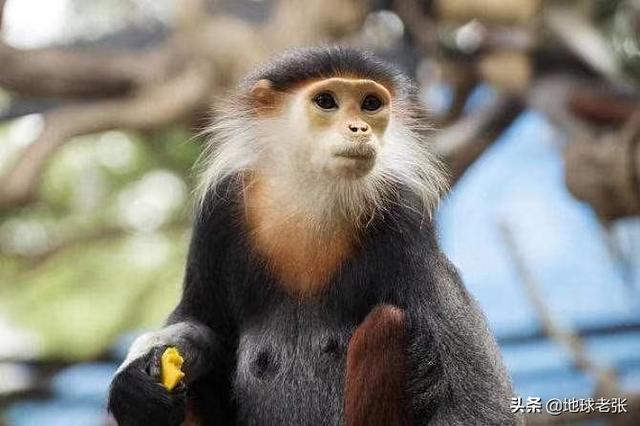
Asian gibbon species (scientific name: Presbytis): Commonly known as gibbon, there are 11 species. Head and body length 40-60cm, tail length 50-85cm; weight 5-8kg. The body is slender and has no cheek pouch. All gibbons have basically uniform fur, either brown, gray or black, with a pale underside. Some species have dark and thick eyebrows, some have a crest of hair on the top of their heads, or have shallow color patches on the top of their heads, cheeks, and buttocks. The head is small and round, the ears are large and exposed. The skin of the face is dark gray or black, and some have white skin on the lips and around the eyes. The buttocks have
Residing in tropical or subtropical forests. Primarily eats leaves; the tail is long and suitable for arboreal life. They like to move around on tall trees, sometimes also going to the ground to drink water or find food. They leap between trees, with distances reaching 10-12 meters. Diurnal, sleeping in trees at night, without nests. It is one of the world's most endangered primate species. Distributed in Thailand, the Malay Peninsula, Sumatra, Borneo, Java and nearby islands.
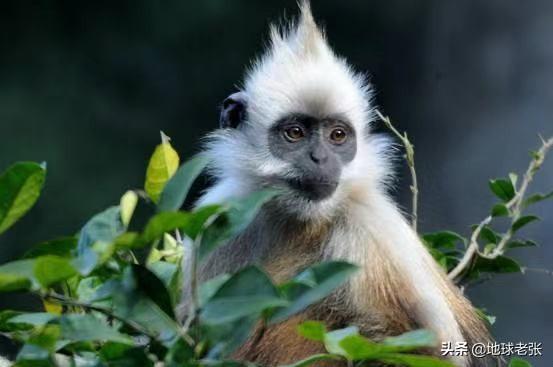
White-headed gibbon (scientific name: Trachypithecus poliocephalus ssp. leucocephalus): Named for its leaf-eating habits. The tail is long and suitable for arboreal life; the body is slender and has no cheek pouch. The length of this species is 50-70cm, the tail length is 60-80cm, and the weight is 8-10kg, which is similar to black gibbons in terms of morphology and body size. The head is smaller, the body is slender, the limbs are slender and long, and the tail exceeds the length of the body. The fur is mainly black, unlike the black gibbon, a tall crest of upright white hair is on the top of the head, shaped like a pointed white melon-shaped cap.
Group activity, with members usually 5-9, led by a male. Diurnal animals, starting to forage at dawn, mainly eat leaves, fresh buds, flowers, bark and some fruits. The average lifespan of the white-headed gibbon is 25 years. The distribution is narrow and the number is scarce, currently only a few hundred individuals, one of the 25 most endangered primates in the world, and is widely regarded as the rarest monkey in the world.
The habitat of the white-headed gibbon is in the subtropical vegetation-rich karst region of southern China, which has a typical karst topography, with rocky mountains linked together, tall peaks and steep cliffs, cliffs and karst caves are everywhere, providing a good natural environment for its survival and reproduction.
A reporter from the Guangxi Baili White-headed Gibbon National Nature Reserve learned that with increased protection efforts, the population of white-headed gibbons is steadily growing, and has increased from about 300 in the early 1980s to about 1200 in December 2018.