Locusts Have Different Levels; They Can Fly from Africa to India – Clearly Powerful Roles
Uncle Mu's international commentary, let's talk about the locust plague that everyone is concerned about.
Some friends question, how powerful are these locusts? How could they fly from Africa to India and Pakistan?
This locust, called the Sahara Desert locust, is called for short.
This isn't an ordinary locust, it's a swarm-type that's specifically capable of causing disasters.
Just from the name, you can see two characteristics.
These two characteristics are the main reasons why these insects can travel thousands of miles to Southwest Asia:
First, they like dry and sunny places.
That's why the name contains 'desert' – it's clearly related to their living habits.
If they liked humid areas, could they still be called 'desert'?
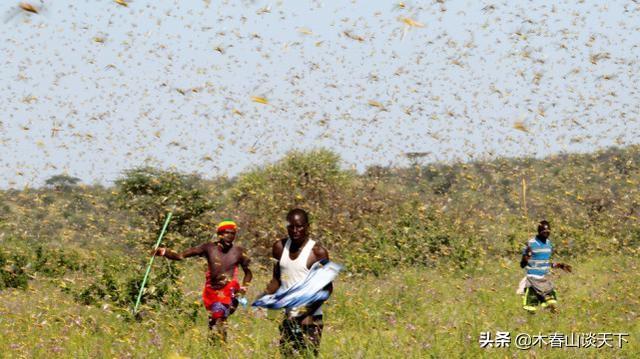
It's clear that their living and activity areas are relatively dry, especially with plenty of sunlight.
And Africa, India, Pakistan, and many regions in the Middle East all fit this characteristic.
Therefore, their appearance and outbreak in these areas is a natural phenomenon.
Second, they have strong flying ability.
Don't think that the grasshoppers we see in daily life can fly; their flight is largely dependent on treaties, and their flying ability has degraded.
True flying locusts are limited to a few, such as the Sahara Desert locust and the East Asian flying locust.
'Flying locust' refers to their ability to fly long distances and actively forage.
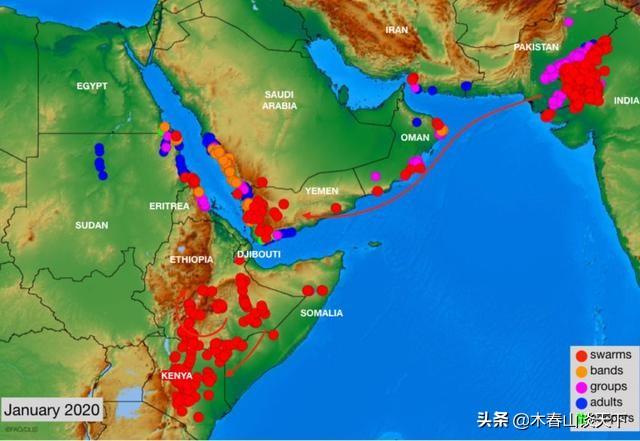
Generally, their daily flight distance and distance can reach 100-150 kilometers, and the furthest is about 200 kilometers. This is beyond the ability of most grasshoppers.
The Sahara Desert locust has similar characteristics, and can fly and enter wider areas to form disasters.
In addition to the above two characteristics, the Sahara Desert locust has a third advantage –
one natural force, namely wind.
With the changes in Indian Ocean currents and wind direction each year, they follow the wind and dance.
As the saying goes – good wind helps me rise to the clouds.

The airflow provides assistance to the locusts from Africa entering Southwest Asia, and these little guys are easier to cross borders.
The areas where locust plagues in India, Pakistan, and Iran have erupted are near the coast, dry areas –
this is a good landing and feeding ground for locusts.
Therefore, there have been many similar locust plagues in these regions over decades, and the areas are basically consistent, which is related to this natural environment.