One Mind, No Two Uses; Can Two Heads Coexist? Introduction to Double-Headed Lizards
Double-headed lizard, as the name suggests, is a lizard with two heads, and this situation is caused by the embryo splitting into two, and then merging into one during development. Generally, such double-headed animals have a short lifespan.
In June 2015, a two-headed gecko was hatched at a reptile farm in Merseyside, UK.
It is said that there are only four cases in the world.
Farm owner Stephan Evans said that when he watched the egg hatch and break through the shell, he initially thought the egg had hatched two lizards.
Morphological Features
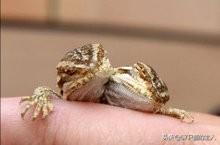
This double-headed lizard has two heads, but shares a single body.
The two heads of this lizard can move independently and drink water.
Generally, such double-headed animals do not live more than a few months, but the farm owner optimistically said that this little lizard is now very healthy, active and normal, and it was born on its own – this is a good sign.
The cause of the phenomenon
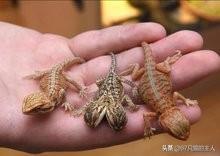
The double-headed lizard phenomenon is relatively common in the reptile world.
Previously, double-headed snakes and double-headed turtles have been discovered in many places in the world.
This phenomenon is caused by an embryo splitting into two, and then merging into one during development.
Compared to double-headed lizards in this non-normal state, there is also a 'true' 'double-headed lizard' in nature:
Many lizard species have a unique function, that is, when they are grabbed, they decisively break off their tails to escape, and in Australia's desert, there is a more magical lizard, because when it encounters an enemy, it sheds not its tail, but its 'head'.
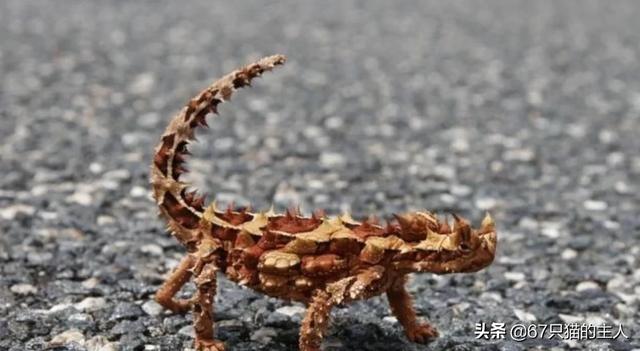
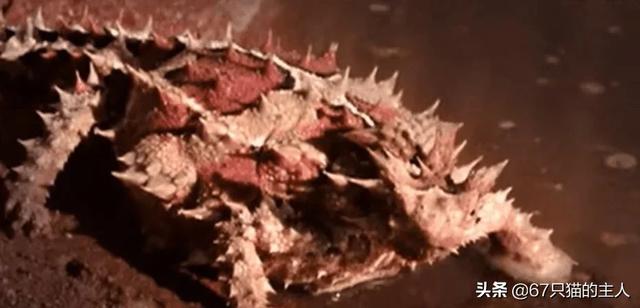
Thorny Devil, a lizard unique to Australia, this lizard has a yellowish appearance, but its skin is covered with triangular spikes.
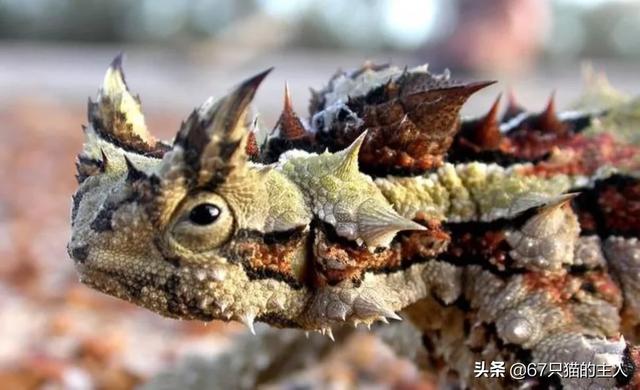
In 1840, when the thorny devil was first displayed in London, many people were startled, and some even thought it was the evil fire god in 'Paradise Lost', so the thorny devil also had a nickname, 'Devil Lizard'.
However, although the thorny devil has a scary appearance, it has a timid personality, and in the wild, any wind or movement can startle the thorny devil, and this seemingly tough creature only dares to hide in bushes to eat ants.
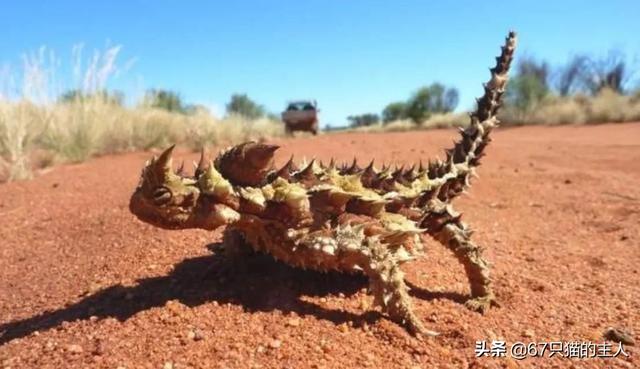
Although the thorny devil has seemingly strong 'armor' on its body, it cannot avoid the fate of being eaten by large lizards or snakes, so the thorny devil always lives cautiously.
Like most lizards, the thorny devil can also protect itself by changing color. When the weather is sunny, the thorny devil's color is close to the earthy yellow, but when the weather is cold, the thorny devil's color becomes closer to gray, and the thorny devil hidden in the bushes is difficult for people to find its tracks.
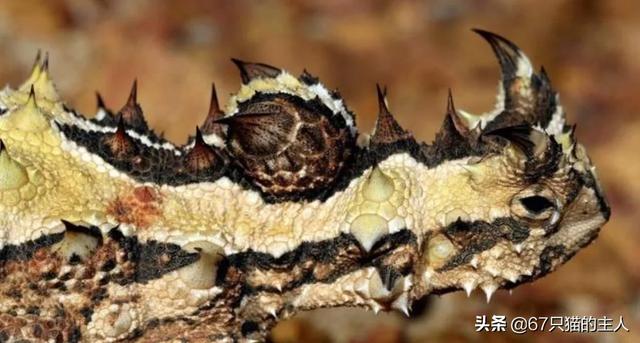
In addition to camouflage, the thorny devil has also evolved a new 'head', that is, the tumor on its back, when people bite the thorny devil's tumor, the thorny devil will quickly shed the 'false head' and take advantage of the opportunity to escape.
In addition, the thorny devil is different from ordinary lizards, although its tongue can be used to stick to ants, but it cannot be used to drink water. It's amazing that the thorny devil's 'mouth' is actually located on its feet. When the thorny devil feels thirsty, it will actively extend its feet into the water pool and transport water to its throat through its feet.