Biodiversity Encyclopedia: Colobus Monkey (Bee Monkey): Be Careful! This 'Sloth' is Poisonous
Today, we're going to introduce you tothe spine animal • bee monkey.
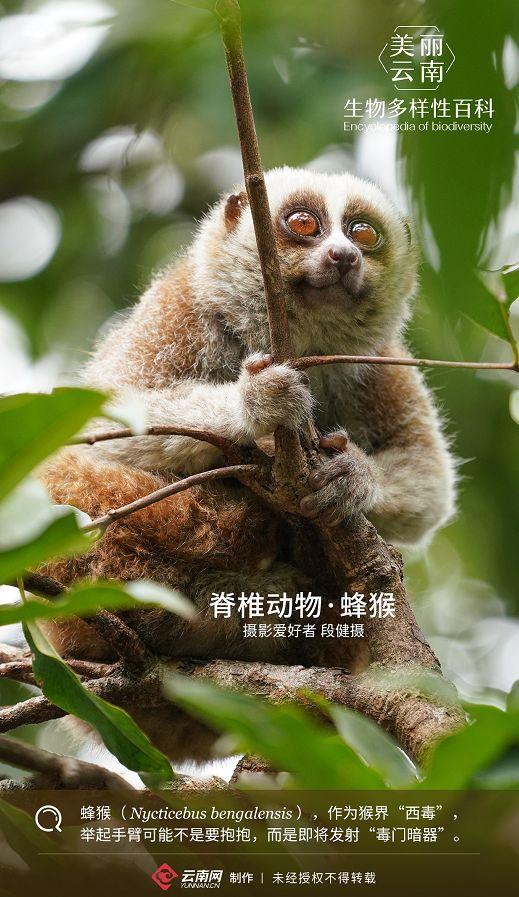
Bee monkey
Nycticebus bengalensis
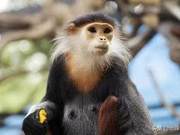
Vertebrates, Mammalia, Primates, Lorisidae, Nycticebus, a national level key protected wild animal. Also known as wind beast, lazy monkey, wind ferret, wind monkey, living in the Asian Eastern rainforest area below 1000 meters in altitude, with a distribution of domestic animals in Yunnan, Guangxi. The photo was taken in West Qin Nan Wild Elephant Valley.
Bee monkeys are a relatively small species of original monkeys. Adults weigh 0.7-1.5kg, with a body length of 280-380mm. They have round heads, big eyes and are very cute. They mainly live in the upper mid-level of tall tree trunks in primary forests, and occasionally also in artificial banana groves. Their main diet includes fresh tender tropical leaves and berries, insects, bird eggs or small birds.
If asked which animal moves slowly, many people will immediately say 'turtle, sloth', and in the order of primates, bee monkeys are the most 'lazy' ones. There's a joke that describes bee monkeys' laziness and slowness: 'Monday gave it a needle, and it won't groan until Wednesday.'
Bee monkeys are nocturnal animals, shy of light and heat, so during the day they curl up in dense tree branches to sleep. Even if woken up, they only open their eyes to look around and cannot move. If they do move, it's 'slow and steady'. The photo in this article was taken by a photographer who waited 3 hours because of the sun. They woke up the bee monkey and slowly changed places with their hands when taking pictures. However, at night, bee monkeys will show another side. They can reach any layer of the tropical rainforest, and large bee monkeys can even climb 5 kilometers in one night.
In addition, bee monkeys are a rare poisonous monkey in the order of primates, and when frightened, they raise their arms because their poison glands are located at their elbows, and venom can be secreted from the inner side of their elbows. Bee monkeys also smear venom around their cubs to avoid being preyed upon by predators. Being bitten by bee monkeys can cause infection, swelling or stomachache, but the venom is not fatal. In addition, this venom can prevent parasites from growing on bee monkey bodies.

Duan Jian, Han nationality in Yunnan, Master of Electronic and Communication Engineering. In his spare time, he loves photography, and his photography works have been published on Xinhua Net, CCTV News Net, Yunnan Daily, Yunnan Net, Yunnan Pictorial, West Qin Nan Newspaper, and China National Geographic Net.

Click the picture to enter the topic