Why Do Snakes Like to Stick Out Their Tongues? What is the Purpose of Snakes Ejecting Their Tongues?
Snakes’ movements appear mysterious as they silently slither through the woods. Don’t be fooled by the snake’s appearance; they are actually quite timid, and in most cases, they will quickly flee at the slightest disturbance. So, when walking through the woods and grass, you can use the 'startle the snake' method to scare away snakes hiding in the grass.
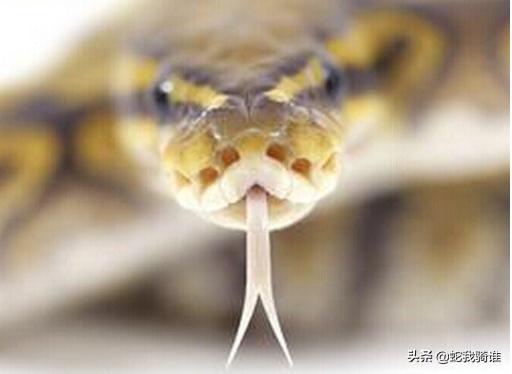
Snakes ‘expel’ their tongues to explore their surroundings.
Snakes’ vision is generally not very good, and their hearing is also poor; their quick reactions mainly come from their skin’s sensitivity to the subtle vibrations in the ground and air.
Many people always see snakes sticking out their forked tongues and think they are scaring people.
It turns out that snakes not only have poor vision and hearing, but their sense of taste has also diminished; they don’t know what their food tastes like when it enters their mouths. However, snakes’ sense of smell is quite developed, allowing them to distinguish many different odors. But their olfactory organs are not their noses, but rather their long, thin, forked tongues, which absorb tiny air particles carrying scents and then they retract their tongues into the area near their throat, which is the snake’s ‘smell analysis room’, even the faintest smells cannot escape ‘inspection’.
It turns out that snakes ‘expelling’ their tongues is actually ‘smelling’ for taste, at least it’s not ‘intentionally’ frightening.
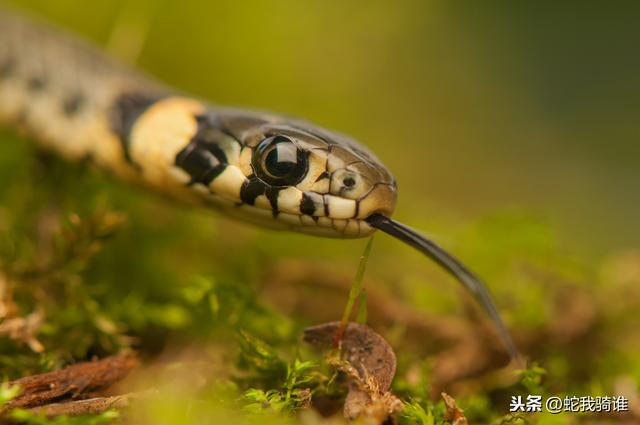
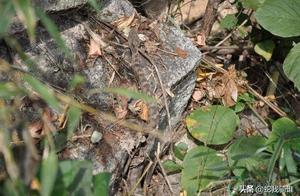
Grass snake
We all know that dogs often stick out their tongues, because their sweat glands are located on their tongues, so they use it to sweat through sticking out their tongues; snakes have poor vision, ‘expelling’ their tongues is actually a way for them to perceive their surroundings. Snakes ‘expelling’ their tongues is to detect odors. Snakes’ tongues are flexible, they can use their forked tongues to continuously absorb air particles carrying scents and send them to the nose and mouth through the olfactory ducts, which is their ‘smell analysis room’. Snakes use this way to seek prey and distinguish environments. Snakes’ tongues can also sense infrared radiation, thereby judging the activity of prey.
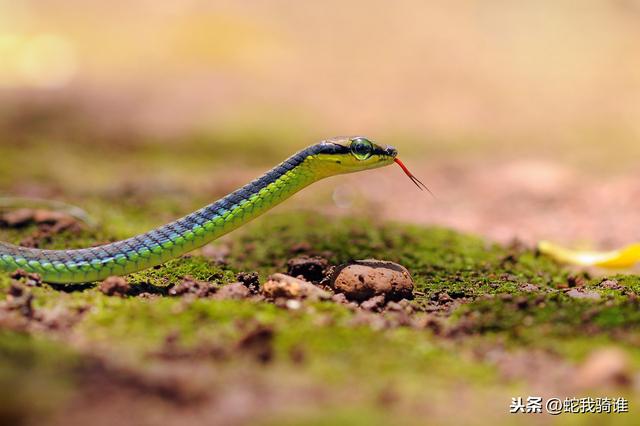
Animals have their own special abilities to adapt to the environment: camels use their humps to store water, helping them to survive in the desert; desert rattlesnakes raise their bodies to prevent burns and reduce water loss in their bodies; chameleons move slowly to hunt and avoid being eaten by predators; birds migrate to the south to avoid the cold winter.