Zhanjiang Wetlands Discover 34 Critically Endangered Spoonbill Sandpipers
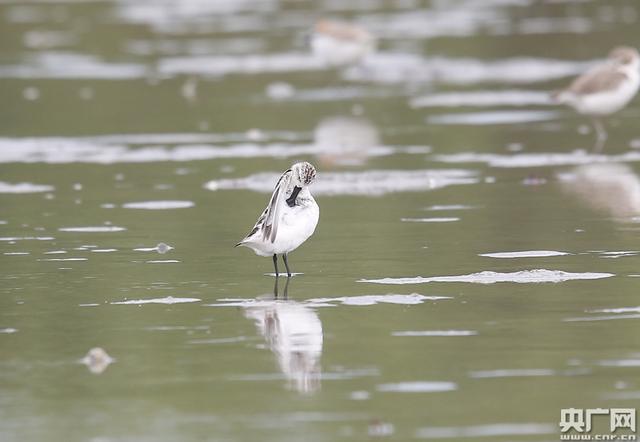
Zhanjiang wetlands discover 34 extremely endangered heron-like Spoonbill Sandpiper (Provided by Guangdong Forestry Bureau)
CCTV News Guangzhou, March 25 (reporter Zhengshu, correspondent Yin Lin) In March, the weather has warmed up, which is the season when a large number of migratory birds are returning north. On March 17, 34 extremely endangered Spoonbill Sandpipers were discovered in the Zhanjiang Red Mangrove National Nature Reserve, this is the second time in recent years that a large number of endangered Spoonbill Sandpipers have been found in the Zhanjiang coastal wetlands.
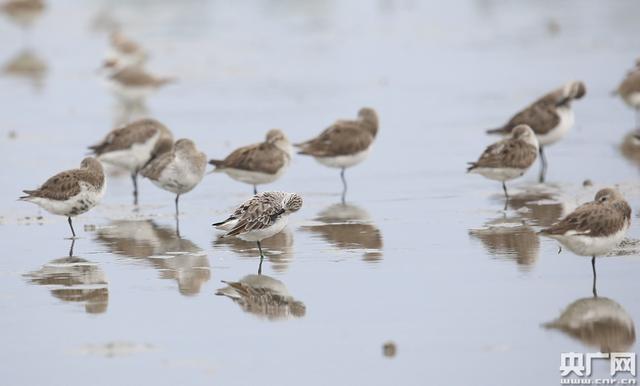
Monitoring personnel discovered that the 34 Spoonbill Sandpipers were gathered on the beaches of the Zhanjiang Red Mangrove National Nature Reserve to forage. Among the flock of Spoonbill Sandpipers, 10 with ring codes were present, and they had stayed in this area for an entire winter. In particular, one light green 87 Spoonbill Sandpiper, which was first discovered in the autumn of last year and has been in the protected area for 179 days recently. There is also a light green M4 Spoonbill Sandpiper, which has been traveling thousands of miles every winter since 2016 and has never been absent.
Zhanjiang wetlands discover 34 extremely endangered heron-like Spoonbill Sandpiper (Provided by Guangdong Forestry Bureau)
Spoonbill Sandpipers are one of the rarest birds in the world. Currently, the number of Spoonbill Sandpipers that can reproduce is about 210 to 228 pairs, which is far less than that of pandas. It breeds in the frozen soil layer in northeastern Russia and winters in wetlands in East Asia and Southeast Asia. The adult birds are about 15 cm long, and their appearance is similar to that of a sparrow. The most distinctive feature of their appearance is the spoon-shaped beak, which is affectionately called ‘spoon’ by domestic bird watchers.
Zhanjiang wetlands discover 34 extremely endangered heron-like Spoonbill Sandpiper (Provided by Guangdong Forestry Bureau)
Next, the Zhanjiang Red Mangrove National Nature Reserve will continue to do a good job of epidemic prevention, strengthen love for birds and bird protection actions and wild monitoring, and try to record as much information as possible about the Spoonbill Sandpipers' plumage changes and behavior characteristics before returning to their breeding grounds to escort and fly them.
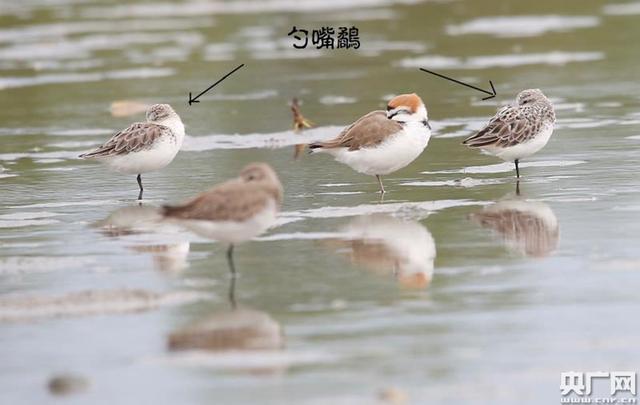
Zhanjiang wetlands discover 34 extremely endangered heron-like Spoonbill Sandpiper (Provided by Guangdong Forestry Bureau)