Home Museum Visit - Meet the ‘Gansu Bird’
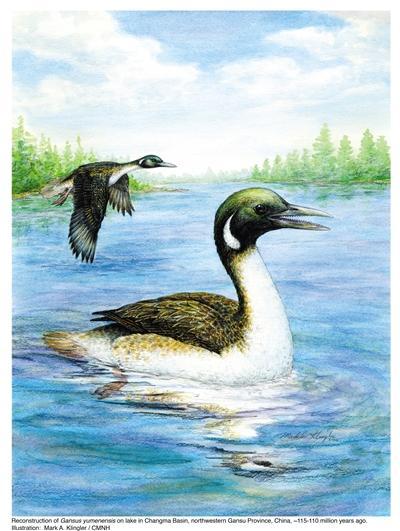
Gansu Bird Fossil Replica
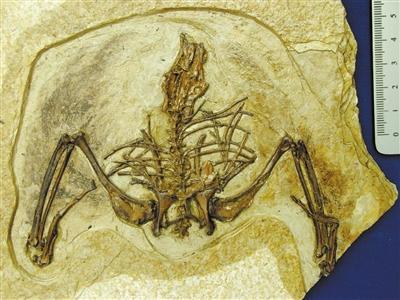
Gansu Bird Fossil
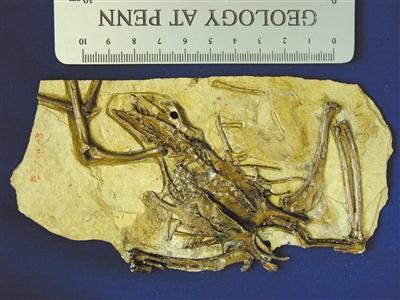
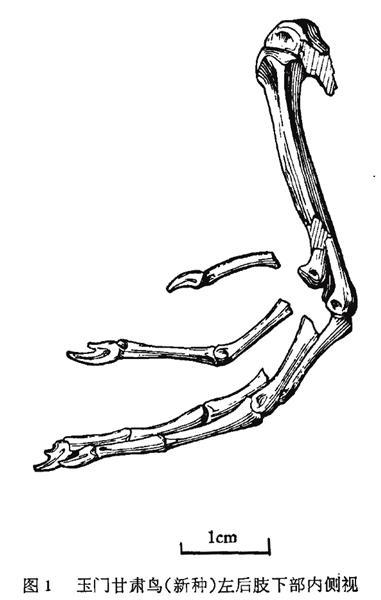
Bird Fossil Replica
Have you ever seen dinosaurs and birds living at the same time?
It is named 'Yumen Gansu Bird' because the first Middle-aged bird fossil in China was discovered in Yumen City, Gansu Province. This fossil lived at the same time as dinosaurs and is now collected in the Gansu Geological Museum.
Fun Facts
Modern Birds and Retro Birds
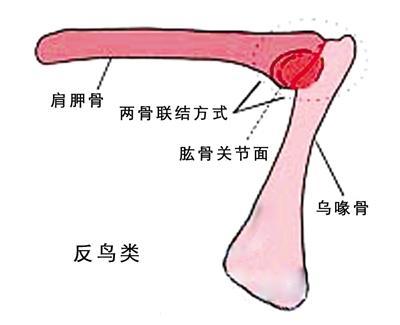
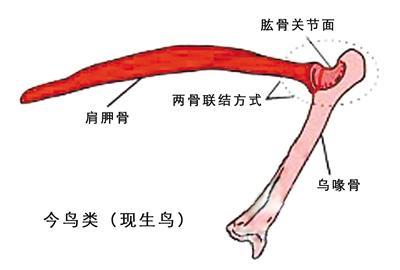
Paleontologists believe that birds evolved into two major branches shortly after their origin. One branch consisted of retro-birds, which were dominant in terms of their number and species at the time, but they went extinct with the dinosaurs at the end of the Cretaceous period. The other branch included all extant birds and their common ancestors, modern birds.
In 1981, British ornithologist Walker C.A. studied a batch of Cretaceous late bird fossils discovered in the Salta Province of Argentina, and found that the shoulder bones and ulna-carpals had a jointing way that was exactly opposite to that of modern birds. Therefore, it was named retro-birds.
Hi everyone, I am Yumen Gansu Bird, its scientific name is 'Gansus yumenensis Hou & Liu, 1984'. My name is very cool, isn't it? I was excavated in Changma Township, Yumen City, Gansu Province, near Shijiawan Village. At the time of discovery, only an incomplete left hind limb was preserved, including the tibia-tarsal end, tarsometatarsals, and four complete phalanges. My name was given by paleontologists Hou Lianhai and Liu Zhisheng of the Institute of Vertebrate Paleontology and Paleoanthropology of the Chinese Academy of Sciences in 1984.
Some students might ask, 'You shouldn't be proud just because of your name. Let's see how the researchers evaluate you!'
When I was named, I represented the first Middle-aged fossil bird in China and the second oldest bird in the world, only young by about one million years old, and it is considered the earliest representative of coastal and aquatic birds.
My discovery opened the curtain for Middle-aged bird studies in China, attracting widespread attention from the world's academic community. Since 2006, Chinese scientists have reported discovering dozens of new fossils of me in the Changma area, enriching people's understanding of the skeletal features and living habits of this bird that lived in the early Cretaceous period. In 2006, the Discovery science channel did a special report on me; in 2008, the National Academy of Sciences of the United States published 'Science, Evolution and Creationism' (Science, Evolution and Creationism) and I am one of the specimens used to illustrate the evolution of birds.
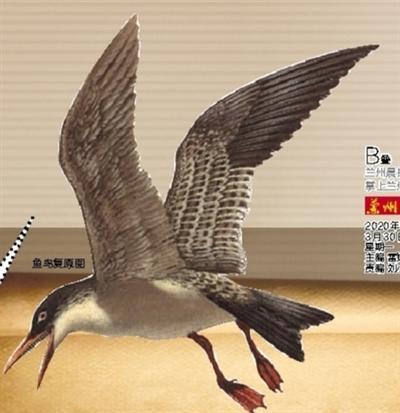
After research by paleontologists, I belong to modern birds, and are closely related to the North American late Cretaceous fish-birds and dusk-birds. I am a two-footed bird. My size is about the same as that of modern pigeons, and I have many common features with modern birds. My forelimb morphology and feather characteristics show that I have strong flying ability; the details of my hind limbs and webbed feet suggest that I may have been a paddling bird that used either its feet or wings and feet to propel itself underwater; in addition, my bones have a low degree of hollowness, so I am heavier and more clumsy. People think I may feed on fish, insects, or plants, and occasionally eat plants. Although some parts of my specimens have stomach stones, but because all of my fossils discovered now have not preserved the head, so it cannot be determined with certainty what my diet is.
Written by/Reporter Xia Miao
Photo/Reporter Xia Miao Reproduced
/