34 Birds Go Viral! But Netizens Panic!
In March, with the warming weather, it's the season when a large number of migratory birds are returning north. Recently, a large number of migratory birds that wintered or transited through Guangdong were spotted foraging and replenishing energy in Guangdong nature reserves, sending out signals of return.
On March 17th, 34 extremely endangered Spoon-billed Sandpipers were discovered in the Zhanjiang Red Tree Forest National Nature Reserve, marking the second major discovery of large numbers of endangered Spoon-billed Sandpipers along the Zhanjiang coast in recent years.

Spoon-billed Sandpipers are very sensitive to their environment and have high requirements for habitat. In recent years, the number of Spoon-billed Sandpipers recorded in Guangdong coastal wetlands has gradually increased.
Monitoring personnel found that the 34 Spoon-billed Sandpipers were gathered on the beaches of the Zhanjiang Red Tree Forest National Nature Reserve for foraging. Within the flock of Spoon-billed Sandpipers, 10 with tracking codes were recorded, and they had been staying for an entire winter season. Specifically, one light green 87 Spoon-billed Sandpiper, was first discovered in autumn last year and has been in the reserve for a total of 179 days recently. There was also a light green M4 Spoon-billed Sandpiper, which has been traveling thousands of miles every winter since 2016 and has never been absent.
The flock of Spoon-billed Sandpipers would gather and disperse, frequently probing shallow water with their spoon-like beaks or quickly running on the mudflats, almost frantically feeding, to accumulate enough energy for their journey back to their breeding grounds.
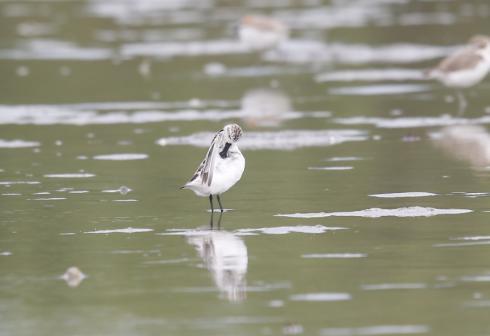

Spoon-billed Sandpipers are among the rarest birds in the world. Currently, there are only about 210 to 228 pairs of breeding Spoon-billed Sandpipers worldwide, a number far less than that of pandas. It breeds in the frozen soil layer of northeastern Russia and winters in wetlands in East Asia and Southeast Asia. Adult birds are about 15 cm long, similar in size to sparrows, and its most distinctive feature is its spoon-shaped beak. Domestic bird watchers affectionately call it 'Spoon'.
This news
It topped the hot search for second

Suddenly, netizens panicked
"Address don't say too clearly"
Became the most liked comment


Zhanjiang's natural environment is excellent
Netizens called for the protection of nature




Everyone jokingly said pandas are losing their status


This hot search has further confirmed
Zhanjiang is a good place

Source: Southern Metropolis News, combined with CCTV News