Biological and Distribution Study of Grassland Side-necked Turtles in Venezuela
As for most turtle enthusiasts, 'Grassland Side-necked Turtle' is a strange name, it has no high ornamental value, this turtle is not popular in the market, and it rarely has the opportunity to find its traces. As a relatively rare turtle species, we can also learn about its survival status and habits in some literary research. It is native to South America and is now commonly found in Venezuela, which is plagued by war and turmoil, 'Podocnemis vogli' is a very abundant species in the Orinoco plains in Venezuela and Colombia, mainly depending on the flooded habitat. Compared with the Red-headed Side-necked Turtle and the Magdelena Side-necked Turtle, it is the smallest distribution area of the entire South American Side-necked Turtle genus. Nevertheless, we can easily find them in the eastern part of Colombia up to the Meta province, and their main activity traces are in Venezuela, such as the Apure state, Barinas state, Bolívar state, Cojede state, Guárico state, and Portuguesa state.This article is translated from the renowned European reptile journal 'Retilia', bringing you rare turtle information.
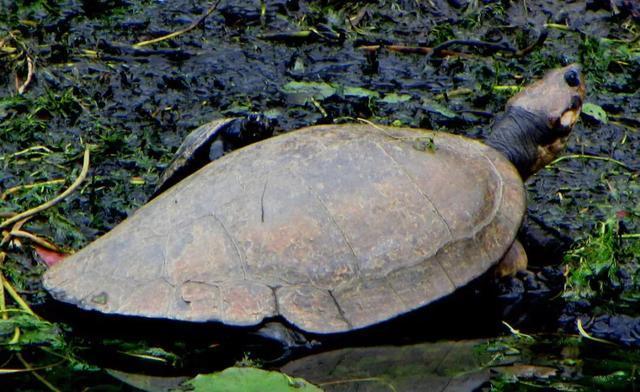
'Grassland Side-necked Turtle' (scientific name: Podocnemis vogli) is a very abundant species in the Orinoco plains in Venezuela and Colombia, mainly depending on the flooded habitat. Grassland Side-necked Turtle is relatively small distribution area of the entire South American Side-necked Turtle genus. Nevertheless, we can easily find them in the eastern part of Colombia up to the Meta province, and their main activity traces are in Venezuela, such as the Apure state, Barinas state, Bolívar state, Cojede state, Guárico state, and Portuguesa state.
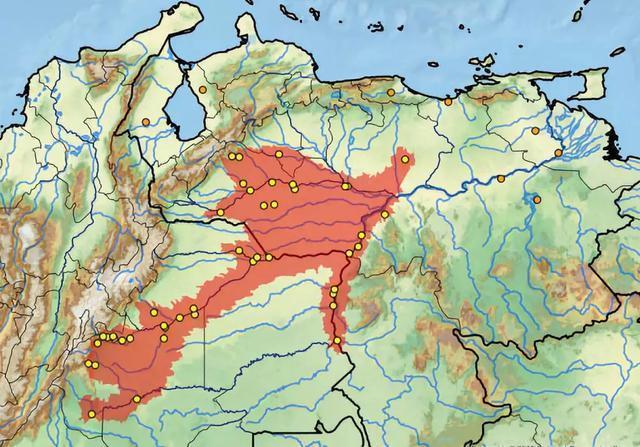
▲Grassland Side-necked Turtle distribution range
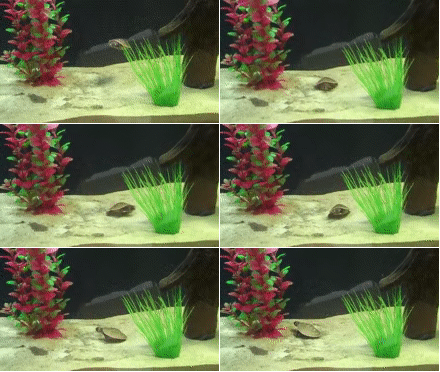
▲Its relative Red-headed Side-necked Turtle juvenile
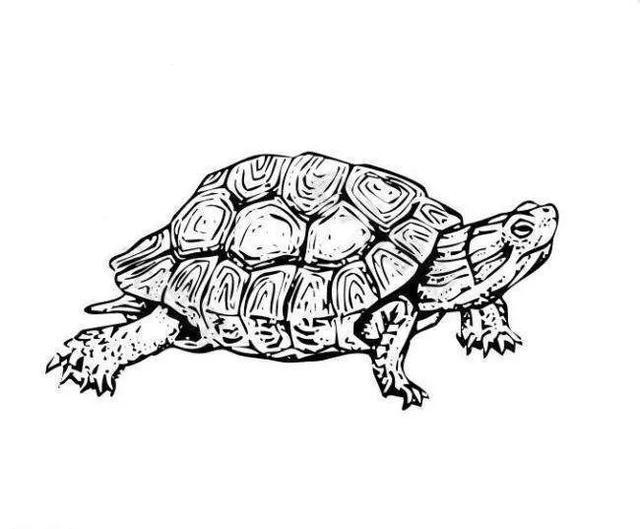
'Grassland Side-necked Turtle' is a medium-sized aquatic turtle, with a carapace length of about 30cm. Its biggest characteristic is its pure brown color and no spots on the head after adulthood. Its four limbs are also brown-yellow like its head. Although there are shallow yellow bases on both sides of its head, the background color ranges from dark (mostly black) to pale yellow. The shell is pale yellow, with blurry dark spots on the lower edge and the top of the carapace and the anus shield, young individuals have yellow stripes or plaques on the eye sockets and the top of the head, which extend to the throat and beak.
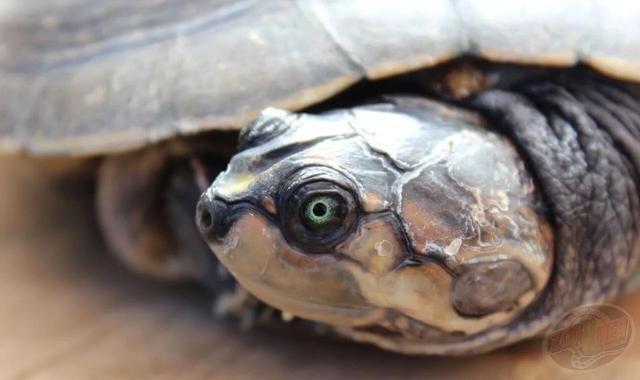
▲Young individuals' patterns are usually more obvious

▲Its original habitat is an endless sparse woodland
'Unlike other species of South American Side-necked Turtles, Grassland Side-necked Turtle prefers slow-flowing waters, especially flooded pools and swamps. Like the South American Giant Side-necked Turtle, they can swim further when floods occur. During the rainy season, these turtles will disperse in various flooded plains, but in the dry season, they will gather again in a few pools that will not dry up all year round.
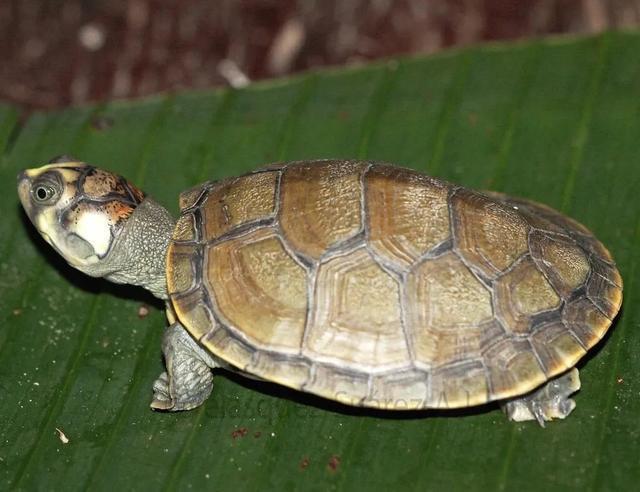
▲Grassland Side-necked Turtle seedlings
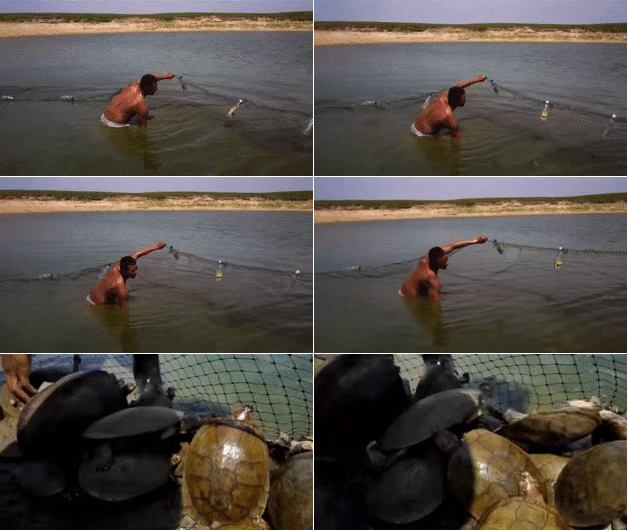
▲Local people hunting turtles in the pond
'Grassland Side-necked Turtle' mainly feeds on plant-based food, but occasionally it is found that it feeds on invertebrates, fish and carrion. Grassland Side-necked Turtle is a completely opportunistic eater, from its stomach we can find all kinds of weird animal skeletons, including freshwater dolphins (a local aquatic mammal), water birds, caimans, and even some evidence that they eat their own kind. Under artificial rearing, this turtle can feed on floating debris in the water surface through filter feeding. This is the first time that South American Side-necked Turtles have evolved this feeding way, which indicates that it is an adaptation to slow-flowing pools.
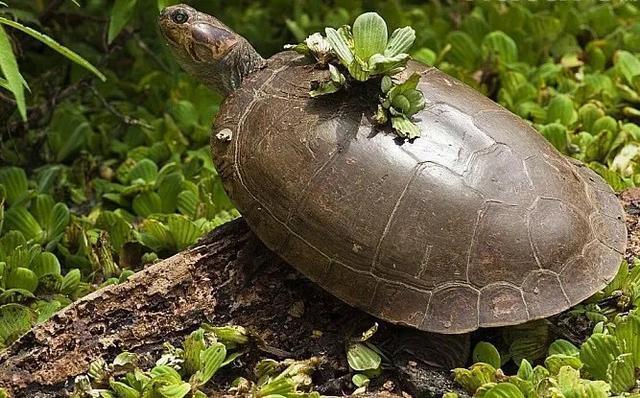
▲Wide range of food, mainly plants
'Egg laying usually takes place from December to February of the following year, 2-4 nests per year, each nest has 7-13 eggs, the egg size is 3.7-4.8cm long, 2.1-2.9cm wide, and the weight is generally 8-20g. The laying place is usually 2-1000 meters away from the shore, the distance traveled by the female to find the nesting site is easy to be attacked by people or animals, so the attack rate is much higher than that of males. Studies show that the ratio of female to male deaths is 2.78:1. Turtle eggs hatch by the end of April or May, coinciding with the rainy season, which helps the little turtles hatch successfully. The flood also allows the newborn turtle seedlings to reach the water without having to travel on land like their mother.
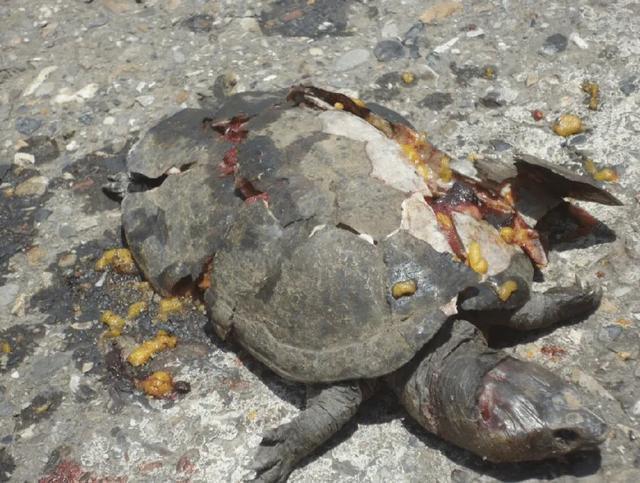
▲Female turtle crushed by a car
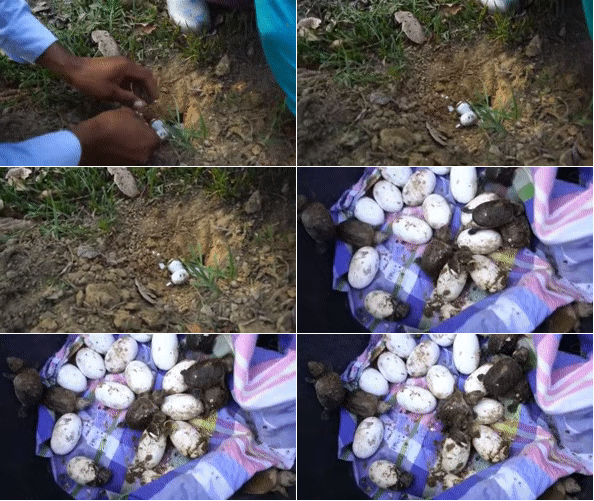
▲Researchers artificially incubate turtle seedlings
'Although this species' habitat homogeneity has led to the apparent lack of subspecies, there are still studies showing that there are differences between the two populations in Venezuela and Colombia. The population in Venezuela is larger. However, we cannot observe enough differences to describe subspecies in these population samples.
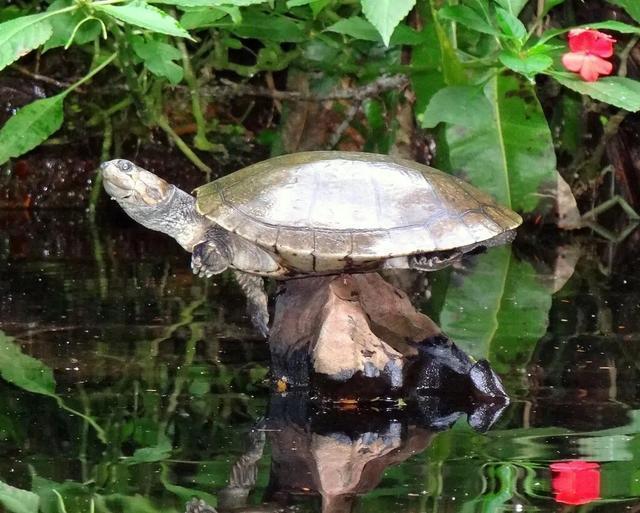
▲A large Grassland Side-necked Turtle
'Currently, Grassland Side-necked Turtle is a widely distributed turtle, with many populations in the Orinoco pools and rivers, such as the Apure woodland. It is also used by local residents as a source of protein, and it is only allowed to be hunted in specific months of the year. Unlike many other turtles, the trade in wild ornamental turtles has not threatened this species, because this turtle does not have flashy patterns, and its relative Yellow-headed Side-necked Turtle (commonly known as 'Ninja Turtle') is not so lucky. Because the young heads of Yellow-headed Side-necked Turtle have a very ornamental yellow pattern, Yellow-headed Side-necked Turtle is very popular in the pet market.
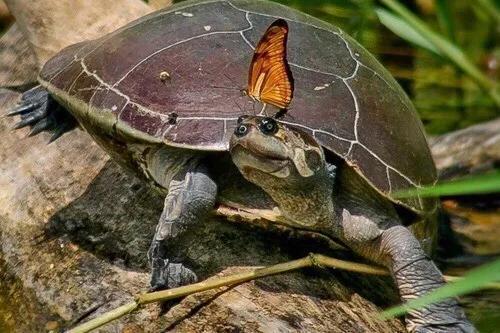
▲Relatively less dazzling patterns became its protection
▲Few enemies as an adult
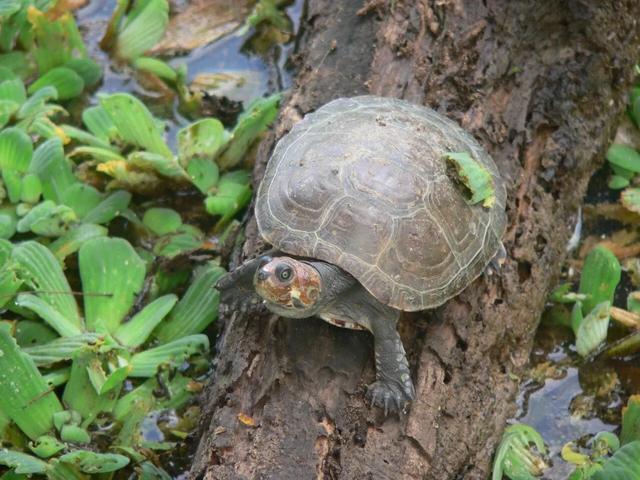
You can see, Grassland Side-necked Turtle may not be well-known, but it is a very interesting turtle. Its diet is diverse and plays an important role in promoting the positive circulation of the food chain. It has also evolved a unique feeding method in special stagnant environments. The female turtle tirelessly travels long distances to find a suitable nesting site, and even sacrifices its life. In the vast world, there are many kinds of turtles, no matter if they have the opportunity to raise them, it is a great honor to have the opportunity to understand their beauty!
Part of the content comes from the network, for reference only.
Turtle lovers can pay attention to the WeChat public account: Meet Fish with Turtles
Daily regularly update personal summary of experience and insights.