How to Calculate the Age of a Shark? Atomic Bombs from the Cold War Came in Handy!
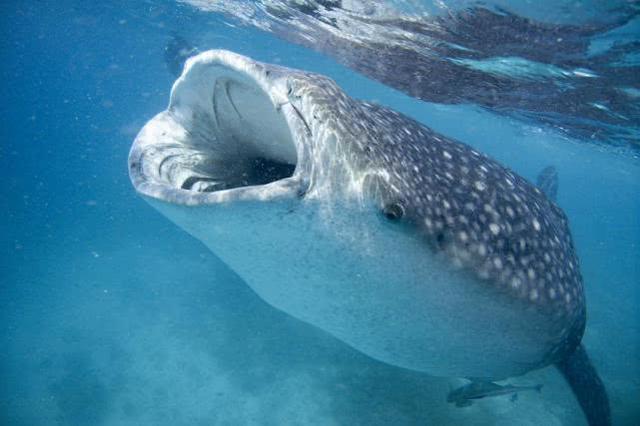
Whale Shark is currently the largest shark and the largest fish currently in existence. However, unlike the terrifying shark image shaped by the film *Jaws*, whale sharks mainly feed on plankton.
To fill their bellies, whale sharks often go 'ten thousand miles' to forage for food. Their bodies can grow to 18 meters long and weigh an average of 20 tons. What a concept, huh? It's roughly equivalent to three to four African elephants added together.
Besides, whale sharks will never make people 'blind' because the white spots on their skin are very distinctive. They are large in stature, move slowly and are docile in nature, and mainly inhabit tropical waters. In some tropical tourist hotspots, you can also see whale sharks and divers dancing harmoniously.

Whale sharks are a long-lived fish species. Unfortunately, due to overfishing in Thailand, the Philippines, and other areas, whale sharks are now listed in the IUCN Red List ('Red List of Threatened Species') as 'Endangered'. Research related to them is still a mystery.
Recently published in the *Frontiers in Marine Science* magazine, an article mentioned that the radioactive remnants from Cold War atomic bomb tests can help scientists accurately calculate the age of a whale shark.
Previously, scientists knew that, just like tree rings, lines could be extracted from the vertebrae of deceased whale sharks to track their age. But it was not clear what the frequency and reason for these 'vertebral rings' were. The current debate is that some people believe that whale sharks form one 'growth ring' every six months, while others believe it is one year.
And now, the Cold War atomic bomb seems to come in handy.

In the late 1940s, the United States, the Soviet Union, the United Kingdom, and France successively conducted atomic bomb tests, which caused the concentration of a substance called Carbon-14 (carbon-14) in the atmosphere to double during the Cold War period (1947 to 1991).
As time goes by, carbon-14 traces can be found in almost all living organisms on Earth, including whale sharks' vertebrae.
Because the decay rate of carbon-14 is stable, researchers successfully used the 'time imprint' of carbon-14 in whale shark vertebrae to calculate the deposition period of 'vertebral rings' is 1 year, which can also accurately calculate the age of whale sharks.
The subject of this article: Golden Goose Emperor Penguin. Editor: Kristyle