Are Bats Really Harmful to Humans? The Real Situation is:
As for bats, people immediately think of them hanging upside down in dark, ugly caves, or the hideous, bloodthirsty bats in vampire movies.
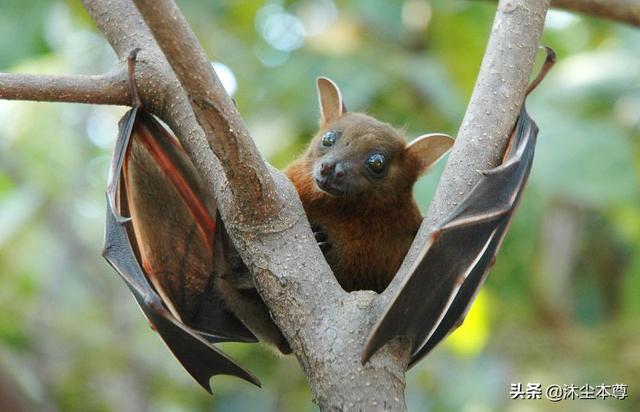
Regarding bats, most people dismiss them, and this creature doesn't look like a good thing at all, it's dirty and may carry many bacteria and viruses.
Actually, bats do carry some of the world's most pathogenic viruses – including Ebola and SARS viruses. Although they carry these deadly viruses, are they really harmful?
The answer is of course negative!
First, let's introduce bats: the suborder of Little Bats, which is commonly known as bats, there are 6 families and 26 genera and 110 species in China. Most bats are insectivorous and carnivorous, mainly using echolocation to search for food, to determine the target, to avoid obstacles and to evade enemies. Bats are truly flying mammals. This evolutionary advantage allows them to utilize a new ecological niche that has not been utilized by other mammals.
A bat's wings evolved from the forelimbs of mammals during evolution, formed by the skin (wing membranes) connected by the elongated claws of its forelimbs. Bats have a muzzle like rodents or foxes. Their ears are forward-facing, large and very flexible. Bats have short necks, broad shoulders and a large chest muscle, while the hips and legs are slender. Besides the wing membranes, bats are covered in fur, with shades of gray, brown, yellow, brown or black on the back, and lighter color on the abdomen.
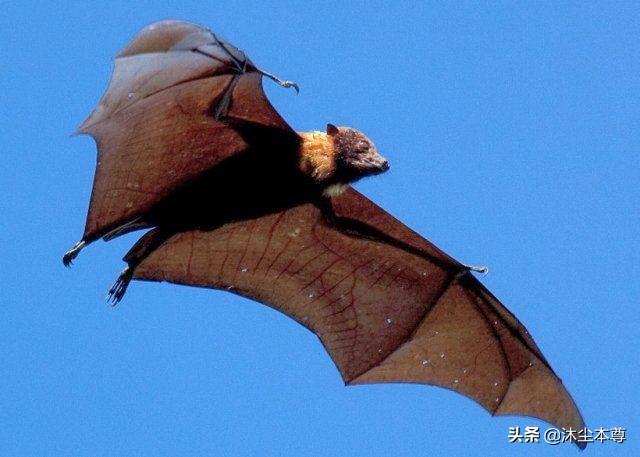
Bats are one of the most widely distributed and successful mammalian groups in the world. Except for the polar regions and remote islands in the Pacific Ocean, all terrestrial ecosystems on Earth are utilized by them. In evolution, they avoid competition with other land and sea mammals, flying into the sky, the high evolution of echolocation allows bats to avoid competition with most birds in the air, and utilize a unique ecological niche – the dark sky.
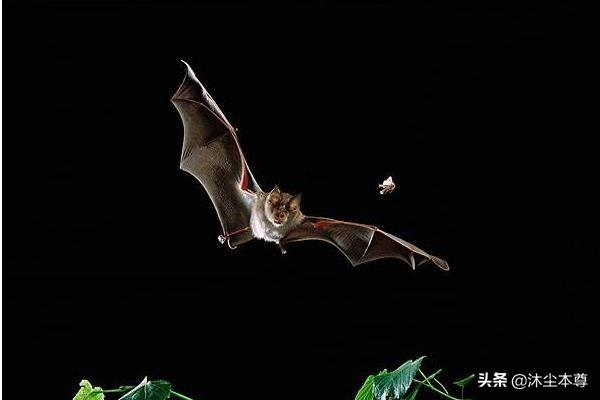
The order of Megabats and Little Bats, also known as fruit bats and insectivorous bats. As their names suggest, the former is larger in size, mostly eats fruit, such as fox bats, with a wingspan of up to 90 cm; the latter is much smaller, in addition to insectivorous, also includes carnivorous and blood-sucking, but also there are members of the Megabats group with the same diet. Bat family is one of the families under the suborder of Little Bats, about 300 species. There are 900 species of bats worldwide, about 81 species in China, which is the second largest mammalian group second only to rodents. They can be broadly divided into Megabats and Little Bats, Megabats are distributed in tropical and subtropical regions in the East and West, larger in size, with a more primitive body structure, including fox bat family 1 family. Little Bats are distributed in tropical and temperate regions in East and West, smaller in size, with a more specialized body structure, including chrysanthemum bat family, hoof bat family, leaf-eared bat family, vampire bat family, bat family more than ten families.
Scientists have discovered that bat immune cells are always maintained in an active state, which helps them to be free from disease. This discovery is beneficial for the subsequent research and development of vaccines against deadly diseases such as viruses.
Human cells encounter foreign organic bodies, such as bacteria and viruses, and will trigger the innate immune system. Unlike humans, who only activate the immune system when infected, bats have a 365-day immune system that is always activated to resist invasion by diseases.
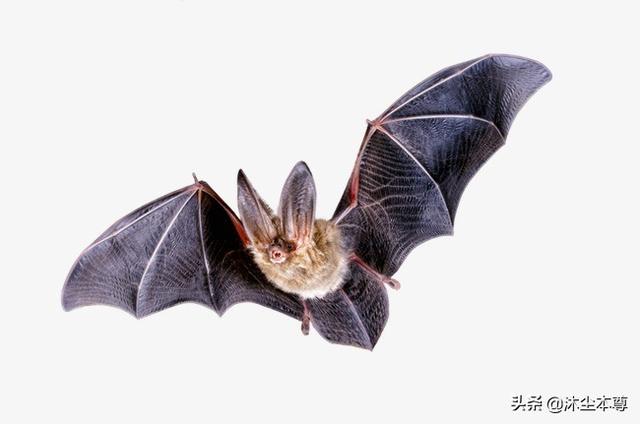
In fact, bats are closely related to our lives.
Bats are human teachers. Humans invent radar by imitating bats' echolocation system. Currently, some countries' stealth aircraft are also copied from bats. In medicine, the anticoagulant proteins extracted from the saliva of vampire bats are twice as fast as the current clinical drugs to dissolve blood clots. And the feces of insectivorous bats are called 'night-bright sand' in traditional Chinese medicine, with a clearing heat and brightening effect. In areas with abundant bats, they play an important role in controlling pests in agriculture and forestry, which not only promotes the healthy development of agriculture and forestry, but also reduces environmental pollution caused by the large-scale use of pesticides. In addition, the waste accumulated in the bat habitat for centuries has been utilized by humans in many tropical countries, and it is an economic and high-quality agricultural fertilizer.
“”“”