Wow! Tingjiangyuan Wild Boar 'Bathing' - Have You Seen This? Infrared Camera Footage of Wild Animals' Happy Habitat
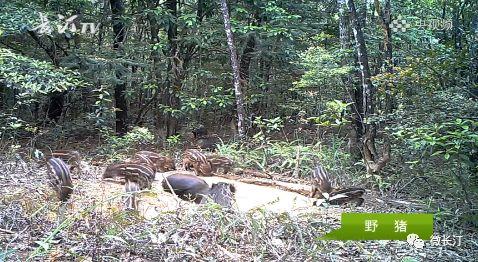
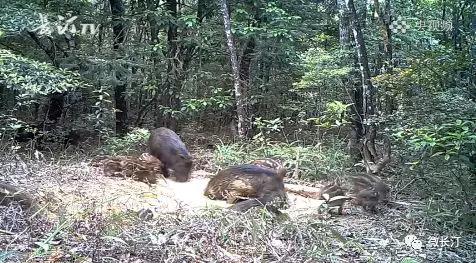
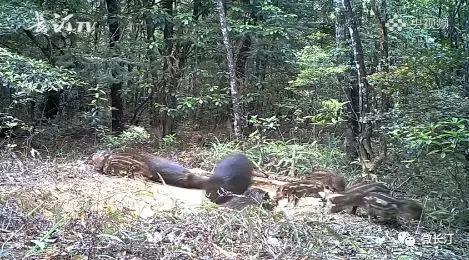
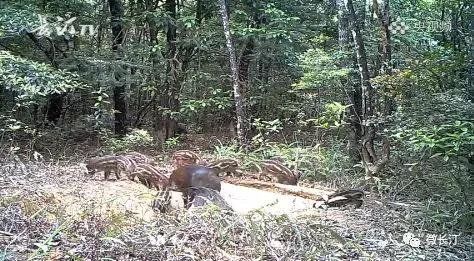
A sudden rain shower after a storm in the dense forests of the Tingjiangyuan National Nature Reserve in Fujian, a wild boar family ‘bathing’ activity was quietly unfolding...
The ‘elders’ were completely immersed in the natural ‘swimming pool’, frolicking and enjoying the coolness of the mud bath, while the ‘children’ lingered at the edge of the ‘pool’, eager to try, sharing ‘family happiness’ , a harmonious scene.
Warm reminder: Please watch the video in a wifi environment

Wild boar (scientific name: Sus scrofa), also known as serow, is divided into European wild boar and Asian wild boar, with 27 subspecies worldwide, but there is no reproductive barrier between them, and they can produce offspring. Wild boar are omnivorous animals, living in mountains, hills, deserts, forests, grasslands and thickets, with strong environmental adaptability. Wild boar are active day and night, but mainly forage in the morning and evening, and enter the dense forest to avoid the sun during noon. They like to bathe in mud and forage along streams. Boars are mostly solitary, while sows often form small groups of 3-4, and sometimes sows and the daughters of the previous litter lead the offspring and grandchildren when they play together, forming large groups of 20-30. Wild boar are widely distributed in the world, but due to hunting by humans and the rapid reduction of living space, the number has decreased sharply, and they have been listed as ‘three-important’ protected animals in China, that is, land-based wild animals with important ecological, scientific and social value.It is reported that the Tingjiangyuan National Nature Reserve in Fujian has been established for many years, and with the increasing protection, patrol and publicity, the awareness of local people to protect wild animals has obviously improved. From 2017 to 2019, 139 infrared cameras were set up in the protection area and surrounding areas, which initially formed a wild animal infrared monitoring network. More and more wild animals appeared in the infrared camera lens, and many wild animals were photographed, including national level protected animals such as black-necked pheasant, red deer, macaque, white argali, mandarin ducks, forest pigeons, eagles, snakes and so on. The activity of live red deer in Fujian was first recorded, and the protection area truly became a happy home for wild animals.
Source: Tingjiangyuan National Nature Reserve Bureau Lin Qinwen

Editor: Xiao You