No More Locusts to See #Stay Home Travel #
I've been reading the news lately about a massive swarm of locusts – around 4000 billion – flying across the Red Sea and entering India and Pakistan. It's only a step away from China, thankfully blocked by the Himalayas. But we shouldn't be complacent if they invade Southeast Asia, as Yunnan in China borders it.
I want to talk about the locusts I used to see. As a child, I often saw locusts along the riverbank and in the grass of the wasteland. They would fly away as soon as someone approached. They were usually brownish with spots, or greenish with spots. We didn't call them locusts in our hometown; we called them 'fei tingle' – 'flying little guys'. They were much bigger than grasshoppers, and we rarely caught them to eat (we usually caught grasshoppers to cook in a pot and fry or deep-fry). Perhaps it was because their skin was thick.
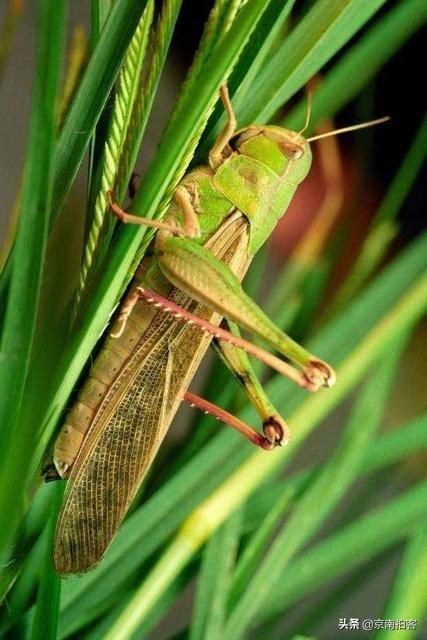
The locusts in our area were often found in the wasteland and along the riverbank's grass. I rarely saw locusts eating crops when I was a child. Grasshoppers usually ate the leaves of corn. Sometimes, a whole corn leaf would be devoured. Grasshoppers are actually a type of locust.
Locust tails resemble a cone, and they are very hard and can close. They lay their eggs in the soil; I have seen one locust lay its egg vertically downwards. Locusts are a favorite treat of chickens; they chase after them relentlessly. Grasshoppers, on the other hand, are a delicious treat. When we were kids, we'd catch grasshoppers in the fields during autumn holidays, and they could even be sold for money. We'd deep-fry them, and the crispy wings were a delight. Nowadays, we rarely see locusts or grasshoppers in the fields and wasteland; I think it's the result of agricultural chemicals.