Carefully Treated for a Month, Trumpeter Swan Returns to the Blue Sky and Water
An albino mute swan, injured by intestinal inflammation and wing injuries, fell from a 20-plus-story residential area, and kind people reported for help. Wildlife rescue personnel carefully treated this national secondary protected animal, and it was released into North Longhu Lake yesterday to return to the blue sky and water.
At approximately 12:30 PM on February 25, 2020, Ms. Fu, who lived in Hanfei Jinsha International Community, saw a community cleaner holding a large white goose standing there in front of Building 4, so she approached to check. At first, Ms. Fu thought the aunt was holding a self-raised goose. After asking, she found out that the goose had fallen from the sky, and as a kind person who loved wildlife, she immediately reported it.
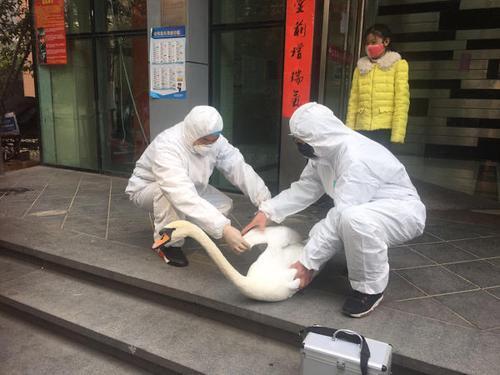
After receiving the report, police officers from the Zhengzhou Forest Public Security First Police Station arrived. After identification, it turned out to be a national secondary protected wild animal – the Trumpeter Swan. At that time, the swan was sluggish and lethargic, and the police suspected that the swan may be sick or injured, so they contacted the Zhengzhou Forestry Bureau Wildlife Rescue Station.
Station Director Dong Chaowei arrived at the scene and conducted a preliminary examination of the swan, discovering that its leg was injured and its wing was injured, and it suffered from intestinal inflammation, indicating that it had not eaten for a long time and fell from the sky due to physical exhaustion during flight. Subsequently, staff and police together took the swan to the Zhengzhou Wildlife Rescue Station for careful treatment.
Mr. Dong told reporters that Trumpeter Swans are migratory birds, with populations mainly in Southern Europe and Western Europe, particularly in Italy and the Netherlands. Its body length is generally between 1.2 meters and 1.5 meters, with a slender neck, and because of the prominent wart-like protrusion on its forehead, it is called a Trumpeter Swan.
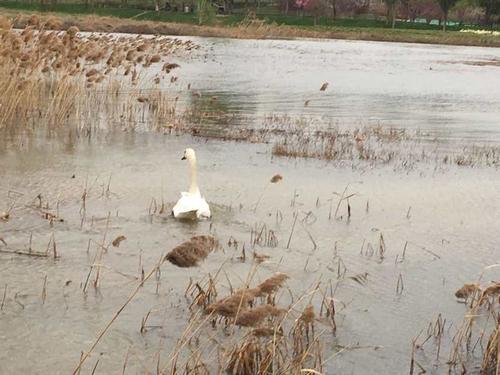
These swans mainly inhabit open lakes, river bays, ponds, reservoirs, bays, marshes and slow-flowing rivers and their banks with abundant aquatic plants, including the roots, stems, leaves, buds and seeds of aquatic plants, and occasionally eat soft-bodied animals and insects and small fish. Trumpeter Swans' migration routes extend from the Mediterranean Sea and Asia to South Asia, not passing through Zhengzhou, so it is rare to appear in Zhengzhou.
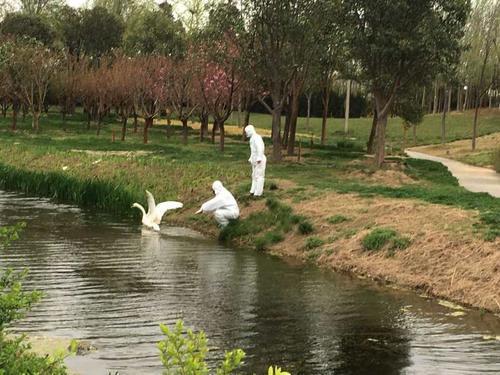
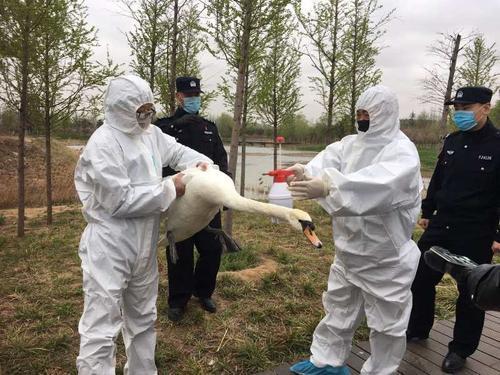
After careful treatment by the rescue station staff for a month, the swan recovered well and met the criteria for release. At 3:00 PM on March 26th, staff from the Zhengzhou Wildlife Rescue Station, together with officers from the Zhengzhou Forest Public Security First Police Station who participated in the rescue of the swan, took it to North Longhu Lake for release.
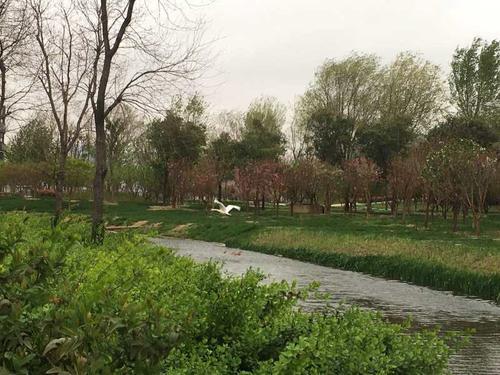
Forest Public Security Police reminded citizens that if they see swans in North Longhu Lake, they should not feed them closely, should not scare them, there is plenty of grass and food now, they have food, especially kite flyers, they should stay away from them, as the kite lines are too thin, and the swans cannot be seen when they fly high, and there have been cases of swans being injured by kite lines every year!
/