Ten Endangered Animals of China
1Ancient Treasures: Giant Panda
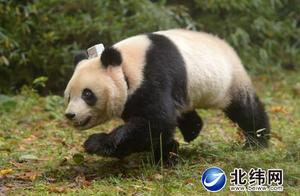
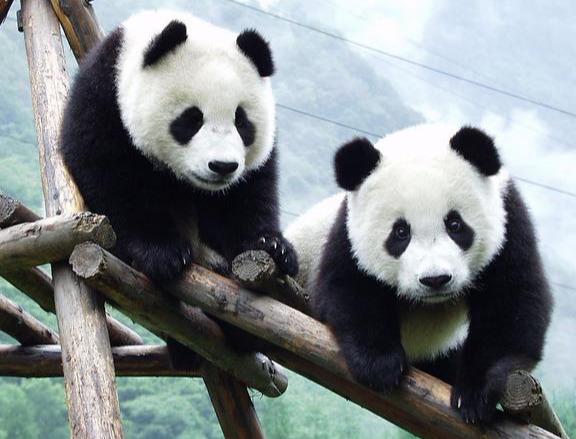
Giant pandas are primarily herbivorous animals of the Order Carnivora. They are not only rare and endangered, but also very ancient, known as 'living fossils'. They are contemporaneous with extinct animals such as the saber-toothed tiger, woolly mammoth, and tapir, all of which became extinct due to the encroachment of glaciers. Unlike other animals, the giant panda has managed to retreat into secluded valleys. Currently, it is found only in 40 counties in Sichuan, Shaanxi, and Gansu provinces of bamboo forests, leading a secluded life.
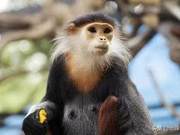
2Snout-nosed Blue Monkey: Golden Snub-nosed Monkey
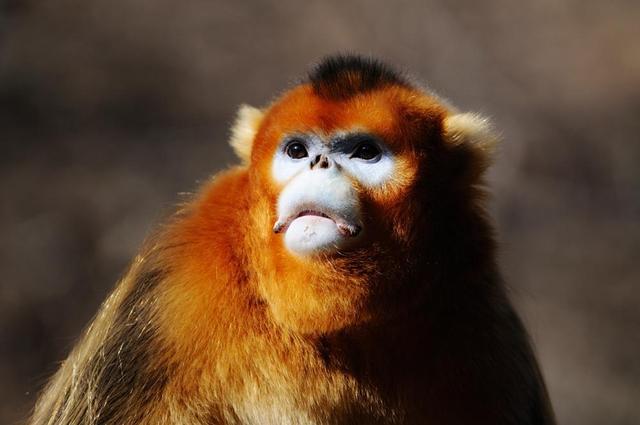
There are three types of golden snub-nosed monkeys in China, found in Sichuan, Yunnan, and Guizhou. We are most familiar with the Sichuan golden snub-nosed monkey. The Sichuan golden snub-nosed monkey is distributed in Sichuan, Shaanxi, Hubei, and Gansu, living in groups in the deep mountains, living in groups and in pairs. They wear golden 'robes' on their backs, climb trees, and jump, as if flying. When the golden snub-nosed monkey was first named, because of its snub nose covered in golden hair, the animal Edward Mr. was inspired by the wife of European knights with a snub nose and golden hair, Lock Anna, so he named the golden snub-nosed monkey after this beautiful woman.
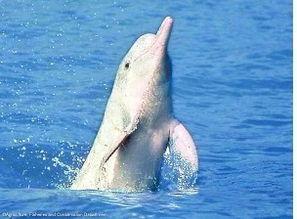
3Yangtze River Oddities: Baiji Dolphin
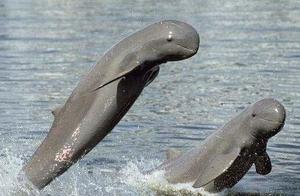
The Baiji dolphin is a rare aquatic animal unique to the Yangtze River. There are 70 species of river dolphins in the world, only 5 of which are freshwater. This freshwater whale is found in a narrow distribution range in China, and is older and rarer than the giant panda. The Baiji dolphin has a delicate figure, smooth skin, a long snout like a sword, and a body like a spindle, with small eyes and small ears. More than 130 small teeth are distributed on its lower jaw, and there is a round nostril above the left side of its head. It exchanges air every 20 seconds.
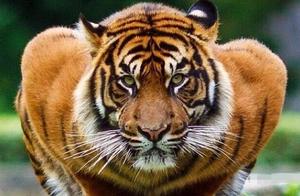
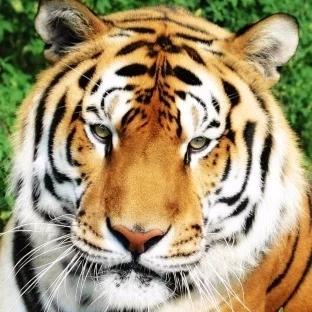
4Spirit of China: South China Tiger
The South China tiger, also known as the 'Chinese Tiger', is a subspecies unique to China. It was the most widespread and numerous subspecies, but it disappeared from China. There are only one species of tiger in the world, and all are found in Asia. In the past, there were eight subspecies: Bengal tiger, Northeast tiger, Java tiger, South China tiger, Caspian tiger, Bali tiger, and Sumatran tiger. But the last three subspecies disappeared one after another. The Chinese Xinjiang tiger ((yet to be clearly identified which subspecies it belongs to)) went extinct in the early 20th century.
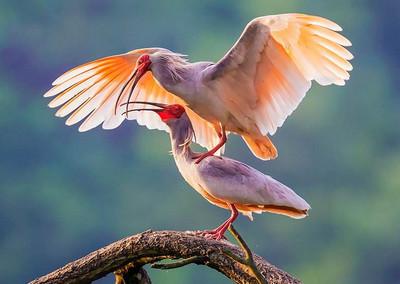
5Pearl of the East: Eurasian Lynx
Asking about the rarest bird in China, the Eurasian Lynx is often listed among the best. It is called 'Oriental Pearl' by animal, a formerly thought extinct species of wading bird, distributed in China, Korea, Japan, and Russia, but disappeared after the 1960s. Has the Eurasian Lynx really disappeared? In the late 1970s, Chinese animal began to search for the Eurasian Lynx. In 1981, they finally found seven Eurasian Lynx nests in Yaojiagou, Yancheng County, Shaanxi Province, which caused a sensation all over the world.
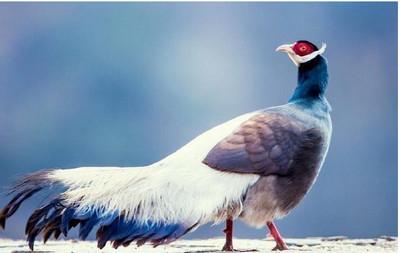
6Bird of the Country: Brown Eared Hare
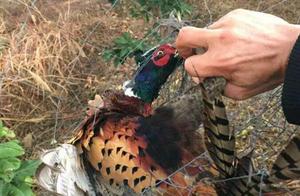
The Brown Eared Hare is a rare bird found in Qianpu County, Shanxi Province, Xiaowutai Mountain, and Beijing Mentougou, because of two white ear fluff like horns, or some call it horn chicken or ear chicken. The tail feathers are raised and drooping, like a horse's tail, so it is named horse, horse belongs to the horse family, there are four species, all produced in China, the hidden horse, white horse, blue horse, and brown horse. Many animal suggest that the Brown Eared Hare should be designated as the national bird of China. Currently, the Brown Eared Hare is a 'vulnerable' species in the International Union for Conservation of Nature (IUCN) Red List, a Grade I protected animal.
7Fossil Species: Chinese Alligator
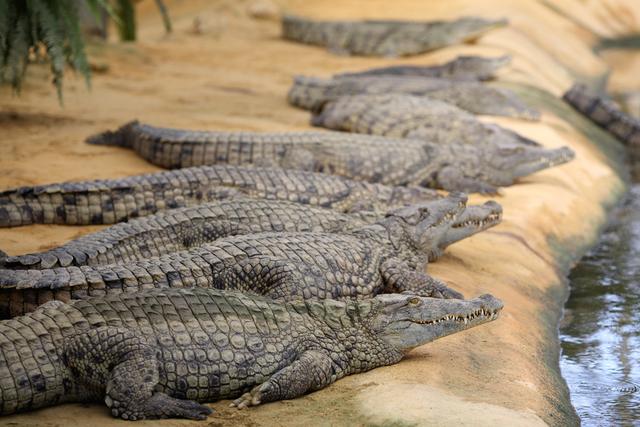
The Chinese alligator is the only species of alligator in China. There are 25 species of alligators in the world, and only two: the alligator and the Chinese alligator. However, as the largest alligator (10 meters long), the alligator went extinct several hundred years ago. Now, the Chinese alligator is unique in China, and it is also the only remaining ancient species that survived the northern temperate zone.
8God Bird of the Plateau: Black-necked Crane
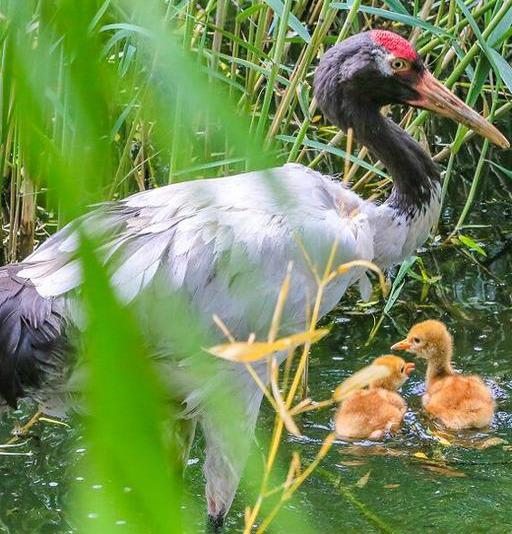
The Black-necked Crane is the only highland crane in the world. It is the 'god bird' in the eyes of the Tibetan people. It is also the latest species of crane recorded in the 15 species of cranes in the world. It was discovered by Russian explorer Przhezalovsky in Qinghai Lake, China in 1876. Black-necked cranes migrate to Tibet in summer, migrate to Guizhou in winter, and some fly over the Himalayas to spend the winter in Bhutan.
9Blood on Snow: Tibetan Antelope
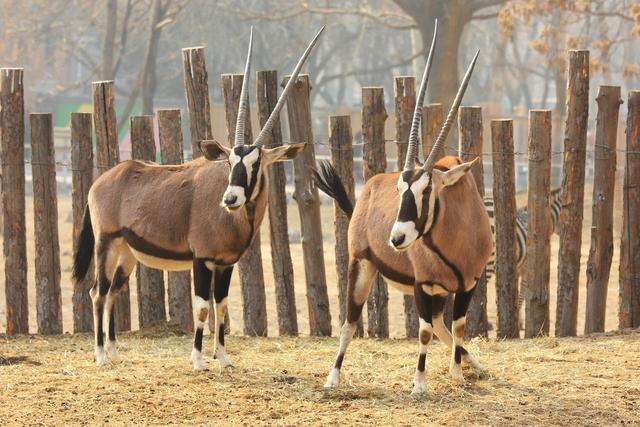
In recent years, the Tibetan antelope has attracted worldwide attention. The main reason is the consumption demand stimulated by the fashion industry for 'Tibetan antelope velvet scarves', which has led to the mischief of poachers. In addition, some gold miners also hunt and kill Tibetan antelope, leading to a decline of nearly 10,000 animals per year in the frigid areas. In order to combat poaching, in recent years, anti-poaching forces have been fighting to protect Tibetan antelope and other wild animals in Qinghai, Xinjiang, and Tibet, led by the 'Wild Yak Team', and two heroes sacrificed their lives for this.
10Returned as a Gift: Four Silenced
'Four Silenced' is a common name for the four-horned deer. As a wetland deer unique to China, it went extinct in China in 1900. Fortunately, there are a small number of populations in Europe. After a century of protection, the deer has been restored. The deer is a wetland animal. Because of its adaptation to wetland environments, it formed a special form, known as 'Four Silenced'. The horns are like deer, the faces are like horses, the hooves are like oxen, and the tails are like donkeys. The four-horned deer is a Grade I protected animal. The Four Silenced is a 'vulnerable' species in the International Union for Conservation of Nature (IUCN) Red List.