Why Zebras Have Not Been Domesticated? Can Zebras Be Tamed?
Zebras have not been domesticated in the past, but were attempted to be domesticated by Europeans in the modern era, but all attempts failed.

Domestication is a long process, not achieved in one go, and requires several generations of selection to turn wild animals into domestic animals. The earliest places where wild animals were domesticated are the earliest places where civilizations emerged, while the history of civilization in Africa, where zebras live, has developed very slowly.Except for the brilliant ancient Egyptian civilization in North Africa, the civilizations in sub-Saharan Africa developed very slowly. Since there was no need to domesticate zebras, the indigenous African tribes did not need to domesticate zebras.
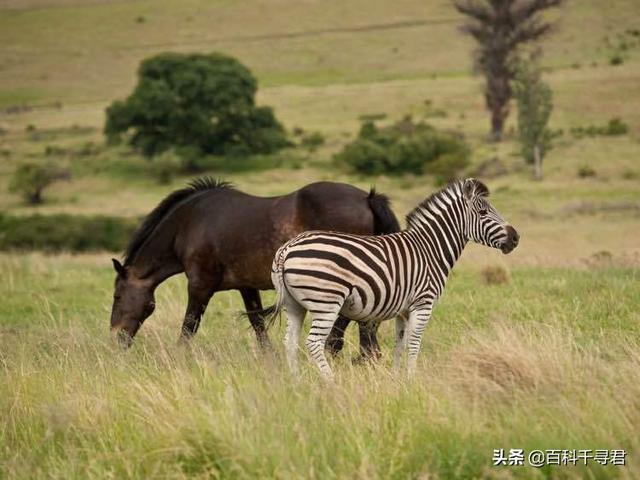
Horses belong to the order Perissodactyla, and there are only three orders currently existing – the order of horses, the order of rhinoceroses, and the order of tapirs, with a total of 17 species, of which the order of horses has 8 species.The last wild European wild horse died in Ukraine in 1876, and the last purebred European wild horse died in the Saint Petersburg Zoo in Russia in 1909.
Later, people tried to resurrect the European wild horse and breed similar breeds to the European wild horse, such as the Hackney horse and the Conick Polish pony, but all were merely similar.
Although the European wild horse has disappeared, its domesticated breed, the horse, is hailed as 'the most significant domestic animal to humanity,' and the horse is an indispensable symbol of civilization.
Zebras and domesticated horses are not very different in terms of their advantages.
Zebras belong to the order Perissodactyla, which has a body height of 1.2-1.6 meters and a weight of 175-450 kilograms.
Wild horse distribution map
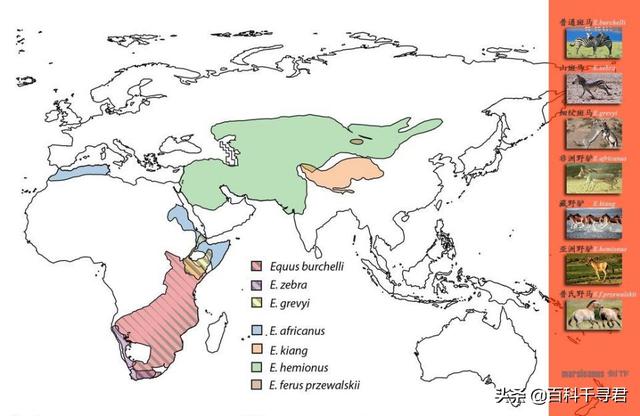
respectively
Common zebras, mountain zebras, narrow-striped zebras, African wild ass (ancestor of domestic donkey), Asian wild ass, Tibetan wild ass, Plachimontes wild horse, domestic horseThe first three are the zebras we often call zebras. The patterns and body shapes of these zebras are very different, and their body shapes are also different.Common zebras, also known as plains zebras, are the most numerous and widely distributed zebras, found in East Africa and Southern Africa, with about 500,000 individuals, shoulder height 1.27-1.4 meters, and weight 175-320 kilograms.
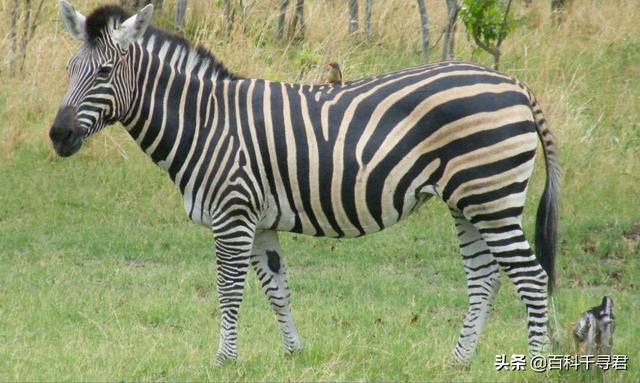
Mountain zebras are found in Southern Africa, with 2.5-3,000 individuals in the wild. Shoulder height 1.2-1.5 meters, and weight 240-380 kilograms.
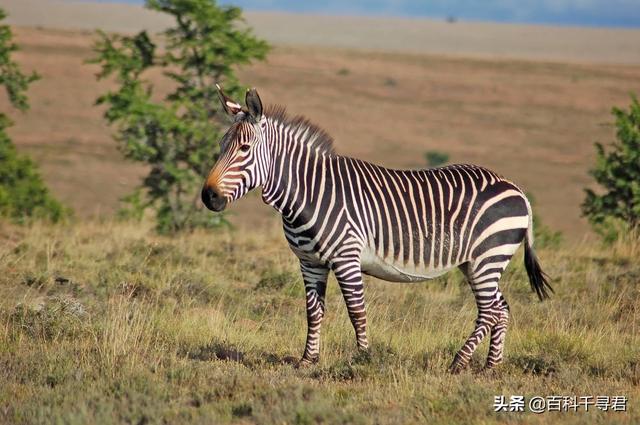
Narrow-striped zebras are the largest zebras, with only about 2,500 individuals, shoulder height 1.4-1.6 meters, and weight 350-450 kilograms.
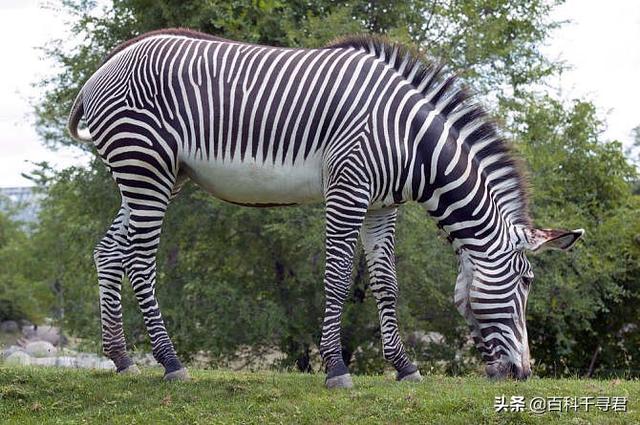
The shoulder height of zebras ranges from 1.2 to 1.6 meters, and the weight is 175 to 450 kilograms. Compared with some ancient horse breeds,
It can be seen that zebras and most domestic horses are similar in body size, so it is not correct to say 'zebras are smaller than horses.' Zebras can reach a speed of 70 kilometers per hour, which is not slower than horses.

Moreover, zebras have an advantage over horses in terms of their resistance to stinging flies.Stinging flies are widely distributed in the sub-Saharan African continent and are the main carriers of animal anthrax and sleep disease.
In the modern era, European explorers entering Africa attempted to domesticate zebras as pack animals. They could not withstand the invasion of stinging flies, nor could they adapt to the African climate. No matter how good the horses were, they would become sick and even die in large numbers when they entered Africa.Zebras' bad temper is the biggest obstacle to domestication.In 1871, Friedrich Selous came to Africa and wrote a book 'Hunter's Pause' about his experience, which was very popular in Britain and triggered a frenzy of European attempts to domesticate African animals.
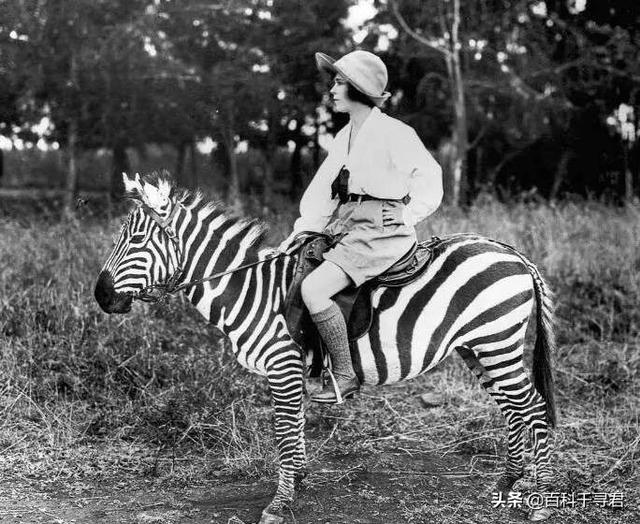
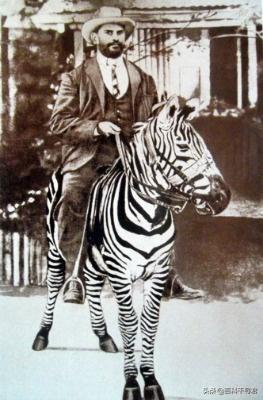
In 1891, German man Heinz captured a male zebra and rode it for two days. In 1907, a doctor named Roseno Ribero in Nairobi, Kenya, rode a zebra to make house calls.
In the mid-19th century, George Gray brought zebras to New Zealand's Kawau Island to pull carts.
Among the many attempts to domesticate zebras, the most famous and successful one is by the second Earl of Rothschild, a British bank and politician, and a quirky animal scientist. He spent a lot of effort training zebras to drive carriages, and finally arrived at Buckingham Palace with six zebras, thus proving that zebras could be domesticated.
However, this is only domestication, and there is still a big difference.
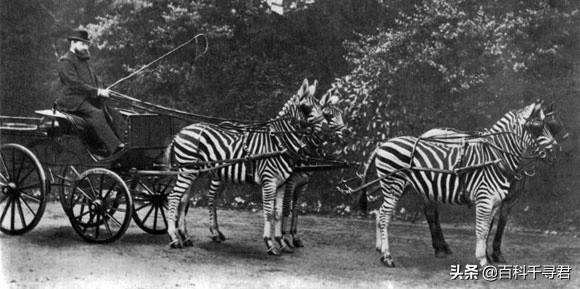
Rothschild also found two problems that made him think zebras were not suitable for riding. First, the zebras' bodies were not as strong and resilient as horses, and they couldn't carry heavy loads for long distances. They were most suitable for pulling carts. Second, zebras were notoriously stubborn, which was the biggest obstacle to domesticating zebras.Zebras are a herd animal, with a small group of 10-20, led by a strong stallion, with a group of female zebras and zephyr. The female zebras also have a hierarchy, with the most powerful female at the front and the weaker ones at the back. Zephyr have the same status as their mothers.
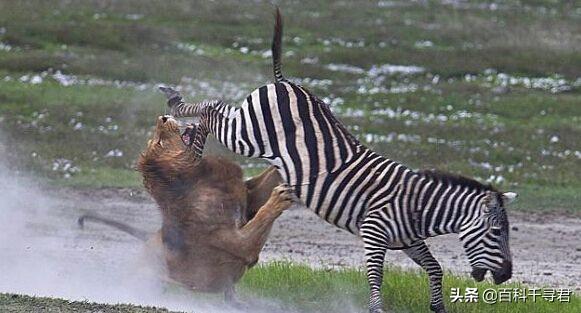
When facing danger, the leading stallion will step forward to protect the group. The stallions will kick and bite each other, except for kicking. When the stallion bites, they can bite the lion's muzzle and teeth, or bite the leopard's head and bite the lion's muzzle and teeth.
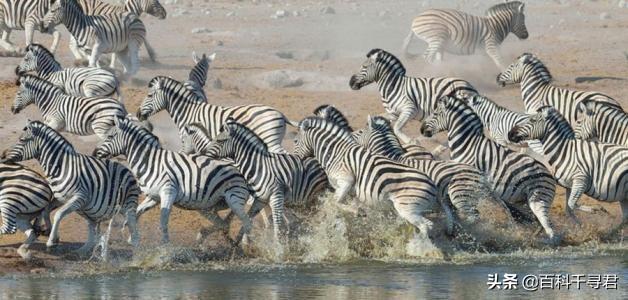
Zebras can kick the lion and leopard, injure the lion and hyena, and even bite the lion's and hyena's muzzle. Zebras are more ruthless towards zebras. Adult male zebras will kill non-blood zebras, kicking or biting them to death in the water.In the 1980s in Zimbabwe, a group of zebras were captured, of which 16 zebras were loaded onto a truck and transported to their destination. People were surprised to find that only one zebra survived. The other zebras died in each other's kicking.
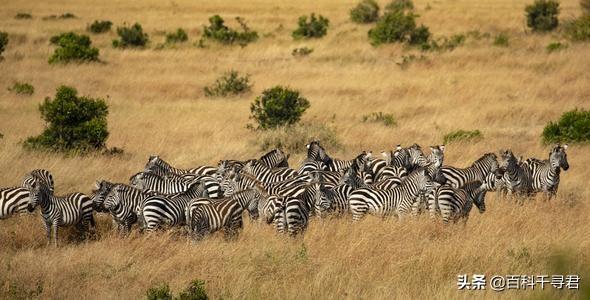
In the 1970-1980s, the Zimbabwean National Parks and Wildlife Administration tried to domesticate zebras as pack animals, but the project was eventually abandoned because it took a lot of time and effort to reduce the zebras' bad temper, and achieving this required abusing them.Can zebras be domesticated?
Zebras are a herd animal and have a basis for domestication, but domestication is a long process, and it takes several thousand years or even tens of thousands of years of successive generations of selection to completely control the breeding process of animals and create different breeds according to human needs.
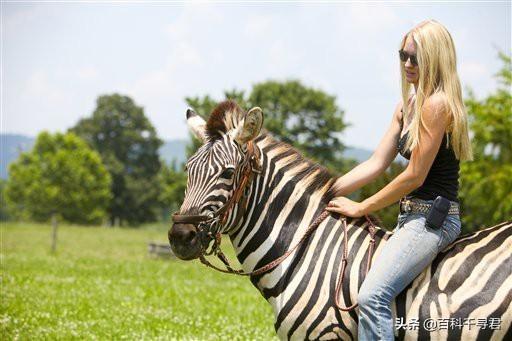
A teenage girl named Shay Eeman in Virginia, USA, bought a zebra and trained it to ride. She patiently used various gentle methods to make the zebra docile.
This shows that zebras are 'soft but not hard' and may be because the zebra she bought had a good temper.
Therefore, it is necessary to be patient with domestication.
Each zebra has a different personality, so we selected a large group of zebras, from which we selected individuals with a more docile temper, and let them reproduce, and then selected individuals with a docile temper from the next generation. After several generations, we can gradually improve the zebra's bad temper. If we want to breed large zebras, we can select strong individuals, but strong zebras and docile zebras may not be the same group, which is a little troublesome, but after several generations, we can solve it.
·“”

1
2
3