Giant Arctic Hare
Arctic hare (scientific name: Lepus arcticus) is a mammal of the rabbit family and rabbit genus. The Arctic hare has a large body size, with the head larger and longer than that of an ordinary rabbit, shorter ears, long legs, and very strong and flexible limbs. In summer, the back of the body is light gray, and in winter, the back of the body is white.
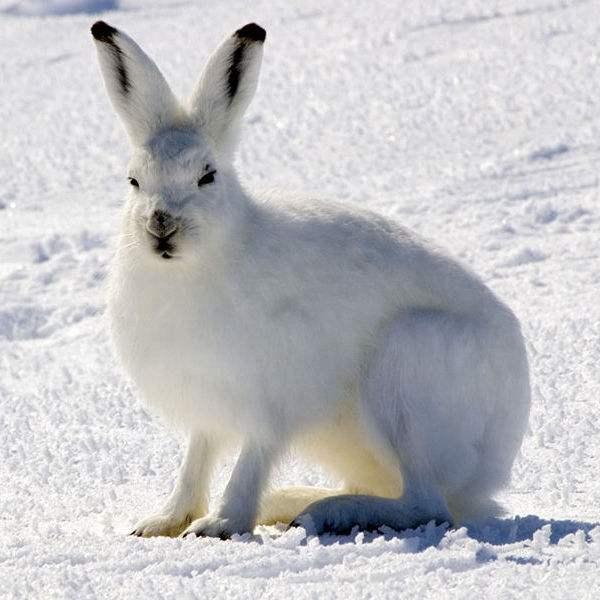
Arctic hares are social animals, with sensitive noses and ears, not timid and not cowardly, easy to tame, mainly feeding on moss, plants, roots and trees, and occasionally eating meat. They give birth to one litter a year, with 2-5 offspring per litter. They live in the cold northern regions of North America, distributed in Canada and Greenland.
Arctic hares typically have a body length of 55-71 cm and a weight of 4-5.5 kg. The body size is large, similar to that of a fox. The head is larger and longer than that of an ordinary rabbit. The ears are shorter, the legs are long, but the limbs are very strong and flexible.
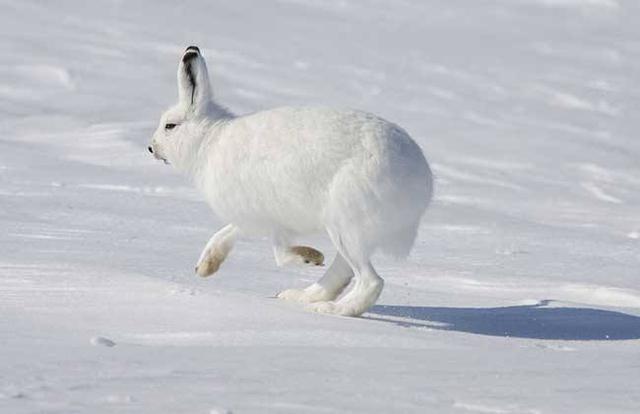
Arctic hares have broad feet and thick fur, which can adapt to cold snow and facilitate running and jumping on snow. They can also effectively reduce the pressure on the soles of the feet, so as not to cause excessive sinking when moving. Therefore, in North America, they are nicknamed ‘snowshoes’. The tail is of medium length, with a messy base and mixed long hair. Arctic hares have a considerable amount of hair, and they have two layers of fur. The lower layer of fur is short and dense, which can keep warm, and the upper layer of fur is relatively long, soft and fluffy, which can act like a shield, preventing frostbite and preventing dirt from sticking. In summer, the back of the body is light gray, and the neck and chest are dark blue-gray; in winter, the back of the body is white, and the ear tips are black.
Arctic hares are social animals, and a typical Arctic hare group can range from 20 to 300 individuals. Arctic hares communicate with each other by using body language to convey information, and also rely on their sense of smell to detect danger. They also leave special olfactory marks to provide companions with recognition information. The most important communication method is their innate good hearing. Arctic hares’ ears, according to their different positions and postures, can transmit different information, and use these clever methods to achieve communication with companions.

Arctic hares are not timid and easy to tame. On average, the speed of Arctic hares can reach about 40 miles per hour. When encountering danger, Arctic hares will stand up and jump quickly with only their hind legs, like kangaroos.
Arctic hares feed on moss, plants, roots and trees, but some Arctic hares occasionally eat meat. They first smell the location of the food, then use their strong and sharp claws to dig out the food, and also use their claws to dig out pits to store food. “