Common Ear Radish Snail
Radix auricularia, also known as,, belongs to the genus of, a species of the,. The shell is large, with an average height of 24mm, a width of 18mm, and a height of 21mm at the shell mouth, and a width of 14mm at the shell mouth. The shell is thin, or slightly transparent, and on live specimens, there are irregular patterns formed by black pigments on the outer membrane of the mantle. The shape is ear-shaped. It is an intermediate host of many parasites. Due to its thin shell and egg-shaped structure, the last spiral layer includes 90% of its volume. The surface is shiny, and the spiral is wavy. The color of the shell is yellow, beige or brown.
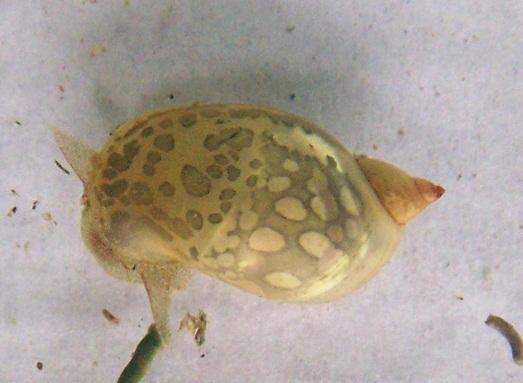
This species has strong adaptability and prefers waters with abundant aquatic plants. It often crawls or crawls on the seabed, rocks or aquatic plants, or swims underwater. When encountering adverse environments, it retracts its body into its body, secretes a large amount of mucus to seal the shell mouth, or hides in aquatic plants or digs into the mud. When the environment is suitable, it re-activates.
Female and male have the same body form, but use external fertilization, except in winter, they can lay eggs. The water temperature of 15-25℃ is most suitable. After laying eggs, they are wrapped in a gelatinous transparent egg sac. The eggs are generally arranged in 3-4 rows, with the upper and lower eggs overlapping, and the number of eggs laid each time varies from 10 to 100. After the eggs hatch, when the water temperature is 16-17℃, it takes 14-15 days to hatch young snails; when the water temperature is 22-23℃, it takes 9-10 days to hatch young snails. The young snails are very small, about 1-1.5mm. They grow quickly in summer, and it takes about 2 months to reach sexual maturity. After mating, they begin to lay eggs in 4-7 days. They feed on diatoms and aquatic vascular plants.
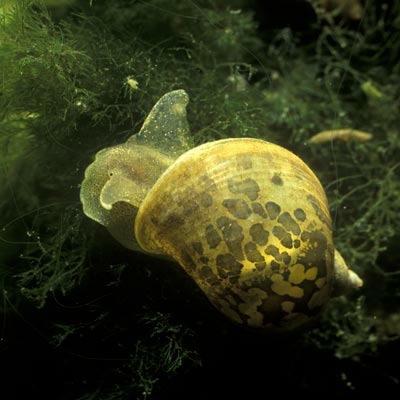
The shell of Radix auricularia is large, up to 32mm. The shell width can reach 29mm, with 4 spiral layers, the spiral part is very short and sharp, the body spiral layer expands greatly, forming the majority of the shell; the shell surface is brown or tea-colored, with obvious growth lines, or has 'hammering' concave marks. The shell mouth is large and expands outward in an ear-shaped manner, with a thin outer edge in a semicircle, and a smooth inner edge that covers the body spiral layer, with the axial edge slightly twisted into an 'S' shape. The umbilical hole is located behind the fold.
Oviparous, except in winter, it lays eggs. The eggs are wrapped in egg sacs, and the number of eggs varies with the size of the egg sac, generally arranged in overlapping rows, with about 70 eggs. It is an intermediate host of liver flukes, and also an intermediate host of Turkish-bird-biting flukes and Package-like flukes, which cause human pityriasis.
This species has a large morphological variation, especially in the juvenile stage, the body spiral layer is not very expanded, the spiral part is higher, so the shape is often not ear-shaped. With growth, the ratio gradually changes.
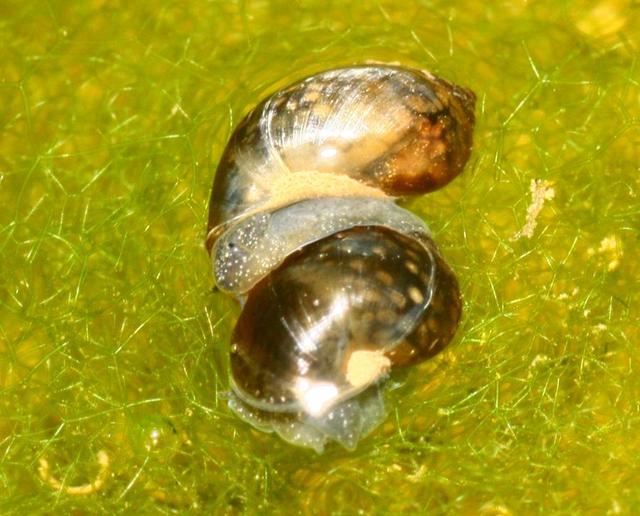
It lives in the shores of swamps, small puddles, ponds, lakes, reservoirs, streams and salt lakes, hot springs, etc. It is widely distributed in China, including Heilongjiang, Jilin, Liaoning, Inner Mongolia, Hebei, Henan, Shandong, Shanxi, Shaanxi, Gansu, Qinghai, Xinjiang, Tibet, Anhui, Jiangsu, Zhejiang, Jiangxi, Hubei, Hunan, Fujian, Guangdong, Guangxi, Sichuan, Yunnan and other provinces.