Pond Raccoon
Raccoons, *Procyon lotor* (Linnaeus 1758), are a species of animal belonging to the order of mammals, the subclass of true hairy animals, the order of carnivores, and the raccoon family and raccoon genus. They are native to North America and are currently considered a non-threatened species. Raccoons are characterized by a dark patch of fur around their eyes, a small body size, and a body length of about 40 to 70 cm. Because they often forage for fish by the river and wash their food in the water, they are called raccoons.
Raccoons' paws are very sensitive, and the tactile cells on them are quite abundant. After contact with water, the sensitivity of the slow adaptation receptors on their paws increases, allowing raccoons to measure the weight, size, and material of their food by their paws. There are 4 subspecies of raccoons.
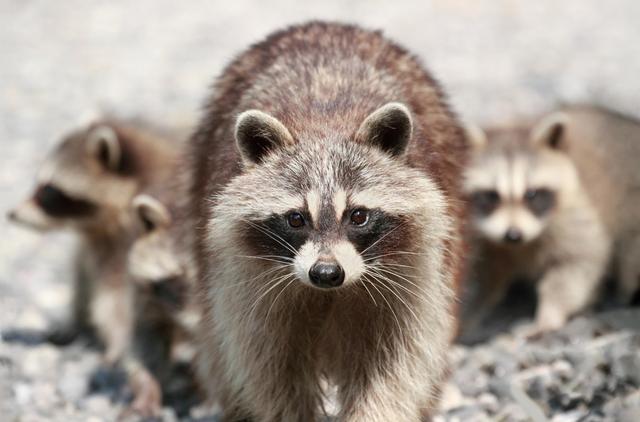
The most distinctive feature of raccoons is the black area around their eyes, commonly known as 'black eye circles', which contrasts sharply with their white facial color. The ears are slightly rounded, with white fur on top, typically ranging in color from dark to light brown, and some are brown and black or pale yellow, and occasionally albino varieties. In winter, the fur grows to 2-3cm. They have five toes on each foot, often separated, which allows them to grasp things, and their original snout teeth have evolved into teeth for crushing things.
The raccoon's tail is long, with black and white ring patterns, and a few have yellow and white patterns, about 5-7 rings long. Arboreal fluffy-tailed raccoons and ground-dwelling long-nosed raccoons both have ringed tails. The long tail of the curled-tailed raccoon (over 1.5-2.0 times its body length) has no ring pattern.
The raccoon's body length is 40 to 70 cm, the tail is 20 to 40 cm long, and the shoulder height is 23-30 cm. Adult raccoons have a wide range of weights, depending on their habitat, ranging from 2 to 14 kg, but generally between 3.5 to 9 kg. Very small raccoons were found in southern Florida, and larger raccoons in the north. In the early winter, a raccoon's weight doubles by the time spring arrives due to fat storage.
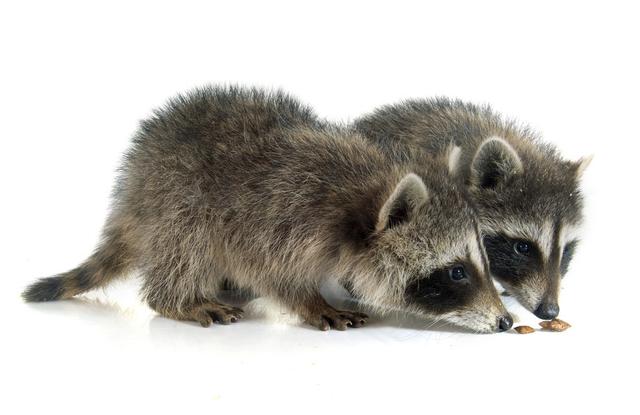
Raccoons' habitats must be near water, and they like to live in humid forest areas, but they can also live in farmland, suburbs, and urban areas.
Raccoons generally build nests in trees, but they also use burrowing animal's nests or live in mines, abandoned buildings, barns, garages, sewers, or people's houses.
Raccoons are 'swimming champions' and like to live in forests near rivers, lakes, or ponds. They usually travel in pairs or family groups. Raccoons mostly rest in trees during the day and come out to activity at night. They often move around in the trees, and their nests are built in trees. During the day, they sleep in hollow trees and rock or ground holes. When threatened by black bears, they will run to the treetops to hide. In winter, northern raccoons will go into tree holes to hibernate.
Raccoons are nocturnal. They come out after midnight, which the Canadians call 'mysterious little thieves'.
Although they belong to the order Carnivora, raccoons are omnivorous. Their diet in spring and early summer is mainly insects and worms. In late summer and autumn and winter, they prefer to eat fruits and nuts, such as persimmons and walnuts. Raccoons rarely hunt active or large prey, such as birds and mammals. Raccoons prefer to catch easier prey, especially fish, amphibians, and bird eggs.
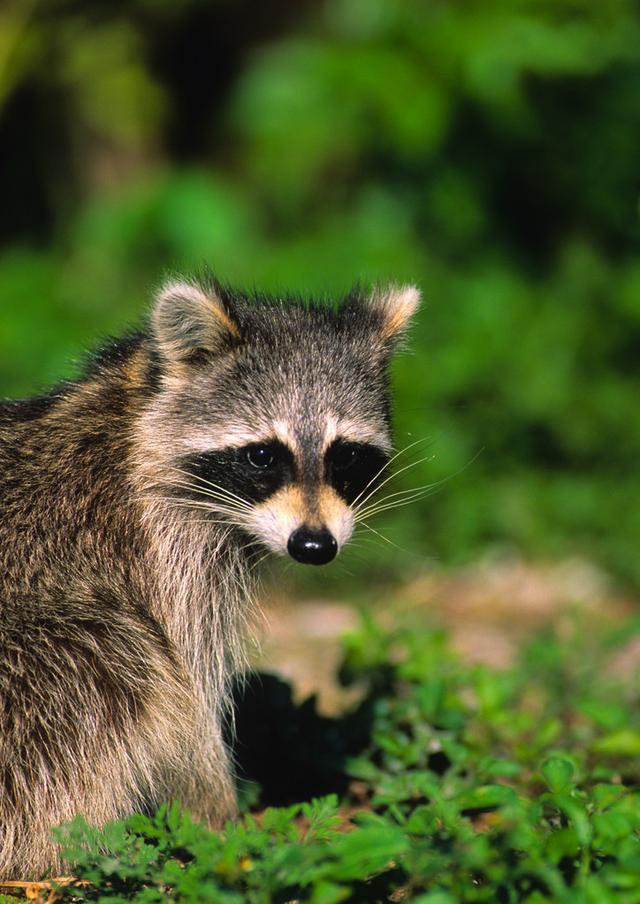
Raccoons only mate in the breeding season. Male raccoons will mate with several female raccoons simultaneously, but female raccoons usually accept only one suitor. Male raccoons are often noisy and fight each other during the breeding season.
The breeding season for raccoons is in January or February, the gestation period is 63-65 days, and they give birth to one litter per year, usually 3-7 young, but usually 4. They generally live in tree holes, ground holes, or caves. Young raccoons can wean by late summer and then begin to live independently. Raccoons do not hibernate, but they hide during cold winters.
Raccoons generally only live for a few years; the longest known lifespan of a wild raccoon is 12 years.