How Amazing Are Animal Defenses? Bee-Wolf Larvae Produce 'Toxic Gas' Before Hatching
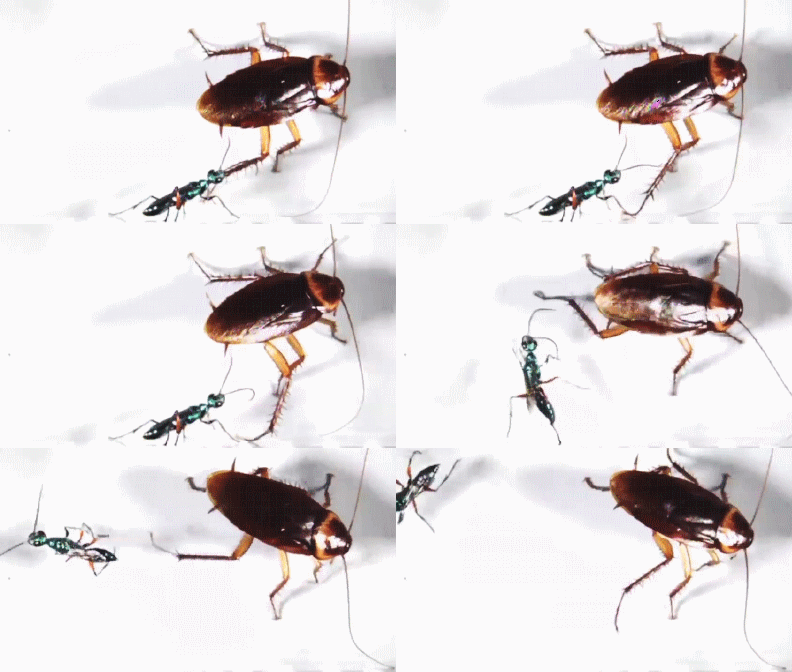
In nature, animals will do anything to survive.
Wasps have a remarkably obvious defense mechanism, such as stingers, but their offspring, a soft, helpless egg, cannot move, and is very fragile, easily attacked by fungi or other organisms. To survive in humid underground environments, there is a type of wasp that has learned a magical defense technique – toxic gas.
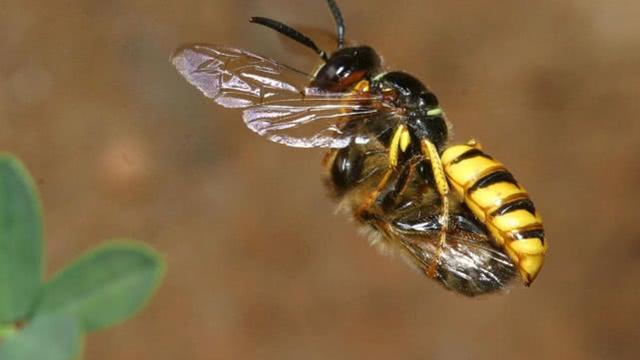
Mom brings food (bee) home
New research shows that this wasp has evolved an incredible way to protect its offspring; these eggs are like live gas pellets, producing gases that kill fungi.
This is a solitary wasp with the habit of capturing bees to store food for its offspring. It uses its stinger to paralyze bees and then drags them into a dirty cave to lay eggs, with the eggs feeding on the bees.
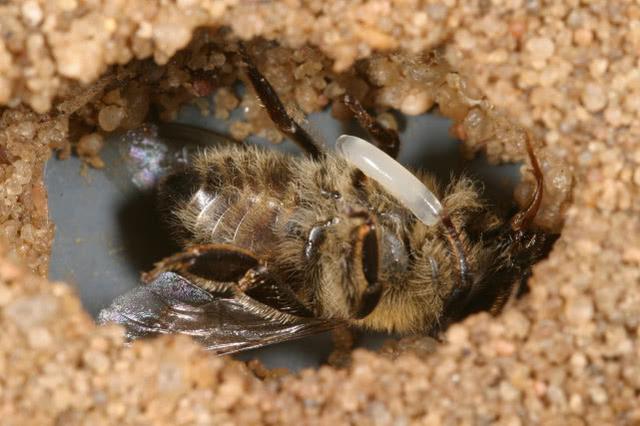
Nursery Teacher: Food (bee) and egg
Hunting bees' habit, therefore also called 'bee-wolf'
The 'nursery room' chosen by bee-wolf is generally humid and warm, although it is a hidden good place, but also conducive to the growth of mold.
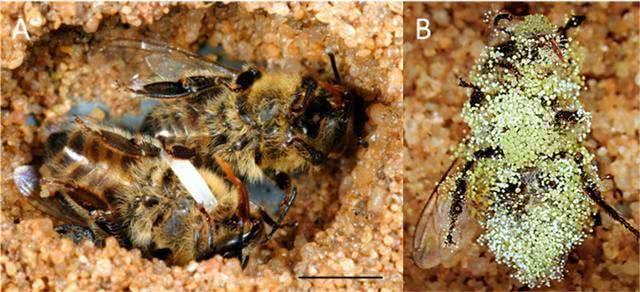
As we all know, when food is not eaten, we often put it in the refrigerator to preserve it. How does the bee-wolf's 'nursery room' protect food and itself when it is hot and humid, and does not easily store bee corpses, and has no refrigerator?
Contrast: Left side food and egg, right side food
The key is the egg, which produces nitrogen monoxide (NO).
To get the answer, German scientists conducted experiments. They found that bees stored with food and eggs are less prone to mold, which means that the food does not rot mainly due to the egg.
After scientific analysis, it was found that bee-wolf eggs produce nitrogen monoxide (NO), which is a widely used gas, which reacts with oxygen in the air to become irritating nitrogen dioxide. In appropriate doses, it is also an effective antibiotic.
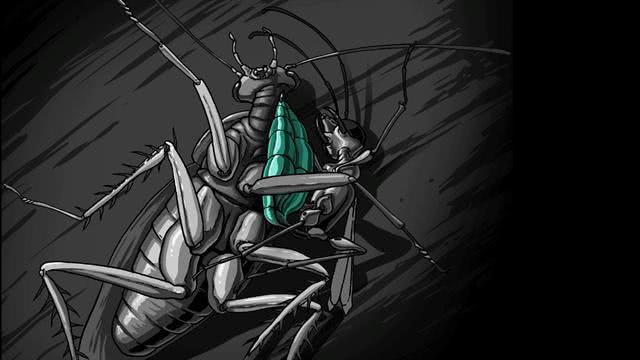
In addition to this gas, bee-wolf also pre-preserves paralyzed bees to produce secretions that help dehydrated prey, making bees less susceptible to fungal infection.
Finally
Bee-wolf is not the only insect that uses gas defense.
Scientists also found a parasitic bee that can produce a gas to disinfect the 'daycare' center, the only difference is that the protected object is larvae instead of eggs.