Many things often have a dialectical nature, how to correctly recognize dogs' protective instincts?

As a pet industry worker, Xiao Mei usually pays more attention to pet-themed films and television series. Recently, she discovered a pet-themed movie called 'Love Pet' that was released at the end of last year.
It has to be said that the plot of the film realistically reflects the attitude of pet owners towards pets, and also reflects that pets, as individuals with ideas, can bring healing to owners who are in special environments. This is a very effective thing.
Perhaps the director is too good at using emotional scenes. After watching the whole movie, Xiao Mei didn't realize how many tears she had shed.
However, while watching the drama, Xiao Mei noticed a very interesting plot. The male protagonist played by Chen Wutian, whenever he wanted to do something shy with the female protagonist played by Zhong Xuxi, the female protagonist's German Shepherd – Hao Seven – would mysteriously appear behind him, and through its imposing manner, scare him or subdue him, fully showcasing the protective performance of a guardian dog!
As said before, it's important to think about things. So this time, Xiao Mei wants to discuss with everyone the topic – about the awareness of dogs protecting their masters!
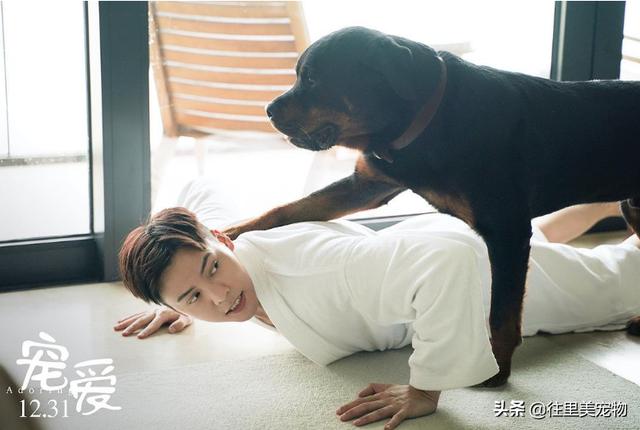
The dog is restrained on the ground by the male actor
Why do dogs have a protective instinct?
The word 'protective instinct' is often heard. It means that when the subordinate is above the superior, the anxious protective psychology is applied to dogs, which is the dog's instinctive reaction and action when the master is in danger or encounters danger.
Then why do dogs have a protective instinct?
To answer this question, we must mention another word – 'wolf nature'.
In modern terms, 'wolf nature' usually refers to team spirit, mainly emphasizing innovation and tenacious fighting spirit, which is an initiative to implement the natural rule of the fittest, optimizing the collective awareness of crisis, in order to survive and develop in the disadvantaged environment and limited resource conditions.
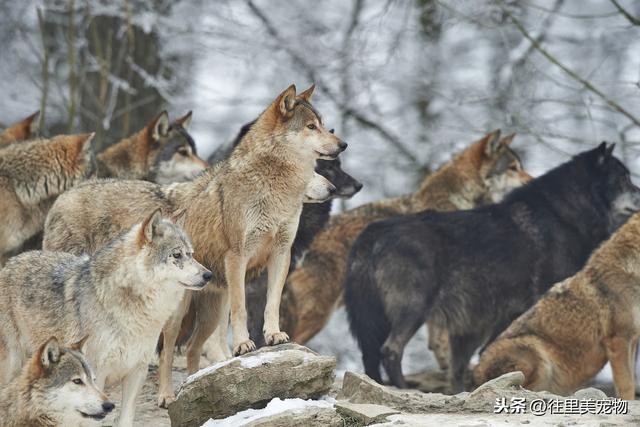
A collective of wolves
However, Xiao Mei's 'wolf nature' here is not the same as this modern interpretation.
As everyone knows, dogs are the descendants of wolves, and wolves are animals with a strong collective consciousness. In addition to obeying the authority of the wolf leader, they will also proactively take on the responsibility of protecting the weak in the group. In the long evolutionary process, dogs seem to have inherited this wolf nature naturally. When they enter a family, they naturally regard every member as someone they care about. When these members are threatened or encounter danger, the dog's inner wolf nature is stimulated, and it will respond with protective reactions and actions. This is the reason why dogs have a protective instinct.
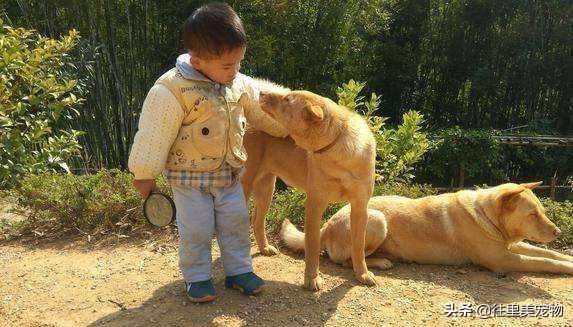
Sometimes, a child with a loyal dog is actually safer than himself
How old do dogs have a protective instinct?
In fact, this question can also be formulated as: In what circumstances are dogs triggered to unleash their inner protective nature?
Similarly, before answering this question, Xiao Mei wants to explain one example for clarification:
For example, a newborn Tibetan Mastiff, when its owner or mother is threatened or encounters danger, even though it is very young, it will still bark at or bite the person threatening it or other animals. However, if it were a different breed of dog, such as Husky or Samoyed, in the same situation, it might hide because of its high fear awareness, or it might lie down and be paralyzed. But in the same situation, the dog may have a stronger protective instinct and will not take action. This is because it's instinctive for dogs to protect what they care about, and it's just a natural response to the threat.
Therefore, it can be seen that the protective instinct of dogs is innate, and it has nothing to do with age. As for whether it can be stimulated in special circumstances, it depends on the breed of the dog. Generally, the protective instinct of guardian dogs is much stronger than that of ordinary family pets, which is mainly due to the different positioning of the dog's identity and the influence of subsequent training.
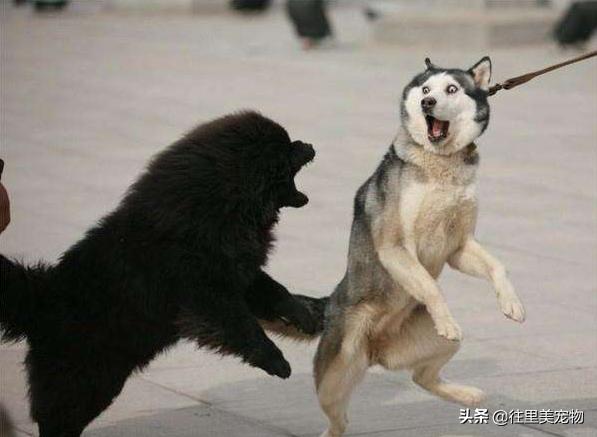
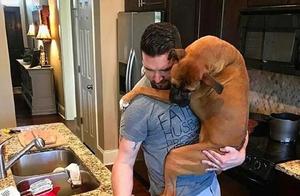
When the owner is threatened, if he is holding an untrained Dobe, the result is often like this
However, let's talk about it. Despite all dogs having a protective instinct, even professional guardian dogs, when the owner is threatened or encountered danger, they don't always respond with the corresponding reaction and action.
This is because in the family, the dog considers itself the biggest boss, and everyone else is its subordinate. When the subordinate is bullied, unless the dog feels that its dignity or humiliation has been challenged, it will not proactively take action!
Therefore, in the daily raising of dogs, the owner should establish his absolute authority, and should not allow the dog to take the initiative. Otherwise, when special circumstances occur, it may not be able to help, but instead, it's like feeding a living ancestor to him!
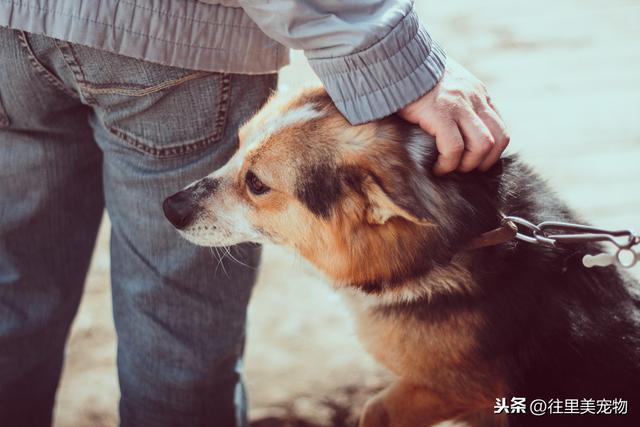
A mischievous dog doesn't seem to react to the master's petting.
Can the dog's protective instinct be strengthened through subsequent training?
Xiao Mei can responsibly tell everyone that this is completely possible! Of course, on the condition that the dog considers the master as a true master, not just a provider of food and drink.
As mentioned above, dogs have a protective instinct naturally. The reason they don't always respond with corresponding actions is because the external stimuli have exceeded the dog's inner fear and the protective instinct.
Therefore, to strengthen the dog's protective instinct, the most important thing is to increase its courage and confidence when facing threats or dangers!
Specific training methods are as follows:
First, the owner holds the leash, and the dog stands on his side. The other hand is ready to pat the dog to give it a reward immediately.
Second, before training, the owner needs to find a friend to discuss with him (her), and ask him (her) to hold a stick or branch, and let him (her) tease the dog from a distance. If the dog makes a barking behavior, this friend should immediately take a retreating action, with a large movement but a short distance (one or two steps or three steps), at this time the owner should reward the dog immediately, praise or give it food.
Third, let this friendslowly and againmove towards the dog, while holding a stick or branch and gently tapping the dog's chest. When the dog's ferocity erupts, this friend should quickly take a frightened action and quickly leave the dog's line of sight. At this time, the owner should reassure the dog and give it a corresponding reward.
Through repeated training like this, the dog's courage and confidence can be greatly enhanced!
However, it is important to note that the friend who helps the owner in training should take action flexibly and follow the principle of 'dog enters, person retreats; dog is fierce, person flees.' At the same time, for different personality dogs, it is necessary to take different provocation methods. For example, for the timid dogs, it is best to tease from a distance and then quickly disappear from the sight of the dog.
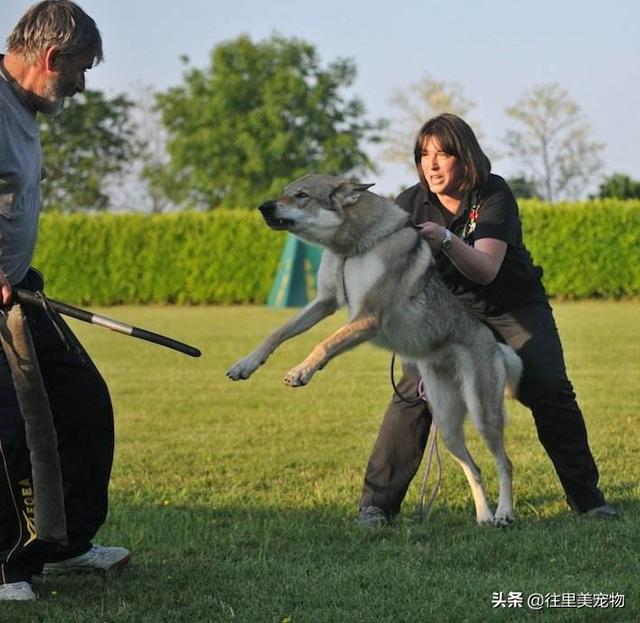
For a Husky, if trained well, it will have a strong protective instinct towards its master.
How should we dialectically view the protective instinct of dogs?
Xiao Mei has worked in the pet industry for many years and has seen many dog owners. They are often proud and boastful because their dogs have a strong protective instinct.
It's not wrong for these dog owners to think so. After all, having a loyal dog accompany you will add more security to your life. But perhaps this is precisely why some dogs' protective instinct is too strong, which often brings unnecessary trouble and harm to the dog owner or himself.
For example, a dog with a strong protective instinct, when playing with the owner and his friend, if the dog doesn't know this friend, it may make an attack. If this is a guardian dog, the consequences of its attack will be very serious.
For example, similarly, a dog with a strong protective instinct, when the owner or himself is threatened or encountered danger, even if the external threat is so strong, it will still protect its master. The result is that the dog itself will suffer serious injuries or even die.
And so on, there are many examples like this, which made Xiao Mei think of what a guard dog trainer said: 'Don't deliberately train your pets to have a protective instinct, otherwise it's easy to cause trouble!'
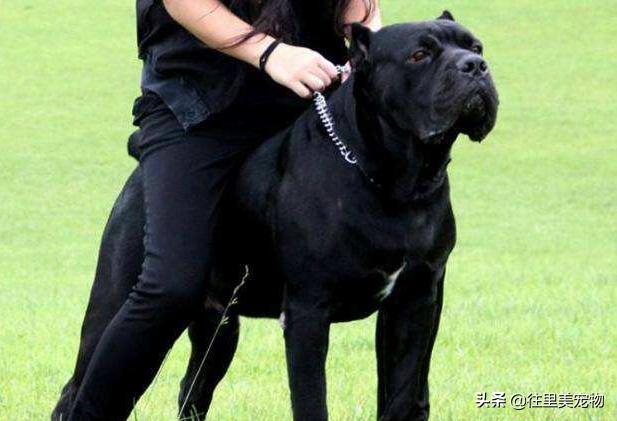
So Xiao Mei personally thinks that regarding the protective instinct of dogs, we should look at it dialectically. It has good points, but it also has disadvantages. Modern people raise dogs, more because they see dogs as spiritual sustenance and a part of the family. At this time, do we need so much protective instinct from dogs?
Guardian dogs are loyal to their masters, but not familiar with other people or animals.
How old do dogs have a protective instinct?