Grand Migration of Birds in Baiyi Park
People's Daily - Overseas Edition
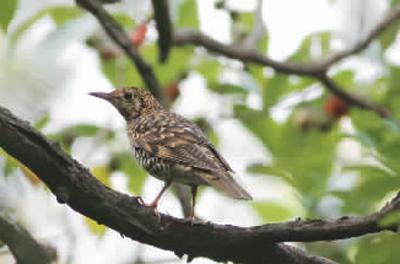
American Robin in Shiyi Park. Photo by Jin Yu
The Wuchang city, also known as the 'Nine Provinces Crossroads,' is an important stopover for migratory birds. During the spring and autumn, guarding a small park can let you enjoy the magnificent migration of birds.
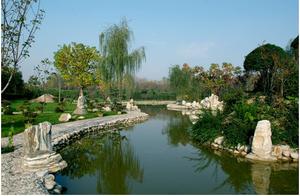
Xichang Road, starting at the and ending at Daxiangmen, is Shiyi Park. The park was built in 1924 to commemorate the Wuchang Uprising. After a century of wind and rain, Shiyi Park, located just one wall away from Yellow Crane Tower Park, has less tourist noise and become a paradise for migratory birds, especially a great resting place for migratory birds coming from north and south. This park, covering an area of only 10 hectares, has recorded 110 bird species in just a few years, of which 50 are traveling birds.
In late March, the American Robins and Titmice that hadn't yet left for migration were still present, while the vanguard of the migratory warbler troops, the Crowned Willow Warbler, had already begun to climb the rough trunks after the Wuchang Uprising Monument. By early April, on a rainy morning with a slight clearing, the American Robin, Hooded Willow Warbler, and Yellow-crested Warbler would all appear on the broadleaf trees beside Bingtang Pond. As May arrives, the Robins, Warblers, and Waxwings begin to become the main migratory forces, until the Red-flanked Bluetail is no longer found, marking the end of the spring migration. In late August, the city is still hot, and the North Gray Warbler and Hooded Willow Warbler return to the small forest under the Cannon Fort, starting a two-month-long return journey…
In Shiyi Park, Robins are a relatively representative group. The park is built on a hillside, and the visitor paths are basically built on the ridge and on the slope next to Wuluo Road, while the other slope next to the Railway is not hardened, with dense vegetation, including saplings and ground cover. Because of this, the park is rarely visited, providing a good habitat and concealment for shy Robins. The White-browed Shrike-thrush, Orange-headed Shrike-thrush, White-throated Shrike-thrush, and White-browed Shrike-thrush faithfully arrive year after year, combined with the resident Purple Thrush and Black Thrush, and the commonly seen Gray Thrush, it's a remarkable feat to find them in the center of this giant city…
Similarly, Sandhu Lake Park, built on the water, is a relatively young city park. Because of the relatively diverse habitat (lake, shore, pond, forest, grassland…) at the initial stage of park construction, and the variety of vegetation (such as lotus, reeds, and maidenhair sago as representatives of submerged plants, broadleaf trees and fir trees as representative of woody trees, and the remaining shrubs), this park has a bird list exceeding 140 species, of which more than 60 species come from migratory birds passing through.
The group of Willow Warblers is a distinctive group in this park. In the only several mature broadleaf trees and a patch of fir trees in the park, 11 Willow Warbler species were recorded, including the first Wuhan sighting of the Black-billed Willow Warbler, which was previously considered rare in the Huacheng region. The Black Reed Warbler appeared seasonally along the shore of the lake and the edge of the pond, along with the Eastern Great Reed Warbler, Thick-billed Reed Warbler, and Brown-eared Warbler.
Built in 1952, Liberation Park is fortunately preserved a small piece of wilderness – Monkey Mountain. This small hill is not overly artificial, retaining a very rich variety of woody trees, and therefore has become the main contribution area for 100 bird species in the park. The first sighting of the Gray-crowned Warbler and the unconfirmed Chestnut Thrush in Wuhan came from here.
Walking along the path up the hill, on the tall broadleaf trees, various Willow Warblers were active among the leaves, Mountain Laughing thrushes chased each other, and the calls of Jays echoed high above. Turning around to the back of the hill and waiting a while, the Blue Rock Thrush, Red-tailed Rock Thrush, Scaly Thrush, White-browed Leaf Thrush, and Mountain Larks emerged slowly from the shrubs…