Guizhou's 'Most Tourist-Friendly' Town: An Investment of 1.3 Billion Yuan, Consistently Free!
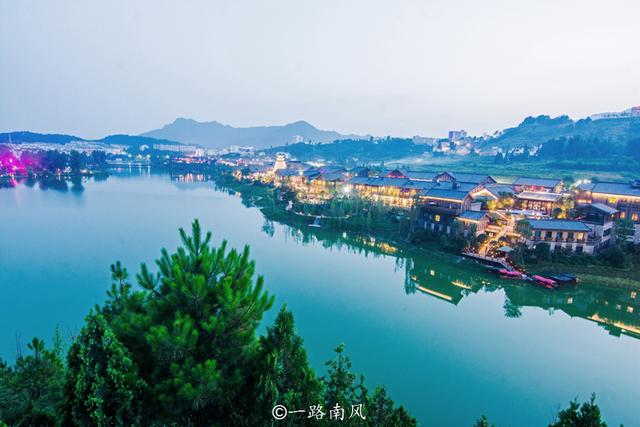
Guizhou is a province rich in tourism resources. Besides the well-known Huangguoshu Waterfall and Mount Voss, there are also beautiful Qiannan Manchu and Dong Autonomous Prefecture, Xijiang Qianhu Miao Village, Langde Shang Village, and Zhaoxing Dong Village, which was once a venue for the Spring Festival Gala Evening Meeting. In recent years, characteristic tourist towns have risen in Qiannan. Phase 1 invested 800 million yuan, and Phase 2 invested 500 million yuan, but it has consistently insisted on being free, and is affectionately called by tourists as ‘Guizhou’s most humanized tourist town’ and ‘the town that saves tourists the most money.’
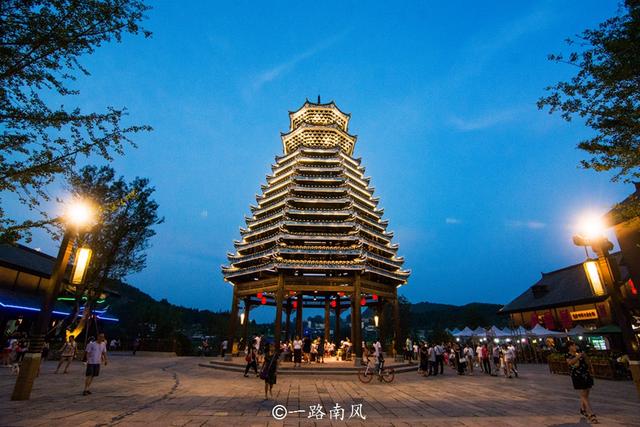
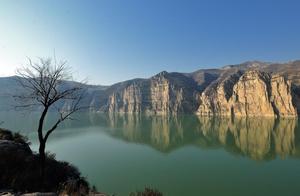
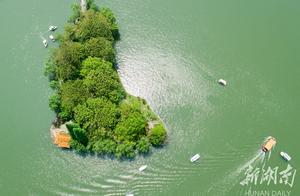
The small town called ‘Dan Wanda Town’ is located on the banks of Donghu Lake in Dan County, Qiannan, with mountains and water. It was once poor and backward, but now it has successfully lifted itself out of poverty.
Dan Wanda Town is mainly based on Miao and Dong cultures and is currently a 4A scenic area. The architecture is mainly in Miao and Dong styles, with four themed squares, and the majestic drum tower is a major landmark. The scenic area also boasts a water wheel that set a world record in Guinness.
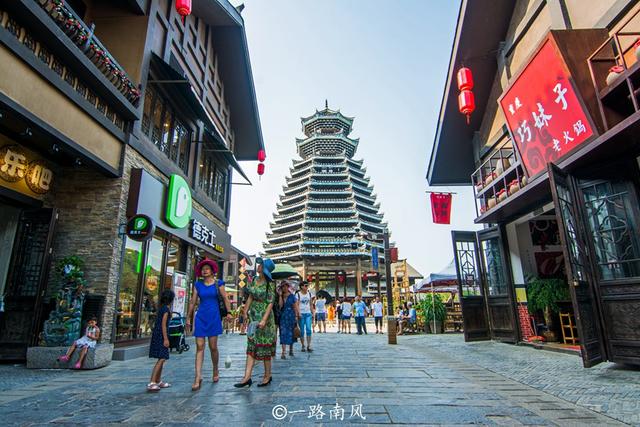
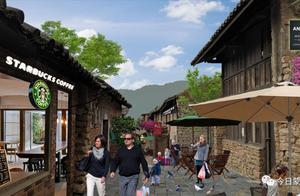
The town has a thriving commercial atmosphere, and what attracts tourists’ attention most are various non-material cultural heritage courtyards, non-material cultural heritage restaurants, and museums introducing Miao and Dong cultures.
According to statistics, a total of 23 non-material cultural heritage projects have been introduced to the town, including 16 provincial-level non-material cultural heritage projects and 7 national-level non-material cultural heritage projects.
What is non-material cultural heritage?
The full name of non-material cultural heritage is ‘non-material cultural heritage,’ which is a symbol of the distinctive civilization of a specific region. Many of them are on the verge of extinction. As a ‘land of handicrafts,’ Dan has a large number of non-material cultural heritage projects.
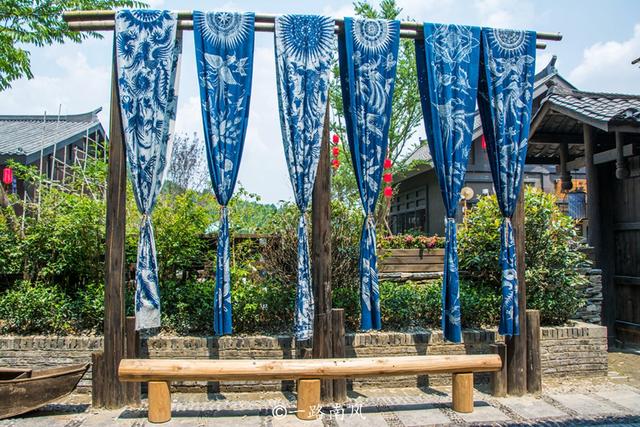
Dan Wanda Town has wax-dyeing, bird cages, and papermaking small courtyards.
Wax dyeing is a characteristic craft of the minority ethnic group in southwest China. Legend has it that it originated in the Yellow River Basin. Dan’s wax dyeing is diverse and elegant, with floral and butterfly patterns, especially the butterfly part, which is lifelike.
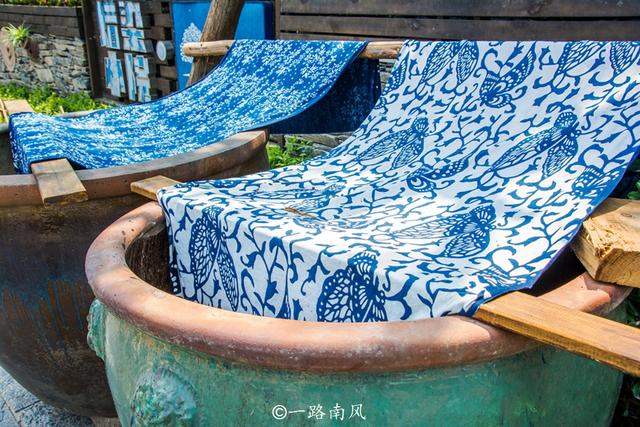
Clothes made of wax-dyeing fabric have a flowing feeling when worn.
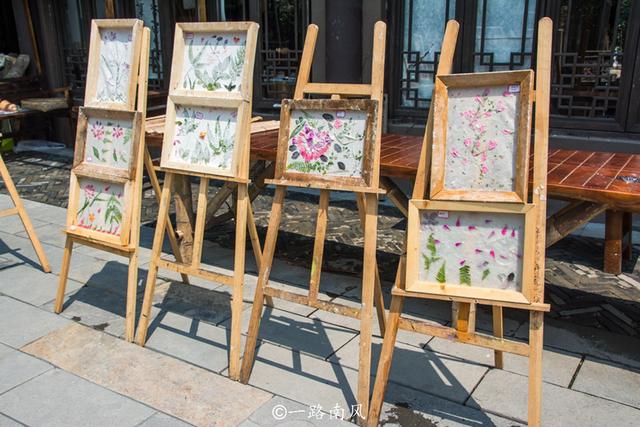
Traditional papermaking is a traditional papermaking process that is becoming rarer with the advancement of modern papermaking technology.
In Dan Wanda Town, tourists can not only appreciate a diverse range of traditional papermaking products, but they can also appreciate the entire papermaking process from beginning to end, and even experience it themselves.
According to records, Dan’s papermaking originated in Shiqiao Village and has been passed down for more than a thousand years.
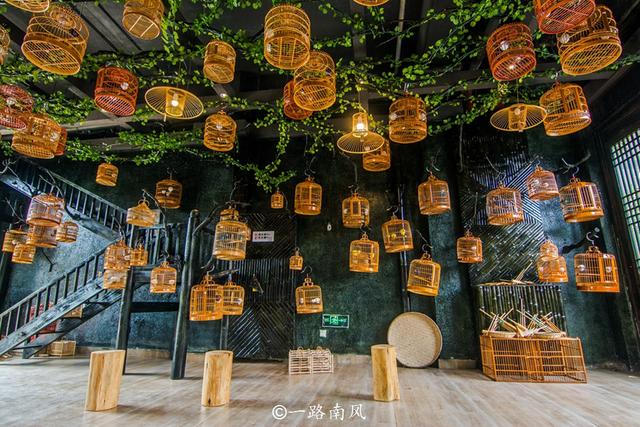
Bird cages are a plaything for wealthy people, but the people of Dan have made bird cages in their own style and sell them domestically and internationally, even making them a non-material cultural heritage project.
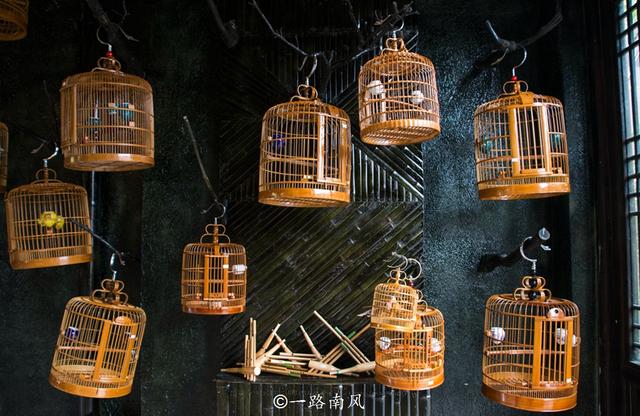
‘Kara Bird Cages’ are generally considered the representative of Dan bird cages, originating from the village of Kara in Dan County, and have been passed down for more than 400 years. Locals make bird cages of different styles according to the characteristics of different birds, and their styles, sizes, and shapes are all diverse.
As tourists, we were immediately stunned by the courtyard full of densely packed bird cages and couldn’t stop taking pictures.
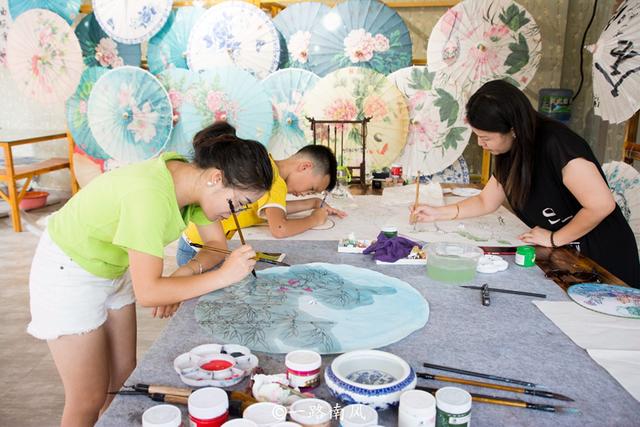
Dan Wanda Town is not a traditional town, because non-material cultural heritage projects have increased its ornamental value. It is a breakthrough in humanistic tourism to take a route with characteristic tourism.