The Most Popular Temple in Qingdao City Center, with a History of Only 75 Years, is Located Two or Three Kilometers from Fusi Square
As a coastal city, Qingdao boasts abundant tourism resources, with countless visitors every year, especially during holidays when all attractions in Qingdao are crowded with people. Many people come to Qingdao to see the unique sea and mountain scenery and the numerous European-style buildings, and Buddhist temples are rarely visited. Today, let's introduce Qingdao’s only temple in the city center – Zhanshan Temple.
First, let’s introduce the route: You can take buses 26, 206, 301, 370, get off at Zhanshan Temple; or take subway line 2 and get off at Ziqianlu Station, then walk about 10 minutes.
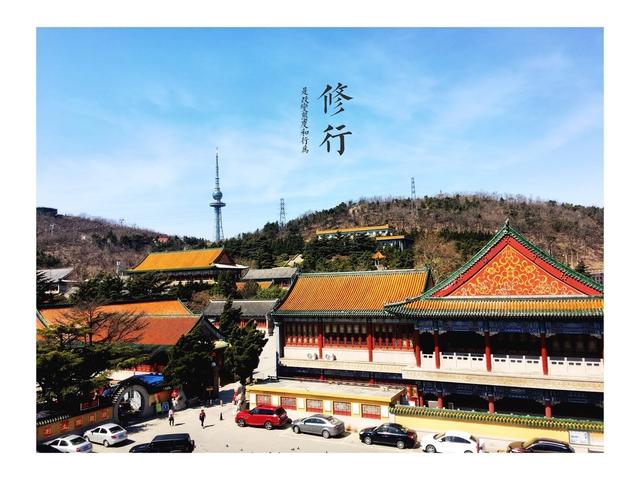
Zhanshan Temple is located in the most beautiful area of Qingdao buildings – Shinan District, it’s a golden location in the old city. It started construction in 1934 and was completed in 1945, it’s built on the mountain with a sea view, which is particularly excellent. Although Zhanshan Temple is relatively young in history, it is the highest and most prosperous Buddhist temple in the Qingdao area. There are two stone lions in front of the main gate, which are said to be from the Ming Dynasty.
Zhanshan Temple is built according to the traditional layout of a temple, the architecture is modeled after the Cheng Palace, the temple is divided into three courtyards – north, south, and east.
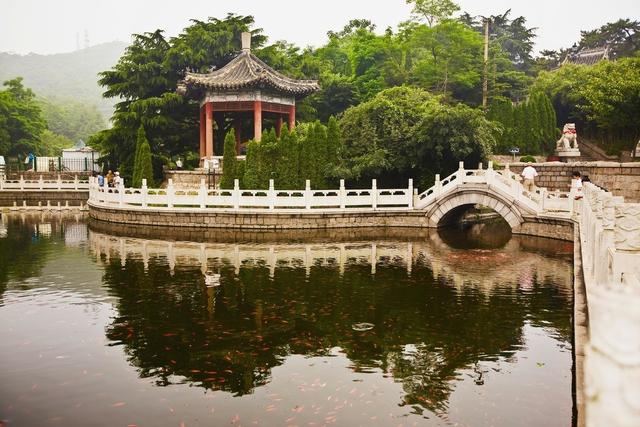
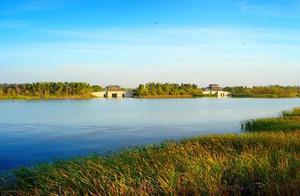
To enter Zhanshan Temple, the pond in front of the temple is an unavoidable path, the pond is named “Fang Sheng Pool,” which is a place where men and women can accumulate virtue. The White Jade Guanyin Bodhisattva stands in the pond, White Jade railings protect the clear waves, water and sky blended into one, washing away dust. Full of lotus flowers and drooping willows, plus the clear water in the pond, it's truly breathtaking.
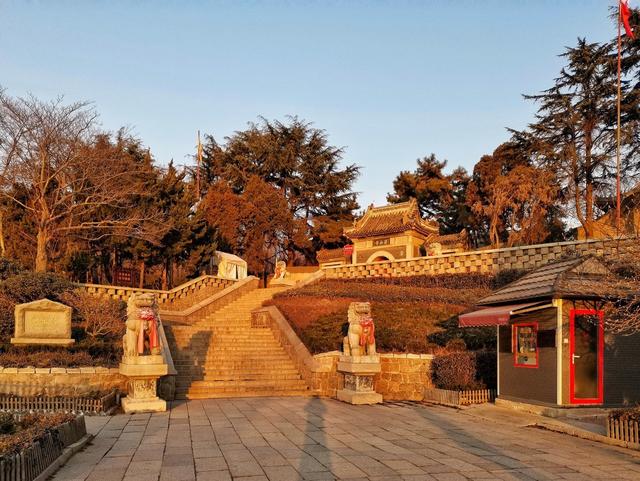
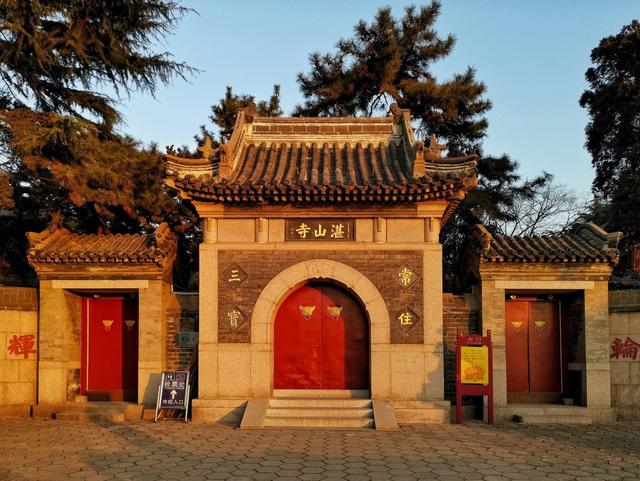
Passing by the pond, you walk up the steps, you can see the main gate of Zhanshan Temple, the gate has the words “Zhanshan Temple.” The bell tower and drum tower are located on either side, and the central hall is the Tianwang Hall (the main hall of the temple, where the Sakyamuni Buddha is enshrined), the Sansheng Hall (where Amitabha Buddha is enshrined), and the Jinge Pavilion (the northernmost pavilion of the temple).
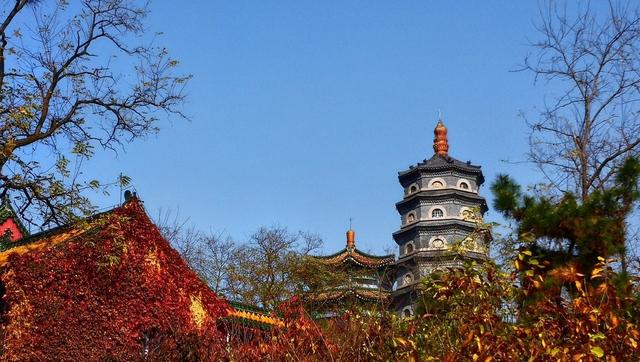
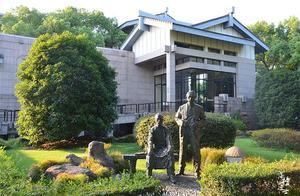
The West Court has the Zhui Xu Master Memorial Hall, the Three Academies, and the Qi Hall; the East Court has the Nursing Home and the Fragrant Hall. There is also an eight-sided, seven-level pagoda with a light of Maitreya Buddha at the southeast of the temple, which blends with the temple, most visitors to Zhanshan Temple will go down to the pagoda to walk around the pagoda seven times, and climb to the top of the pagoda, to enjoy the scenery of Qingdao city.
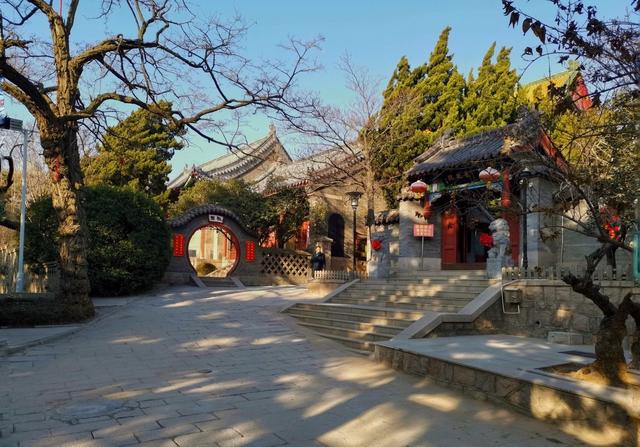
In the past, because Zhanshan Temple was located outside the city, it was inconvenient for people to listen to lectures, so they built a place to listen to lectures and recite scriptures on the top of Xiaoyishan (now Xiaoyishan Park), named Qingdao Buddhist Association. At that time, every Sunday afternoon, people from all walks of life would gather here to listen to lectures, Xiaoyishan became a place to propagate Buddhism, and later Master Zhixu renamed it “Zhanshan Jixinggong.” In 1959, the nearly collapsed Zhanshan Jixinggong was demolished, and only the ruins remained.
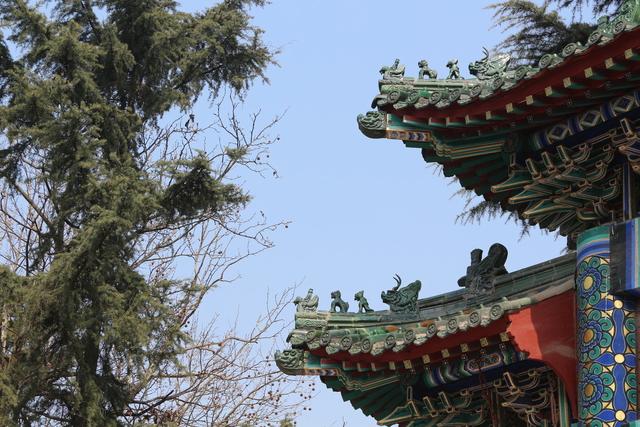
As Qingdao's most popular temple in the city center, Zhanshan Temple is located in a scenic area, only a few kilometers from Fusi Square, it can be driven in about 10 minutes, and it takes about half an hour to walk. On the first and fifteenth of each month, many believers gather here to pray, worship Buddha, make wishes, and return wishes… The most crowded day is the Baidu Festival in the fourth month of the lunar calendar.