It's better to have a solid foundation than to be superior.

Heaven and Earth have jurisdiction.
We often hear from many outstanding predecessors saying that no matter what you do, the most important thing is to master the basics. Only when the basics are well mastered can you step by step walk the road behind. Just like building a house, if the foundation is solid, the ten thousand feet building can stand on the ground, otherwise it is all in vain. But in real life, many people are unwilling to do these basic skills, everyone is thinking about how to quickly reach their goals, and the best is to not spend any effort, telling a straight shortcut to success.
In 2018, I started following Potato to write book reviews, at first I also wrote myself, but it wasn't qualified, so I followed Potato to learn how to write qualified book reviews. After the reviews were qualified, I started thinking about how to write better and better.
In this process, Potato repeatedly emphasized that it is important to master the basics. For us, this basic skill is reading ability. If you don't have a good reading ability, you can't carry out long-term and effective input and output.
But most people are unwilling to pay attention to these basic skills. Many people directly ask me how to make money by writing book reviews? Frankly, the first step is to start practicing, there is no shortcut.
Frankly, after a year of constantly writing, I deeply realized this truth,Let's not climb to the peak, but rather the basic skills are the most important.
All great beginnings are nothing more than countless days and nights of silent practice. This principle also applies to work. Why do some people outperform and get promoted faster than you? Is it really because they are smarter than you or will they please their superiors? Not really, because they have been secretly practicing basic skills, so they have enough space to play in front of everyone and outstanding performance.
Japanese writer Hutsuka Ryo will mention in 'How McKinsey Elite Practice Basic Skills' that the high-achieving people like Goldman Sachs and McKinsey, Harvard Business School have a commonality that they all practice basic skills. It may be curious to everyone, what are these basic skills? How can ordinary people practice them?
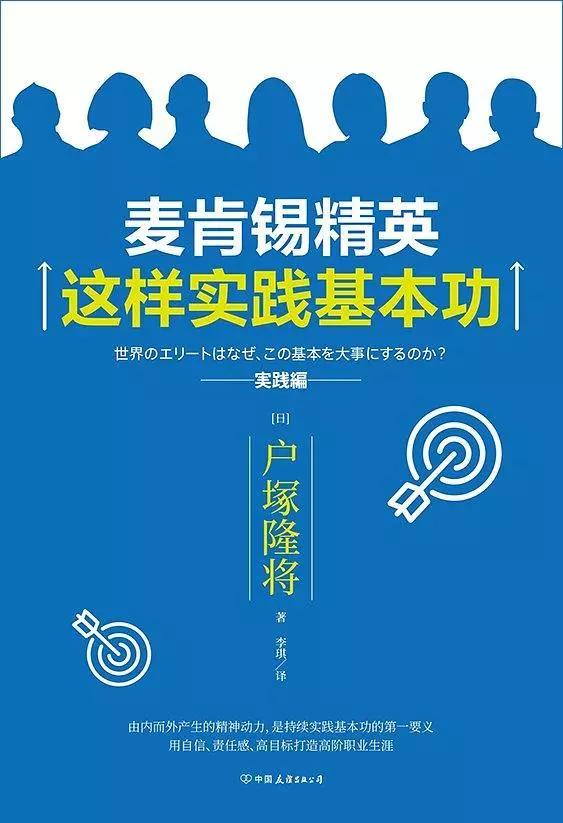
The understanding of basic skills is different for everyone, Hutsuka Ryo will define basic skills in 'How McKinsey Elite Practice Basic Skills'
Things that can influence the results, have substantial and important attributes.
Things that are well-known and frequently encountered.
Things that are difficult to persist.
Hutsuka Ryo will review his experiences working at McKinsey, Goldman Sachs and Harvard Business School for several years, and summarized the methods of the elites practicing basic skills. All practice of basic skills relies on self-driven internal motivation. 'How McKinsey Elite Practice Basic Skills' summarizes the driving force of practicing basic skills into 3 points,
Once you do it, you can be confident;
Take the initiative to dedicate oneself;
A belief in the goals you set for yourself.
As Hutsuka Ryo said, 'I learned from the people I worked with at McKinsey, Goldman Sachs and Harvard Business School. I believe that it is more important to practice basic skills than to understand them.' Like I said before, everyone has a different understanding of basic skills, as long as you can find a method that you can continuously produce results and motivation, and then put it into practice, it is enough for you.
There will never be a shortage of methods in this world, what is lacking is the willingness to practice and verify the methods, many things to achieve actually don't seem so difficult, but we are all hindered by the imagined difficulty.
Because when you start climbing, you will never reach the top of the mountain.
1All confidence is hidden behind unspoken preparation
Facing all audiences, dance and sing on stage, talk eloquently
Casually pull out a new product from the pocket of a pair of jeans
Cooperate with the perfect demonstration on the large screen
Bearing gestures, full of self-confidence
This battle-hardened big man is Steve Jobs, the former CEO of Apple, he practiced this short 5-minute product launch for only more than 10 times, so we saw the perfect performance on stage.
When we see the confident and talented faces of many people, it is easy to attribute these to their innate talent, as if they are born without effort or any effort can easily show a perfect performance, not knowing thatEvery confident face is the result of long-term practice and preparation that outsiders don't know.
Hutsuka Ryo will mention in 'How McKinsey Elite Practice Basic Skills'A formal report that has not been adequately practiced will not pass through smoothly, this is what we often hear, but it is often forgotten when we grow up.
In the company, capable colleagues are actually secretly practicing, but we are easily to think that they are because of these talents can easily handle things, this talent is innate, so we unconsciously slacken the preparation work.
'Jia Zang Ke Film Notes' writes,Talent is the overflow of basic skills.Confidence is just the repeated practice of basic skills.

2Responsibility: Treat every task as your own responsibility
In the past, I didn't think responsibility was such a rare quality, but I found after working, it's such a rare quality to have responsibility. There are too many capable people in the world, they may achieve good results in their work, but that doesn't mean they have a sense of responsibility.
But those who have a sense of responsibility will never be too bad, because this sense of responsibility will determine that they will treat every task as their own responsibility and try their best, not a careless attitude.
Many times in the workplace, there are often phenomena of shifting responsibility, complaining and blaming each other, this is because everyone thinks this matter is not related to themselves, even if they don't do it, someone will do it,
So naturally, if someone can put these things that no one wants to do, treat them as their own things to do, it's the leader's willingness to promote such people, and the employees are willing to follow such people.
Responsibility is a sense of ownership, whether you are willing to treat every task as your own thing to do, and try your best, instead of a careless attitude.Many things done may not lose anything, but not doing them may lose an opportunity. But in the face of this invisible immediate return, most people will choose not to do it.
Hutsuka Ryo will share in 'How McKinsey Elite Practice Basic Skills'What I identify with is that, 'I learned from the people I worked with at McKinsey, Goldman Sachs and Harvard Business School. I believe that it is more important to practice basic skills than to understand them.'
3

“”“”