About Stretching: What Your Physical Therapist Doesn't Tell You
Stretching is a common warm-up and relaxation essential, in all kinds of sports before and after, we advocate for full and correct stretching.
Do you know what the effects of stretching are? What are the various ways of stretching, and which stretching is suitable for which place?
Stretching Classification and Efficacy
We usually divide stretching into three types:Static stretching, dynamic stretching, and PNF stretching.
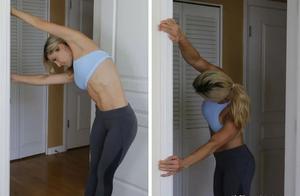
Static stretching: refers to keeping the muscle at its stretched maximum range for 15-30 seconds.
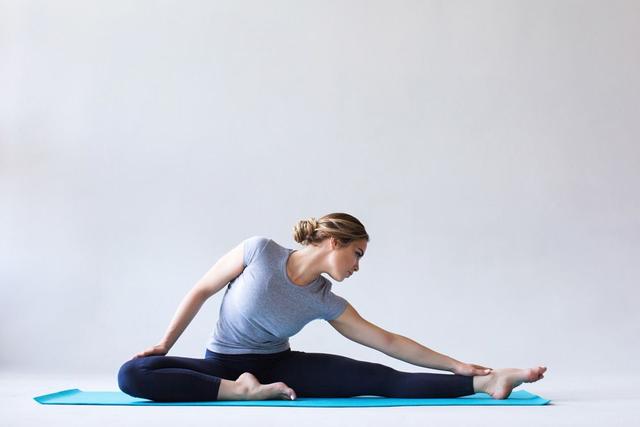
So far, static stretching is still the preferred choice for many people, but most people will do static stretching for a few seconds and then finish, which cannot achieve a good effect, is pseudo-static stretching.
- Bouncing back and forth during stretching: Static stretching requires holding it at its maximum range, but many people like to bounce back and forth, which is not a good stretching effect.
- Forcefully exerting oneself to reach the maximum range of the joint suddenly: For static stretching, it is recommended to slowly increase the angle to its maximum range, and sudden force may cause injury.
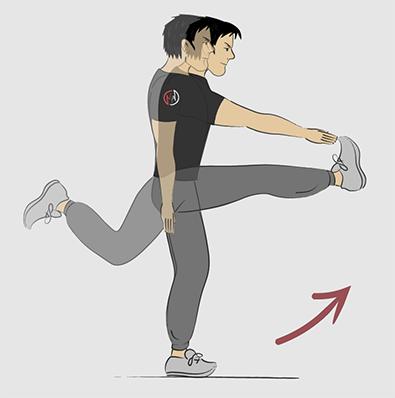
- There is a saying about static stretching that it is not suitable for doing before sports, because it can affect the subsequent strength and explosive movement, reduce athletic performance. It is recommended to do it after exercise, which can effectively improve joint activity, reduce post-exercise muscle tension, and improve lactic acid accumulation.Dynamic stretching: refers to combining movement, using the active contraction of muscles to achieve stretching purposes.
For example, football players will do actions such as kicking their legs before entering the field for warm-up.
Dynamic stretching is better than static stretching in that it does not reduce athletic performance, and can also effectively mobilize the neuromuscular system, achieve the purpose of warm-up, and promote flexibility, coordination, and balance ability, enhance muscle elasticity, and prevent sports injuries.Therefore, it is recommended to do dynamic stretching before sports. Common two dynamic stretching methods are arm circles and high kicks, which are equivalent to warm-up.
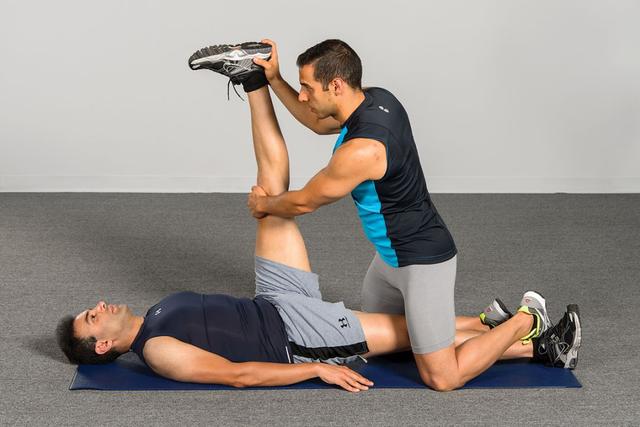
PNF stretching: refers to adding active contraction during static stretching to stimulate proprioceptors, improve neuromuscular response, promote the alternating contraction and relaxation of the active and antagonistic muscles, and achieve enhanced neuromuscular excitability, muscle tension relaxation effect.
And PNF stretching can also be applied in sports rehabilitation to improve the joint activity of patients with injuries.
But PNF stretching is not suitable for doing before sports, it is more suitable for relaxation after exercise, and it is better for activating proprioception and improving joint activity.The specific operation is: first static stretch the target muscle for 10 seconds, then let the target muscle do an isometric contraction for 6 seconds, then again static stretch the target muscle for about 30 seconds. The precautions are similar to static stretching and avoid bouncing back and forth, sudden force, and insufficient time.
Stretching is classified into many categories, but their effects are the same:
1. Increase joint activity, increase body flexibility;
2. Restore the normal muscle length, improve neuromuscular efficiency, and improve muscle imbalance;
3. Improve lactic acid accumulation after exercise, reduce muscle soreness;
4. Warm-up before sports, reduce the risk of sports.
Stretching Duration and Frequency
The time for stretching activities should be determined by the level of sports being performed. That is, for those who aim for improving body health, the stretching time should not be less than 20 seconds, but if you participate in high-level sports competitions, each stretching action should be maintained for at least 30 seconds, and gradually extend it to 60 seconds or more.
The same principle applies to the number of stretching times for each muscle group that we should do. For example, beginners can stretch each muscle group 2-3 times, if the athletic level is higher, each muscle group can be stretched 3-5 times.
The same principle applies to stretching activities according to the specific project and athletic level, such as beginners can stretch for 5-10 minutes, but for professional athletes, the total stretching time throughout the day should be close to 2 hours, if the athletic level is between beginners and professional athletes, then adjust the stretching activity time according to the athletic condition.
Stretching Taboos
The following situations are not recommended to do stretching exercises:
1. Joint instability caused by fractures or sprains (or joint injuries)
2. There is a wound on the site of stretching and accompanied by infection or inflammation (soft tissue inflammation, such as folliculitis, etc.)
3. There is an acute injury (muscle, tendon, ligament injury) on the site of stretching
4. There is pain on the site of stretching.
Now do you know how to stretch? Sports are a joyful thing, and stretching is too.
4.