Why Do You Experience 'Butt Wink' During Squats? The Main Reasons Are:
Original content, plagiarists will be held accountable!
Squats are the golden exercise for lower body training. To build well-developed legs and a full hip shape, we all rely on squat training. Therefore, the correctness of the squat action has a profound significance for personal physique development!

Many people may encounter several problems when doing squats, one of which is calledbutt wink
The phenomenon of 'butt wink' is often seen by many people. So there are 5 possible reasons, firstly, the problem is with our action control, secondly, it's congenital structure, thirdly, it's the initial pelvic excessive anterior tilt, fourthly it's ankle dorsiflexion activity insufficiency, and the last problem is hip flexor activity insufficiency.
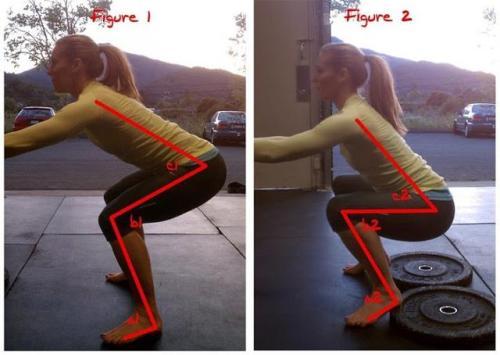
First, we must understand what 'butt wink' is.
'Butt wink' refers to: when we squat down to the point where our thighs are parallel to the ground, our pelvis appears to flip. What impact does this action have?
Because our pelvis is connected to our lumbar vertebrae, when this happens, our lumbar vertebrae will become more flexed.
Research shows thatButt winkthis situation meets the two key points.On the other hand, when the 'butt wink' occurs, our lumbar vertebrae will have a flexing action, and when the lumbar vertebrae flex, it is more likely to increase the risk of intervertebral disc posterior protrusion.

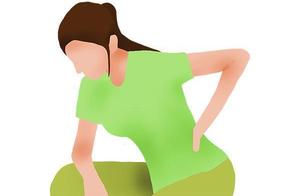
Furthermore, long-term 'butt wink' during squats will lead to our lumbar vertebrae muscles, namely the erector spinae segment of the lumbar spine, and our external obliques replacing our leg muscles to bear the pressure of squats, which also leads to lower back pain.
We have already mentioned the possible reasons for 'butt wink', now let's analyze them one by one.
One, action control problem
Many people when doing squats, they just passively follow the force of gravity and go down to complete the action process, instead of truly activating their core and using core strength to control the stability of their entire lumbar vertebrae and pelvic structure.
Two, congenital structure
Each of us has different shapes of femur and pelvis, different angles, and different lengths, so the distance between our feet when standing is definitely different.
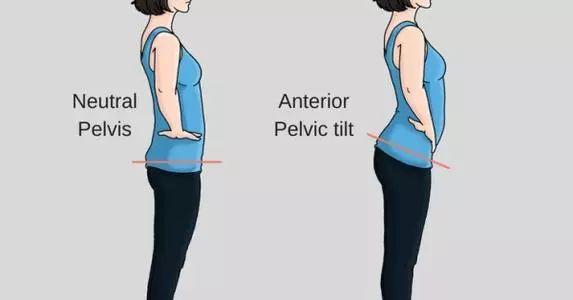
Three, pelvic excessive anterior tilt
This reason is that we excessively tilt our pelvis at the beginning, which leads to a more obvious pelvic flip when we squat down.
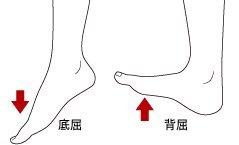
Four, ankle dorsiflexion activity insufficiency
When our ankle dorsiflexion activity is insufficient, when we squat down, we easily shift our center of gravity to the rear of the lower body, and our upper body shifts forward to balance the action's center of gravity.
So in this case, our upper body will try to hunch its back to balance the action's center of gravity.
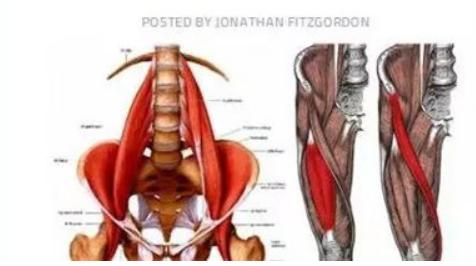
Five, hip flexor activity insufficiency
When we do squats with hip flexor activity insufficiency, it is easy for the lumbar vertebrae to compensate, so you will see a rounded back.
The five reasons above may lead to 'butt wink' when we do squats, so how to solve it? The author will tell you later.