Many actions are involved in strengthening the deadlift leg, but which one is often overlooked?
Instead of looking at your arms, look at your back, and surely the most heart-wrenching phrase is: look at your legs.
Don’t train legs and you’ll regret it later. Approximately 70% of your muscle mass is in your lower body. When you train your legs, you not only stimulate muscle growth in your legs but also stimulate your body to secrete more growth hormone, which stimulates muscle growth throughout the body.
Furthermore, leg training is never ‘isolated.’ Training legs will also stimulate other muscle groups, such as the back muscles and core muscles, to improve the efficiency of strength training.
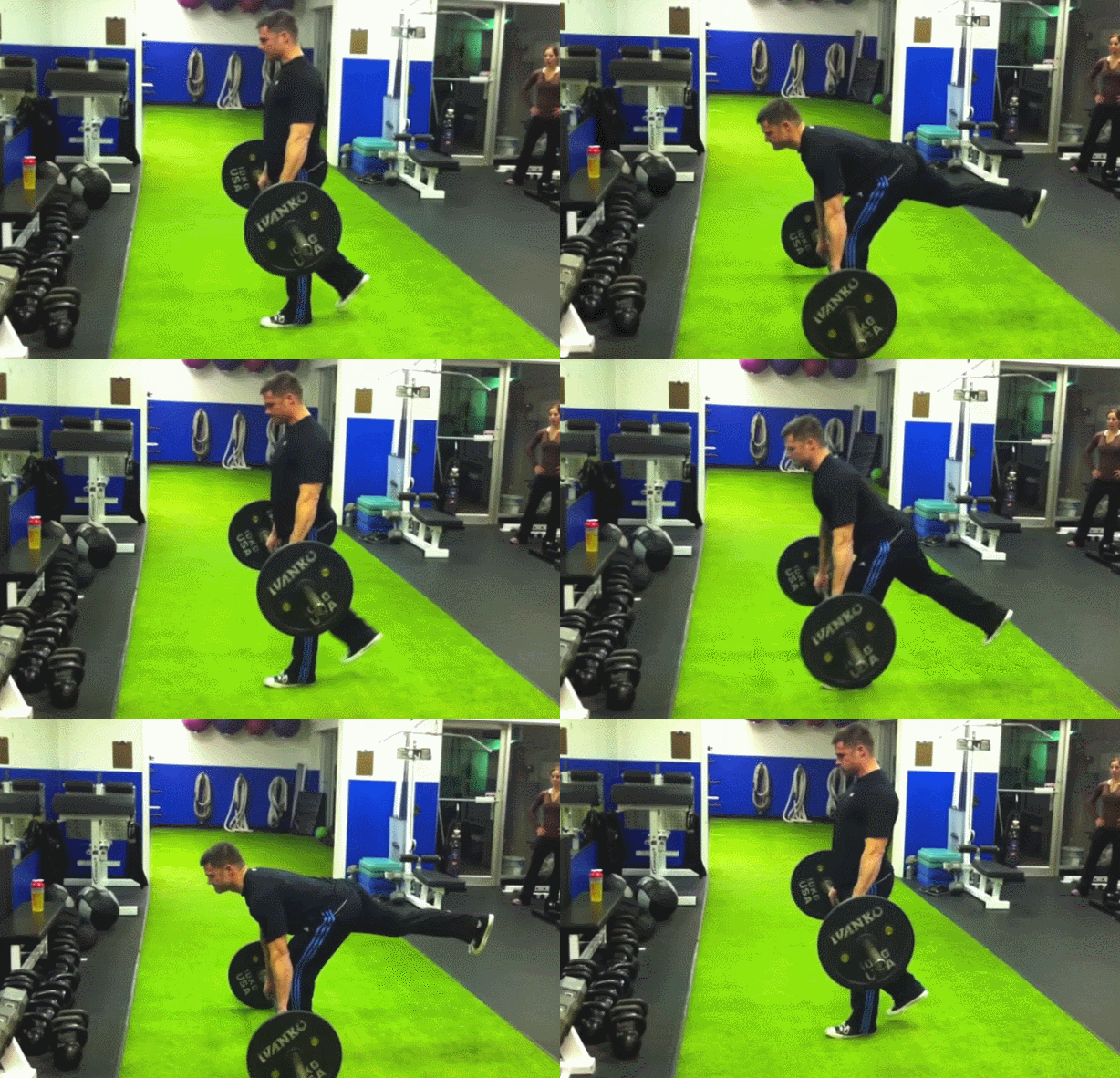
However, leg training has a classic movement that is not a simple strength training movement,It encompasses flexibility, stability, movement control, strength, and explosiveness.If your squat hits a bottleneck, you can try this movement to adjust.
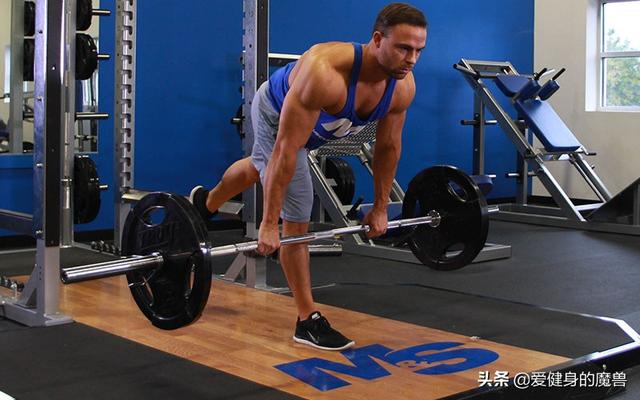
That’s single-leg deadlift.
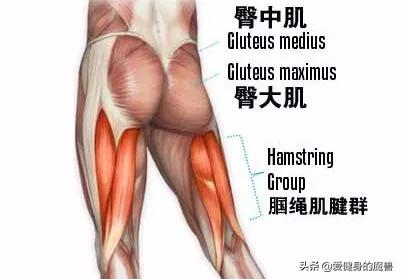
The glutes are made up of three muscles: gluteus maximus, gluteus medius, and gluteus minimus. The glutes are a core component of the posterior chain, which also includes the hamstring muscle on the back of the thigh and the lower back muscles, as well as other muscles on the back of the body.These posterior chain muscles work together to maintain a healthy, upright posture, and they play a role in maintaining balance both statically and dynamically. Moreover, having a strong posterior chain is essential for maintaining a healthy lower back.
Steps breakdown
You need an area where you can fully extend yourself. Place a kettlebell in front of you.
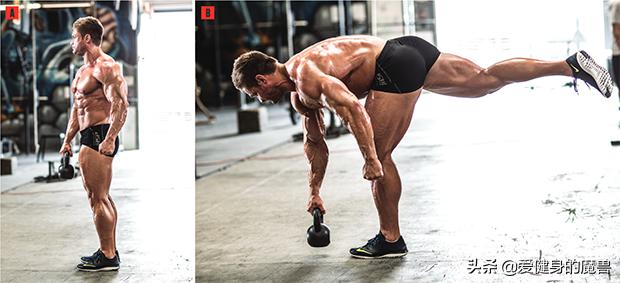
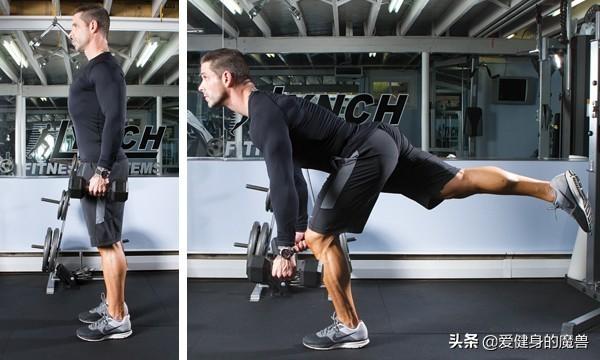
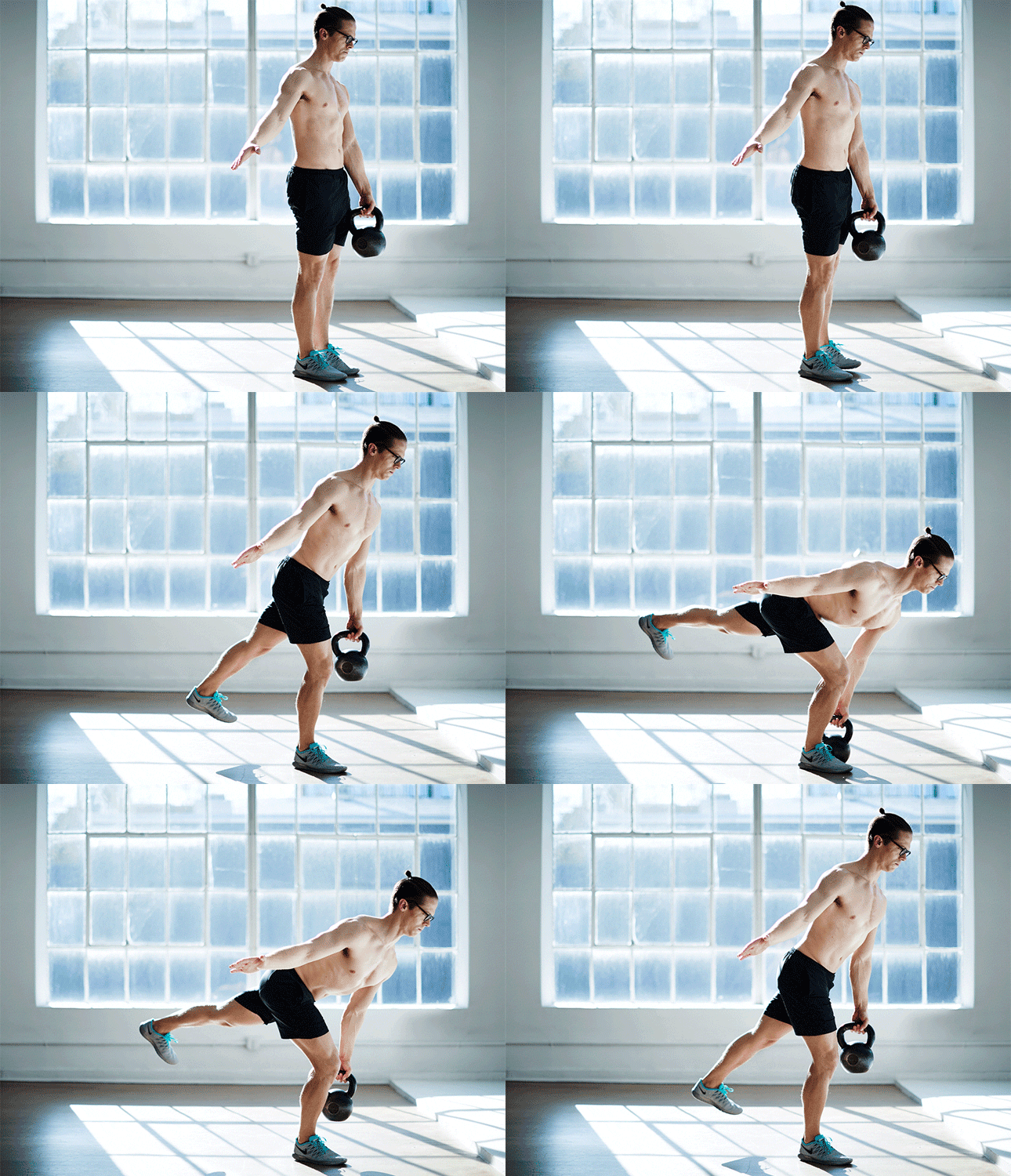
1. Stand upright, with your feet firmly planted on the ground, your legs straight, with your upper arms hanging at your sides.
2. Stabilize one leg and slide the other back, allowing your torso to move forward.3. The hip joint is the axis.4. As long as you lose balance during the movement, simply tap the leg you’re lifting down to the ground to maintain balance.
5. Maintain stable leg extension or slight flexionleaning forward to the point where your fingers touch the handle of the kettlebell.
6. Through the pull of the posterior muscles—hamstrings and glutes—complete this movement.
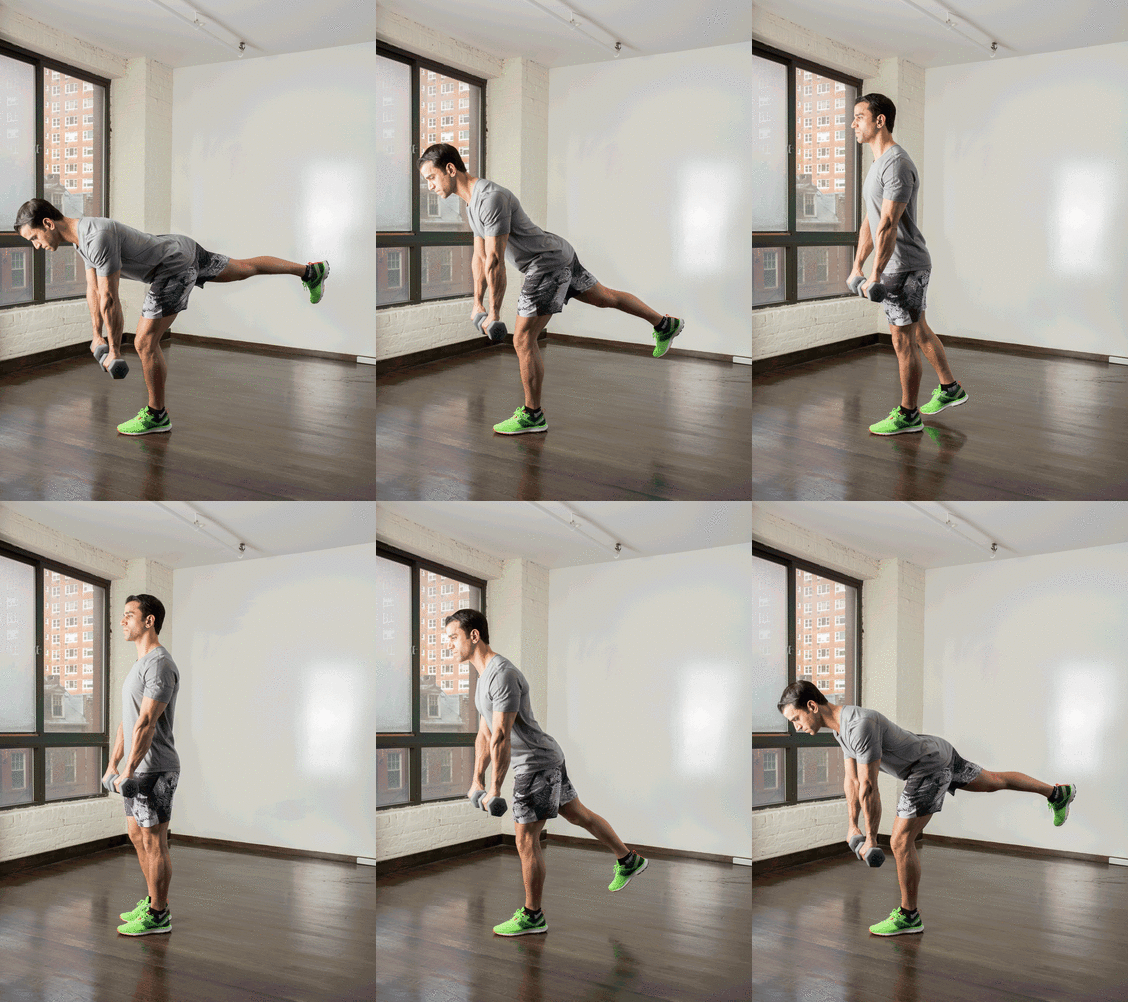
7. Maintain an upright body and support the leg completely extended to complete the movement.Ensure your hip joint performed a full range of motion, and the glutes contracted.
8. Make short pauses during the movement to ensure balance, then slowly lower the kettlebell to the ground.
Perform 5 repetitions for each leg, using a small to medium weight, then gradually increase the number of sets and repetitions as you progress.
Common mistakes
Avoid these mistakes to maximize the effect of this movement and prevent muscle strains.
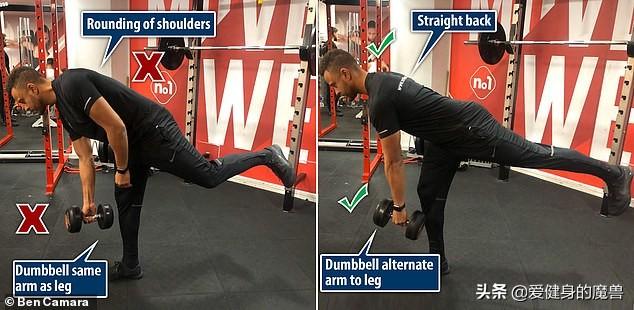
Arching the spine or arching the back
Your body should be a straight line, without bending or arching the spine. Arching the back may cause back pain and reduce the force of the gluteus maximus, which is contrary to your goals.
Bent-leg
Your back leg should be straight, forming a line with your spine. Bending the back leg may cause your back to arch.
Adjustments and variations
You can complete the movement in different ways to make it more effective and increase the intensity.
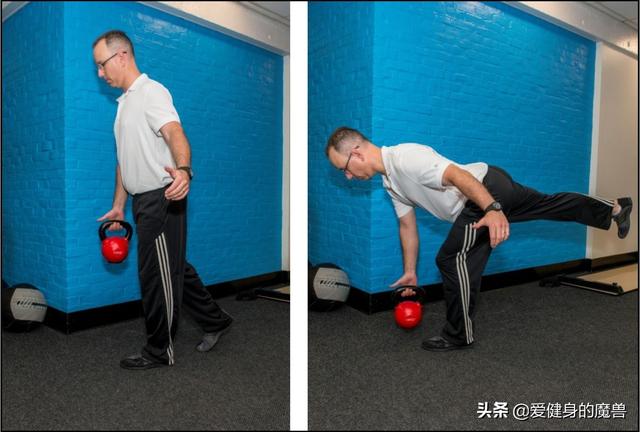
We strongly recommend that you perform the movement without any weight at the beginning to perfect your movement. Let the torso descend to feel the mid-range stretch of the hamstring. If your flexibility doesn’t allow you to tilt forward enough, you can bend the supporting leg’s knee.
Once you’re ready to add weight, start with light weights. A recommended approach is to perform 5 sets of 5 repetitions for each leg, then switch to a slightly heavier kettlebell, repeat.
Want a challenge?
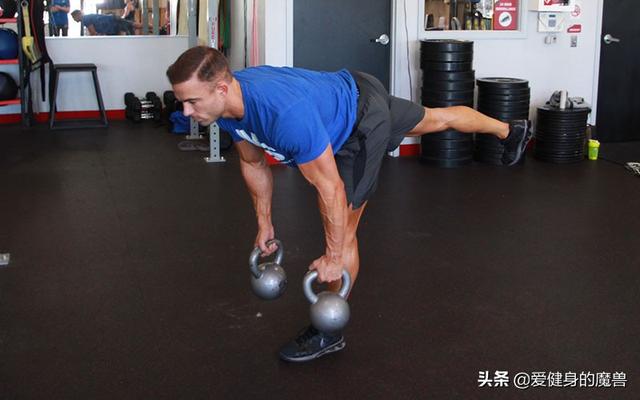
There is also a way to use two kettlebells. This increases the total weight, so make sure you’re proficient with one kettlebell before starting with two.
Another way to increase the difficulty, without increasing the weight, is to close your eyes. This forces your muscles to work harder to maintain balance.
Safety precautions
If you have ankle, knee, hip, shoulder, or back injuries, consult and examine yourself to see if you’re suitable for this movement. Proceed with caution, and stop immediately if you feel pain.
Through single-leg deadlifts, your balance will be greatly enhanced, you can not only shape and strengthen the glutes, but also increase overall athletic ability and overall athletic performance.
Single-leg straight-leg deadlift is a simple yet effective movement that can simultaneously strengthen and shape the glutes and improve balance. You can use a kettlebell or dumbbell to perform this movement. Beginners can also complete this movement by self-weight. You can arrange this movement into your plan to strengthen muscles and shape muscles. Perform this movement after a warm-up for better effect.