The Future of Scattered Wine: Will it Disappear Like Soy Sauce, or Become a Replacement for Name-Brand Wine?
At the beginning of the 1990s, when people bought soy sauce and vinegar, they generally carried their own bottles to small shops to buy. Merchants used funnels to scoop soy sauce and vinegar from barrels and then poured them into empty bottles. This was called 'making soy sauce' or 'making vinegar.' Similarly, 'making wine' was also common at that time. With the significant improvement in people's living standards, the gradually declined retail sales of bulk soy sauce and vinegar. Bulk baijiu still occupies a certain share in today's baijiu market, thanks to the price advantage and the purchasing habits of users.
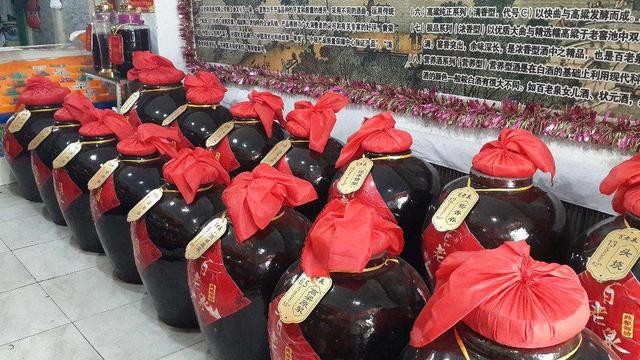
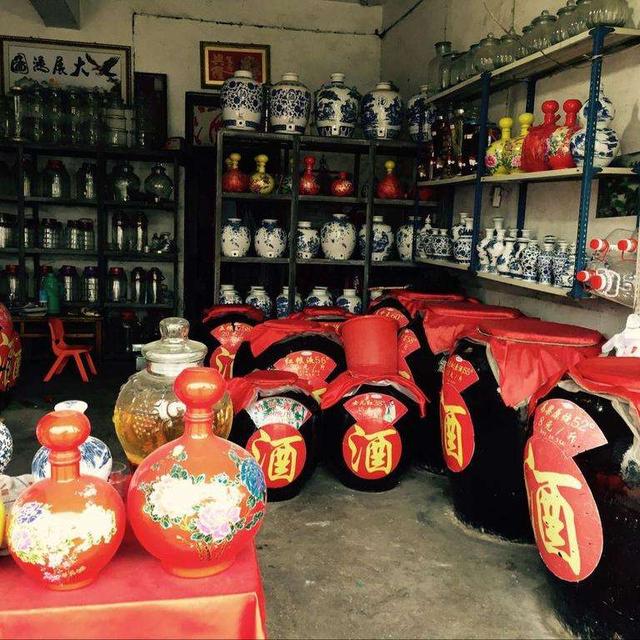
scattered hotel
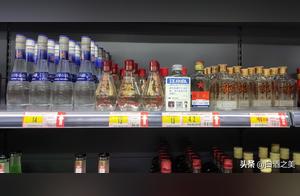
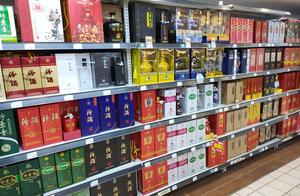
Bulk baijiu and bottled wine are the same in terms of packaging, the difference is that they do not have fixed packaging. Their packaging is usually divided by merchants using recycled bottles or new plastic bottles or wine barrels. Before 1998, Sichuan bulk wine was everywhere, flourishing and prosperous. The emergence of many bulk wine companies, relying on the advantages of local renowned bottled wine brands, began to sell bulk wine in large quantities to other provinces. These bulk wine companies took advantage of the advantages of 'Chuan Jiu' (Sichuan wine) to sell bulk wine continuously to other provinces, and their relatively superior quality occupied the market. It is worth noting that their bulk wine was not only sold to consumers, but also to bottled wine companies as an important customer group.
Later, with the shrinkage of the external market and the rapid expansion of renowned baijiu brands from Sichuan, the rise of local brands, the bulk wine market began to decline. On the one hand, some bulk wine factories are workshop-style production, with small production scales and lack of experience in building modern production management. On the other hand, their products do not meet the changing tastes of consumers. Under such circumstances, except for some large companies that insisted, many small companies exited the bulk wine field. Despite this, bulk baijiu has not completely lost its market, because it still has its unique advantages.
the price advantage is the most prominent advantage of bulk baijiu compared to bottled wine, and can be said to be the core element that bulk baijiu maintains its position under the siege of bottled wine. It is well known that there are still many people in China who drink low-grade wine, especially in rural areas or among workers, and affordable bulk baijiu meets their needs. Given the large number of baijiu consumers in China, not everyone will drink high-grade or mid-grade wine, so in the long run, bulk baijiu will not completely collapse, but its survival pressure will still be great and may be further squeezed.
Simply drinking alcohol is no longer the main purpose of baijiu consumers, and the prosperity of the bottled wine market and price cuts further compressed the survival space of bulk baijiu. Baijiu's positioning is based on price, and the price band of bulk baijiu determines its low-end positioning, which is difficult for wine manufacturers to produce high-end products in bulk wine form. With the progress of urbanization and the arrival of consumption division, the consumption population of bulk baijiu will gradually decrease, and its price band even carries the risk of disappearing.
In conclusion, from a development perspective, bulk baijiu is not a blue-chip stock, and if you are investing, you should be cautious. If you are determined to do bulk baijiu, you need to clarify the characteristics of bulk baijiu survival, which is cheap price and the target audience is consumers with lower consumption levels. After doing market research, focus on rural areas with dense personnel, where there is still potential to dig bulk wine markets.

When bulk baijiu meets private customization, it gives rise to the concept of small batch customization, which is thriving in some provinces. This scattered hotel can be understood as 'baijiu boutique store', not a common scattered hotel, it is a new business format.
(Author Zhou Jincheng, a researcher in the liquor industry, assistant expert of the 'China Wine' Think Tank, compiled by Ouyang Qilian)
“”