Xi'an: Hui Street, Exploring the Great Leather Mosque
Located behind Xi'an’s Gulou (Drum Tower), Hui Street is composed of numerous intersecting alleys. It not only allows you to taste local famous food but also to see the star-like mosques.
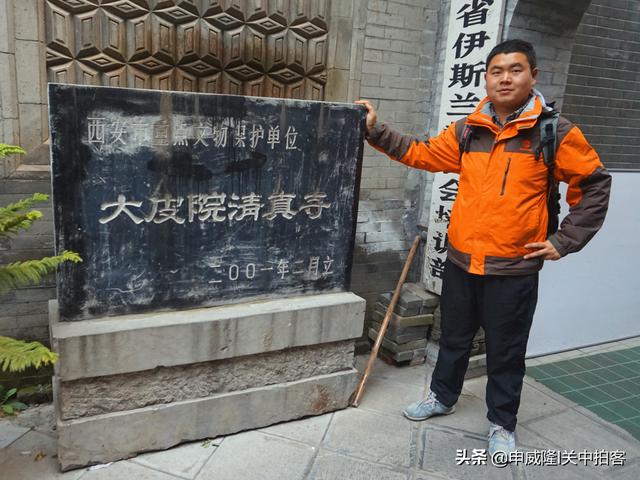
Shawn Shen: '90s Shaanxi Museum ‘One Star’
Dapian Street is an east-west road, about 400 meters long, east of Xihua Men Street and west of Bingui Street. During the Ming Dynasty, there were many shops selling leather and fur, hence the name ‘Dapian’ Street. There is also ‘Xiao Pian’ Street on the north side. Nowadays, like other alleys on Hui Street, it is crowded with tourists and full of shops.
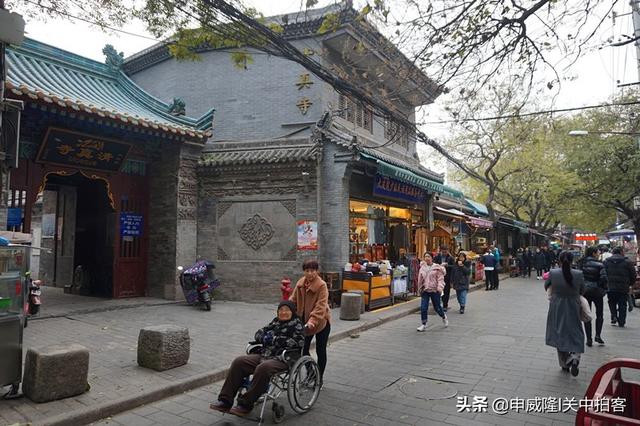
Dapian Mosque is located on the west section of Dapian Street, south side, the gate is small and inconspicuous. Therefore, many people pass by Dapian Street in a hurry and fail to notice this mosque, missing a free historical site. On February 9, 2001, it was announced as the second batch of municipal-level cultural relics protection units by the Xi'an Municipal People’s Government.
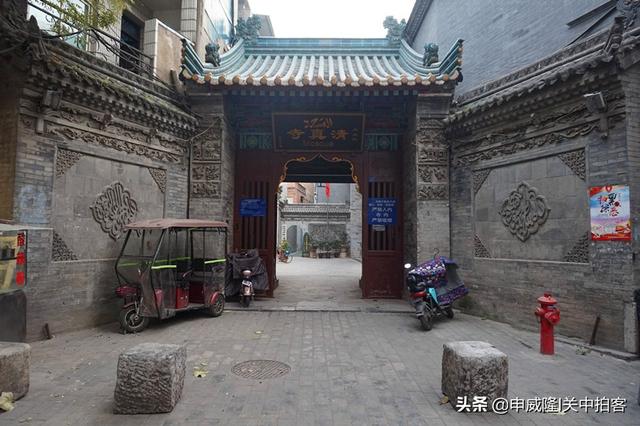
The mosque is facing west with a north-facing side having a side entrance that leads to Dapian Street. Entering through the side entrance, you step into a courtyard with narrow space, the right side is the main gate, with a ‘National Model Mosque’ honor board hanging above, and a fluttering five-star red flag next to it.
Entering the main gate, a spacious and bright courtyard appears, instantly separating you from the hustle and bustle of Hui Street. Huge trees and various potted plants adorn this small mosque, making it lively and vibrant.
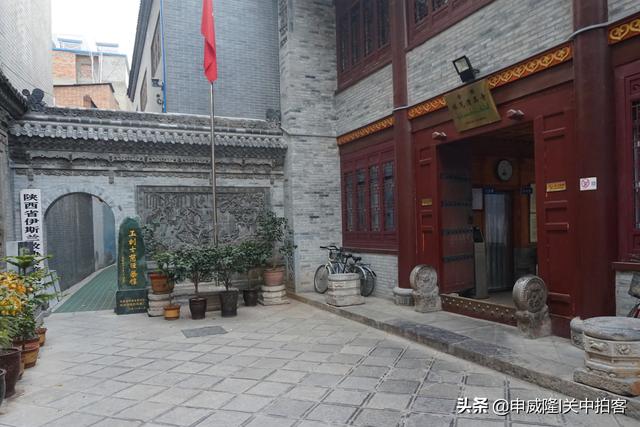
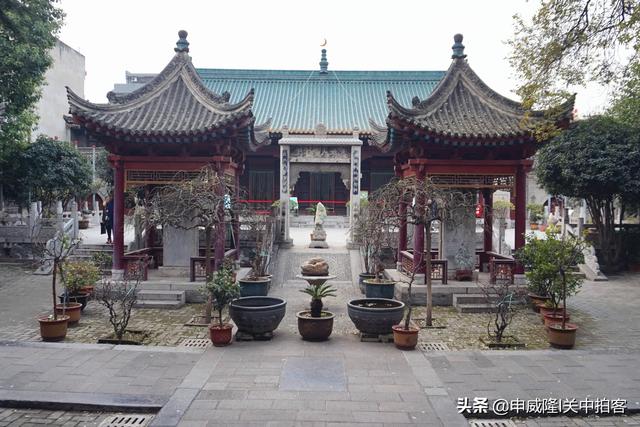
Shaanxi’s mosques lack ‘onion’ domes and have absorbed traditional Chinese architectural styles. Legend has it that it was built during the Ming Yongle 9th year (1411) by Ma Daozhen, and rebuilt in the Qing Qianlong 46th year (1781), forming the current layout.
In 1959, the mosque was used for other purposes, and religious activities were forced to stop. The main hall and two pavilions collapsed. In 1985, local Muslims donated funds and, after five years of restoration, the building was basically restored to its original state.
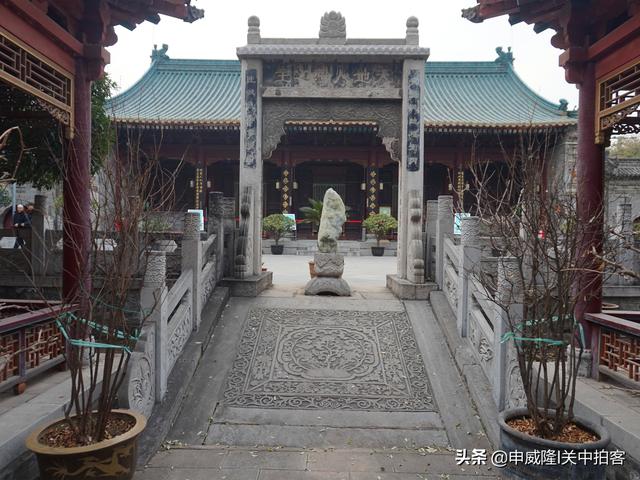
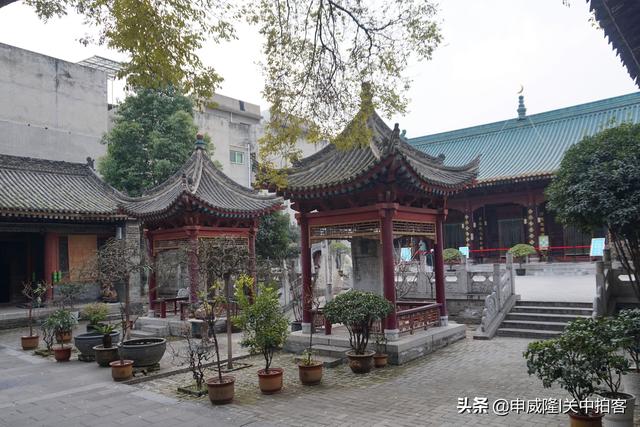
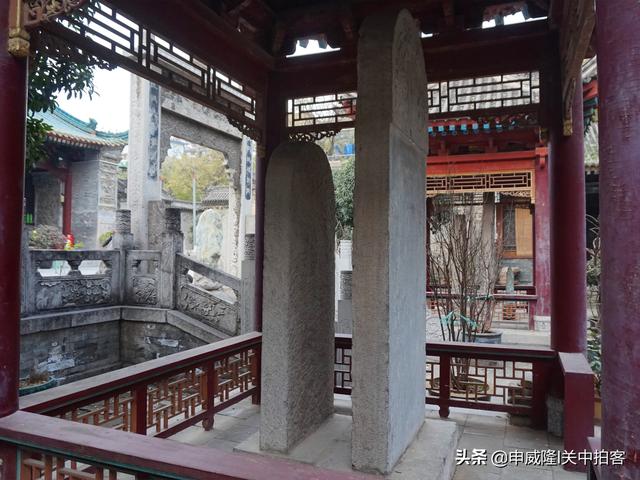
There are a total of four stone tablets erected in the two side pavilions. In the north pavilion, there is a newly carved Islamic text tablet and a damaged ‘Thoughts of Mr. Ma Zhongji of Xijing’ tablet erected in the eighteenth year of the Qing Emperor Guangxu (1892).
In the south pavilion, there is a tablet erected in the first year of the Qing Emperor Xianfeng (1851) – ‘Thoughts of the Tombstone of Mr. Wang Jixing, an Elder of the Hui People of Dapian Street, Xixing Prefecture’ and a tablet erected in the fifty-fifth year of the Qing Emperor Kangxi (1716) – ‘Thoughts of the Tombstone of Mr. Wang Jixing, an Elder of the Hui People of Dapian Street, Xixing Prefecture’.
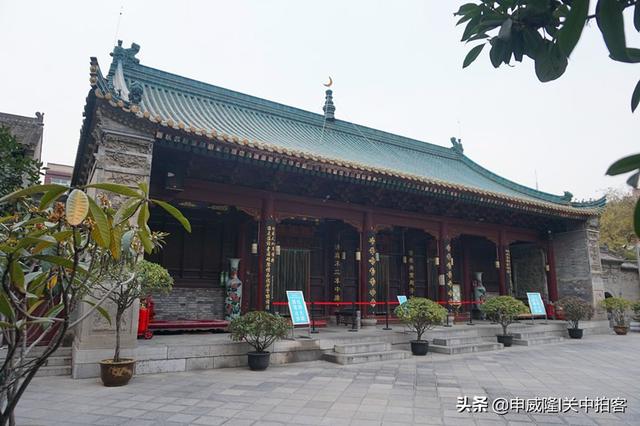
It is said that in the main hall of the prayer room, there are calligraphy by Empress Dowager Cixi – ‘Dispelling Heavenly Illnesses’, calligraphy by Emperor Guangxu – ‘Promote the Cultivation of Western Regions’, and calligraphy by Bai Chongxi – ‘Build the Nation’. However, the gate is closed, and visitors stop. In addition, the temple also collects 51 Arabic classic books and one Ming Xuande copper incense burner.
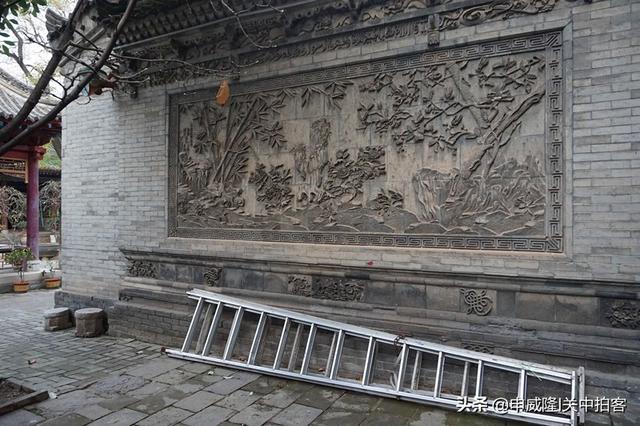
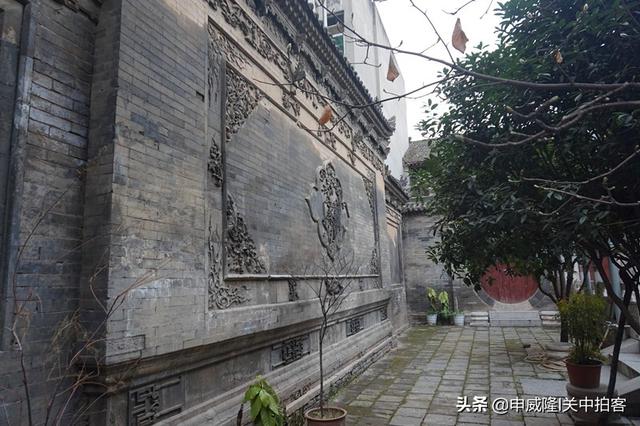
Now, it not only restores its former layout but also adds a large number of decorative components. You can see exquisite brick carvings, stone carvings and wooden carvings everywhere on the wall panels, fences and railings, adding more Chinese cultural elements to the mosque.