Fierce African Buffalo
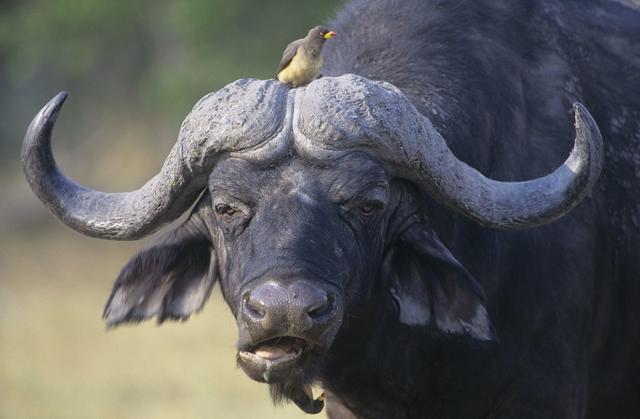
African buffalo (scientific name: Syncerus caffer): 5 subspecies exist. Head-body length 2.1-3.4m, height 1-1.7m, weight 300-900kg. The chest is broad, the limbs are thick, and the head is large with long horns. Male horns spread outwards and downwards, and in some males, the horns are connected by a head shield, known as a 'boss'. Soft hair on the head top is attached to large, drooping ears. The body is usually covered with sparse hair, ranging from brown to black. A long tail with a tuft of hair at the tip. Males are larger than females, and horns are larger, longer, and thicker. The body type of the tropical grassland population can reach twice that of the species living in forest habitats.
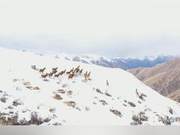
Herd animal, the strongest bull in the herd is the leader of the group, leading the herd and entitled to eat the best grass. Never stray from water. Nocturnal, avoiding the intense heat of the day by hiding in the shade or soaking in water pools or mud to cool down. Injured, isolated or mothers with calves are particularly aggressive and dangerous. Widely distributed in most of sub-Saharan Africa south of the Sahara.
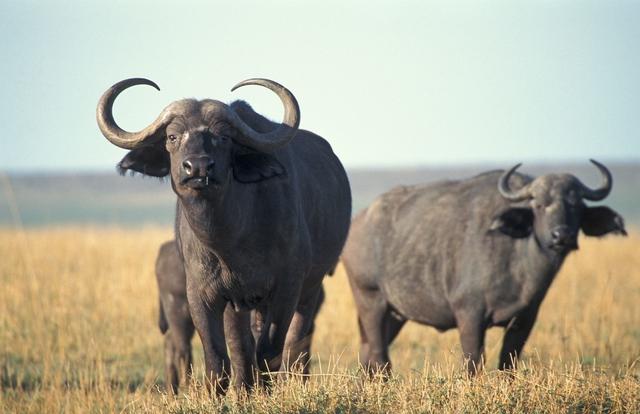
African buffalo, head-body length 2.1-3.4m, height 1-1.7m, weight 300-900kg. The chest is broad, the limbs are thick, and the head is large with long horns. Male horns spread outwards and downwards, and in some males, the horns are connected by a head shield, known as a 'boss'. Soft hair on the head top is attached to large, drooping ears. The body is usually covered with sparse hair, ranging from brown to black. A long tail with a tuft of hair at the tip.
Male individuals are larger than females, and horns are larger, longer, and thicker. The body type of the tropical grassland population can reach twice that of the species living in forest habitats. Mature southern grasslands subspecies males can measure up to 340cm in length and weigh up to 700-900kg, while forest buffalo subspecies are less than 120cm tall and weigh less than 320kg.
The African buffalo has 5 subspecies, with significant size and appearance differences. The forest buffalo subspecies (Syncerus caffer nanus) is the smallest of the subspecies, with reddish-brown to dark reddish-brown skin and smaller, drooping horns with prominent tassels at the tips of the ears. There are three large grassland buffalo subspecies and one mountain subspecies. The southern grassland buffalo is the largest individual in terms of body size.
Adult grassland buffalo skin color is very dark brown or black, males are usually darker than females; older male grassland buffalo may develop white patches around the eyes. Forest buffalo are usually red to reddish-brown. Like grassland buffalo, the color of older male forest buffalo becomes darker and sometimes black. The underbite and abdomen are often paler, and the face and legs may have contrasting patches. Despite the significant differences between forest and grassland buffalo, there is an intermediate and mixed type.
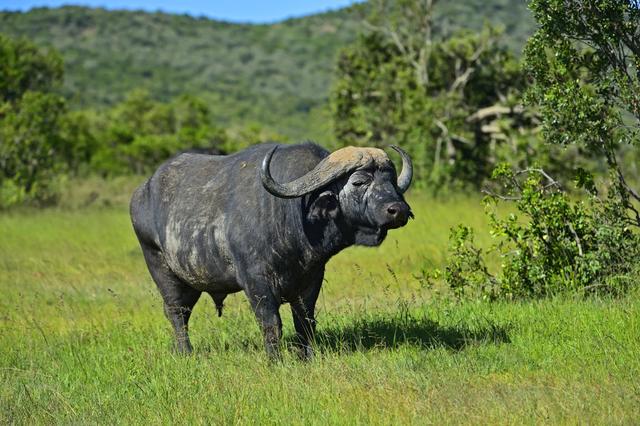
African buffalo are herd animals, only old or injured individuals will be isolated. The strongest bull in the herd is the leader of the group, leading the herd and entitled to eat the best grass. African buffalo cannot do without water, drinking at least once a day, and never stray from water. They are nocturnal, avoiding the intense heat of the day by hiding in the shade or soaking in water pools or mud to cool down. African buffalo is one of the most dangerous animals in Africa (other are elephants, rhinoceroses, hippopotamuses and crocodiles), the most aggressive and irritable species, and the most injurious animal in Africa. Injured, isolated or mothers with calves are particularly dangerous, and equally dangerous with lions and leopards.
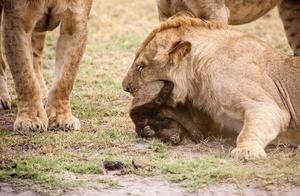
In the buffalo herd, the cooperation between females is strong, and if a member is attacked by predators such as lions, the rest of the group will react by roaring for help and rushing to defend. A group of buffalo can easily drive away an entire lion group to protect the safety of the entire herd members. The size of the buffalo group is not important for forest buffalo, as they live in a habitat that is not suitable for predators (such as lions). If necessary, forest buffalo can easily hide in secluded places.
To avoid heat, African buffalo spend most of their time lying in the shade. They often appear near water pools in the morning and evening, and most feeding occurs during cool nights. African buffalo eat fresh grass, and turn to grass, shrubs and trees when grass is lacking. The diet of African buffalo opens up long-grass areas for other species with more selective feeding habits, thus playing an important role in the ecology of the long grass areas south of the Sahara.
African buffalo mating and calving are strictly in the rainy season. Females usually give birth to their first calf at around 5 years old, followed by a one-year interval, and males begin to mate around 7 years old. The mating season of African buffalo is between March and May, with a gestation period of about 11 months, and birth occurs between January and April. The mother will closely monitor the safety of the calf, while preventing other bulls from approaching. This is a difficult task because a bull in mating will go to attack the calf or other bulls.
The bond between the buffalo mother and calf is very close, and the calf can walk on its own within a few hours. In just a few hours, the newborn calf can keep up with its herd. In the first few weeks, the newborn calf hides in vegetation, and the nursing mother will occasionally join the group. The calf is contained in a safe area within the herd. Calf mortality rate is as high as 80%.
The calf is weaned at about 10 months old. Male calves around 15 months old will be expelled from their mothers' herds and will join other herds of their age. They will formally join the buffalo herd at the age of 2.
Average lifespan is 20-25 years