Biodiversity Encyclopedia: White-throated Brownyard Bunting – Building an ‘Infant Room’ on a Cliff Wall
Beautiful Yunnan – Biodiversity Encyclopedia
Today
The editor wants to introduce you to
Lophophorus sclateri – White-throated Brownyard Bunting
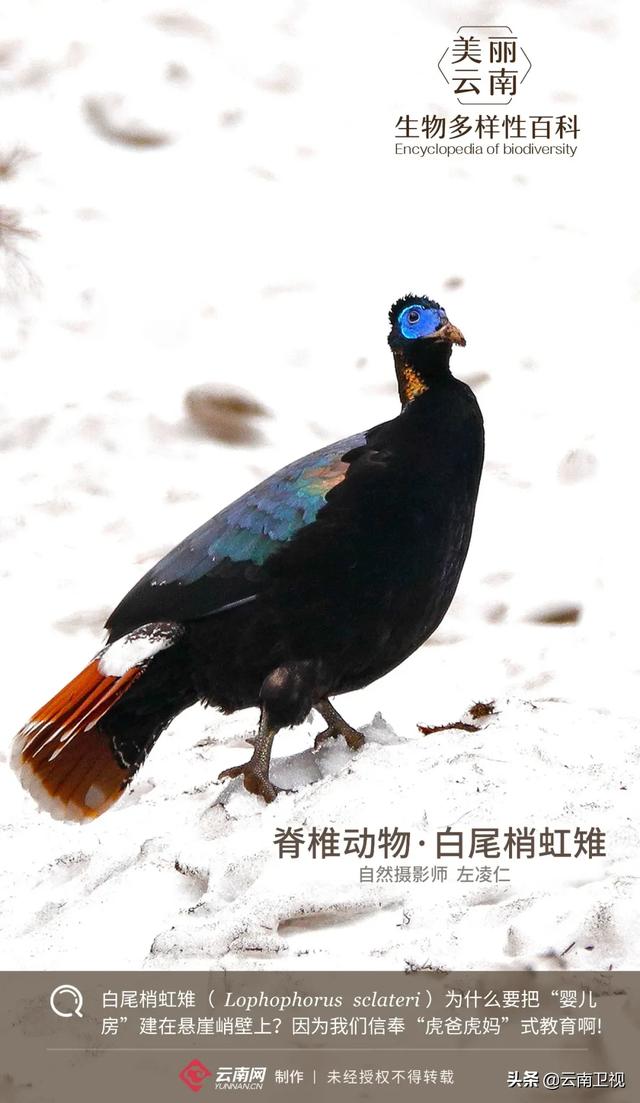
White-throated Brownyard Bunting
Lophophorus sclateri
Vertebrates, Aves, Passeriformes, Phasianidae, Lophophorus, also known as Snow Peacock, mainly distributed in Tibet and Yunnan in China. White-throated Brownyard Bunting is beautiful in appearance and scarce in number, and is a national grade one key protected wild animal. It is also listed as vulnerable by the World Conservation Union. The photo was taken in the Gaoligongshan National Nature Reserve.
They are often active at an altitude of 2500-4200 meters in high-altitude grasslands, rhododendrons and bamboo thickets, and dark coniferous forests. In winter, they migrate to mid-altitude areas with the snow line. The upper beak of the White-throated Brownyard Bunting is longer and more curved than that of other buntings, suitable for digging soil and pecking food on the ground.
The male White-throated Brownyard Bunting in the photo is a male. Male adults are about 600 to 700 mm long and weigh up to 2.8 kg. There is a small cluster of black feathers at the base of the nostrils, resembling a beard, and the top of the head has short, curved feathers that shimmer with metallic green. The entire upper back is dark blue-green with purple. The tail is brown with a white tip.
Female adults are about 580 to 628 mm long and weigh about 2 to 2.5 kg. Their wings are dark brown, and the back gradually turns gray-brown. The tail feathers are dark brown with 6 brown-white stripes, with a white tip.
In April, the White-throated Brownyard Bunting is the breeding season, during which male White-throated Brownyard Bunting will engage in fierce battles with males next to the mountain, and the victorious male will dance gracefully to pursue the female.
When the 'beard' male bunting wins the 'wife', they begin to build the most dangerous 'nursery'. They build the 'nursery' on a 30-meter-high cliff wall.
Researchers found that female birds incubate eggs, and male birds are responsible for vigilance on the day of hatching. On the day of hatching, the parents (birds refer to both parents as 'parents' during incubation and rearing) will not leave the nest until the morning of the 10th day. 10-day-old chicks sleep on the very steep cliff edge and have the ability to fly across the valley more than 20 meters.

Left Lingren, nature photographer, special editor of 'China National Geography', long-term shooting of domestic wild plants and animals, committed to expressing the beauty of biodiversity.
Follow the editor
Let's review
Previous issues
Biodiversity Encyclopedia knowledge points!
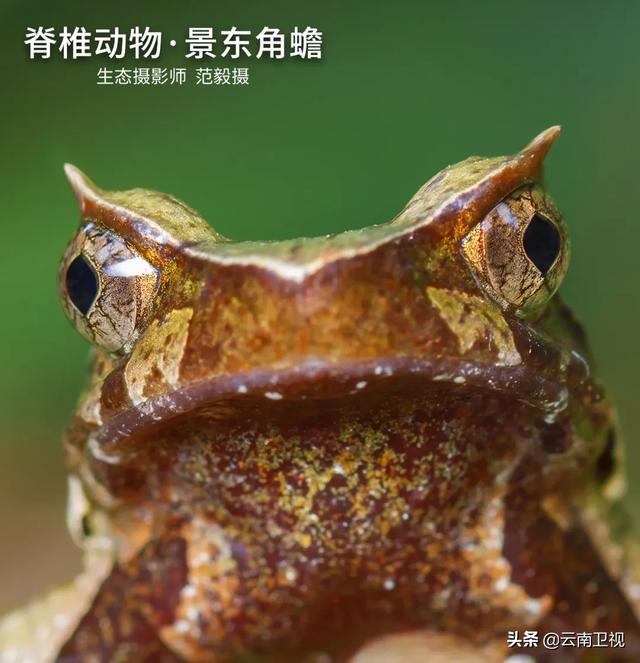
Danger is coming, quickly shield your eyes! – Vertebrates – Jeding Horned Frog
I am not guarding sand, I am guarding – Vertebrates – Great Wall Lizard

Millions of years ago, I danced with the Mammoth – Seed Plants – Sichuan-Yunnan Cold-adapted Pine

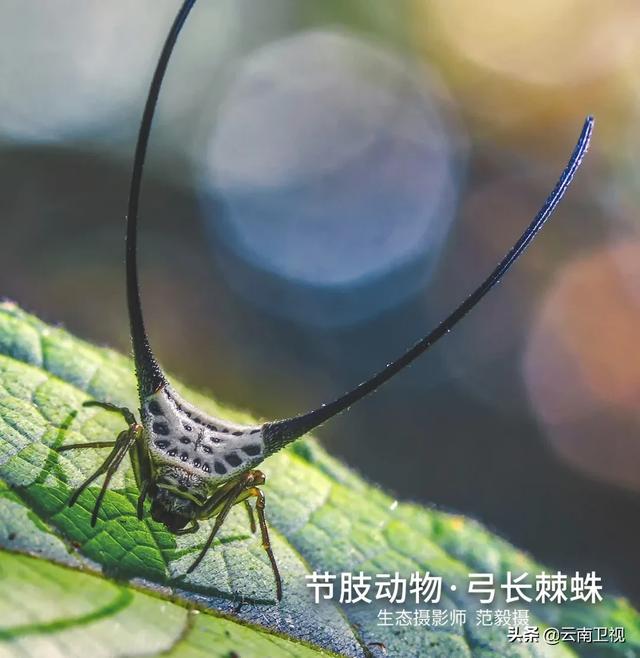
I love you, are you scared? – Orb-weaver Spider
Source: Yunnan Release
Editor: Selina
Responsibility Editor: Song Lijin
Producer: Mu Liyi
Channel Director: Du Xiang
Chief Editor: Li Xiaofeng
Editor-in-Chief: Li Qian
/