How to Prevent Young Birds from Developing Curved Legs and How to Correct This Condition Promptly to Potentially Cure It
Bird leg deformities commonly occur in young birds, and young birds cannot walk after birth, only relying on the body for crawling.When abnormal lateral forces act on the legs and feet, causing distortion and curvature of the hip socket and upper limbs (pelvis), this occurs.Both legs are usually affected.This is what we often call X-shaped legs or eight-legged feet. For young birds, this is a fatal defect. If it cannot be corrected in a timely manner, young birds will be unable to walk and will not learn to fly, and the final result may be death.
Young birds appearing leg developmental deformities, the main reason to investigate its causes is due to female birds duringpregnancy lack of vitamins and mineralsDuring the pregnancy of parrots, there was no additional nutrient intake, primarily relying on whole grains, in the late stage of parrot pregnancy, it is necessary to add some calcium appropriately, and liquid calcium can ensure the skeletal development of young birds.Female birds will press on bird eggs for a long time during incubation, even after maturity, they will press on young birds for a period of time, causing the young birds' legs to bend outwards and grow.
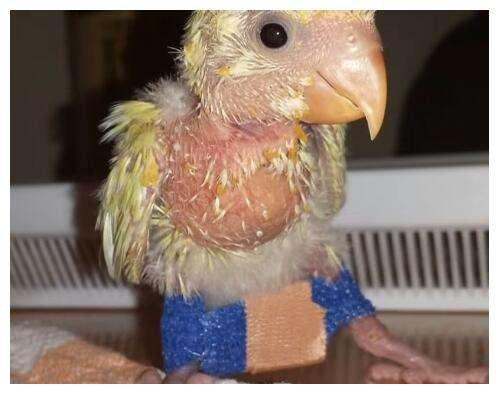
As a pet owner, there is an inescapable responsibility. The growth and development of birds need sunlight as a catalyst to produce vitamins, young birds in dark corners may suffer from vitamin deficiency, which will affect their normal growth.
When young birds are born, they urgently want to stand up. Before young birds are born, it is necessary to quickly set up the incubation box, lay enough wood chips or fine sand so that young birds can obtain sufficient traction, otherwise they may slip due to the bottom of the cage being too smooth, which will prevent them to form good muscle tension on their legs and cause them to deform.Another common reason is that the growth rate of parrots raised in artificial feeding is too fast.
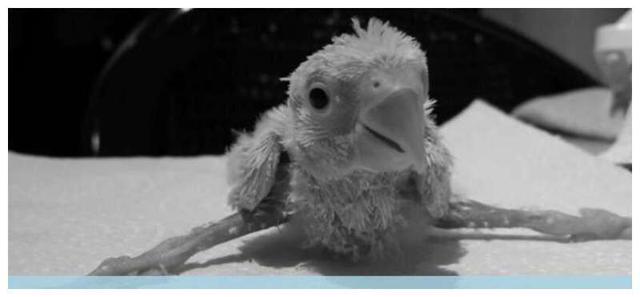
Symptoms of young bird's double legs bend outwards and grow deformed:
- Do not want to stand up
- Trembling when standing up
- Unwilling to walk
- Walking disorder
- Both legs are affected
Although this situation has occurred, don't wait, if corrected in a timely manner, young birds can almost be cured. As parrots get older, it takes more time to correct the legs, as their bones become more calcified and stiff, and the cellular structure is less adaptable to change. In the young bird stage, we can take the following measures to correct the legs.
The young bird is in a state of excitement, it is difficult for a person to complete the work because the young bird shakes constantly
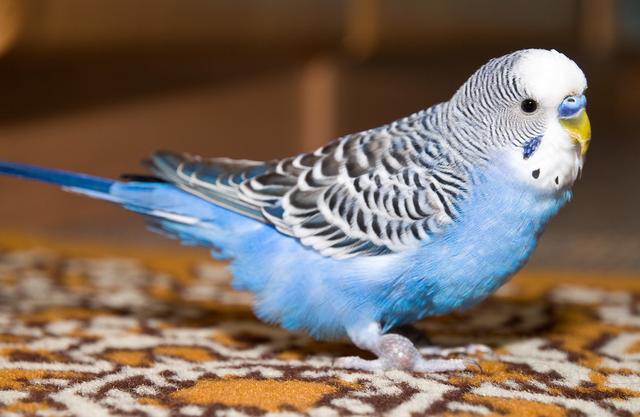
One person fixes the young bird and the other person operates, which is the bestStep 1
: To protect the young bird's legs, I will choose glue. First, cut the glue into a length suitable for the young bird's situation, and flow a large gap inside the young bird's legs, so that it can maintain the blood circulation of the feetStep 2
: Because the glue is too wide, it may bind the whole parrot's leg, so it needs to be trimmed, cut the glue shorter so that the young bird can move more freelyStep 3
: Start wrapping with one glue, in a clockwise direction, slowly lift it to the other leg. Make sure to avoid any feathers sticking to the glue sideStep 4
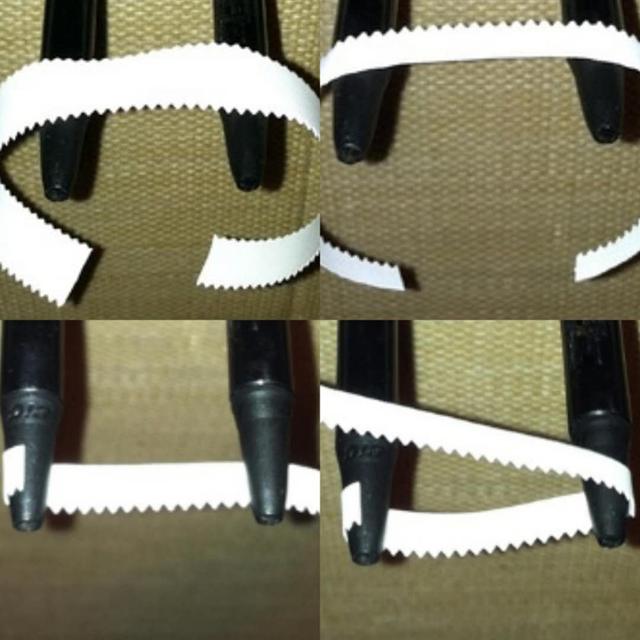
: Slowly put the other leg into the required position and wrap it with glue. Leave some space to move, wrap it with glue againStep 5
: After wrapping with glue to the required position on both legs, flip the excess glue over and cover the exposed sticky parts with itStep 6
: Cut off the excess glue and form a closed ring with the glue
Step finished: After completing all operations, there should be looseness between the two legs, ensuring that they can easily move their legs. If the bandage is too tight, it will cause blood circulation problems and local necrosis
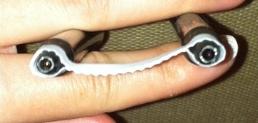
The bandage should be re-applied every day, to avoid the feet remaining glue residue, when finally needing to be removed, you can use olive oil and cotton swabs to slowly remove itHelping young birds to correct leg problems is a gradual process, to maintain a gentle pull on the legs, we can apply this process toYoung birds aged 7-30 daysMature parrots need to change the treatment method. During this period, the pet owner needs to spend a lot of time, even if the young bird can move now, but due to restraint, it still limits the distance of movement
It is necessary to do leg massage to the young bird, to prevent the toes and feet from atrophy or shrinkageI usually quickly put them in a wider aviary, because the feet and toes are prone to deformationIt must ensure the blood circulation of the feet, the foot color and temperature should be consistent with the normal state, if the glue is too tight or the foot torsion is too large, it will not be able to move quickly
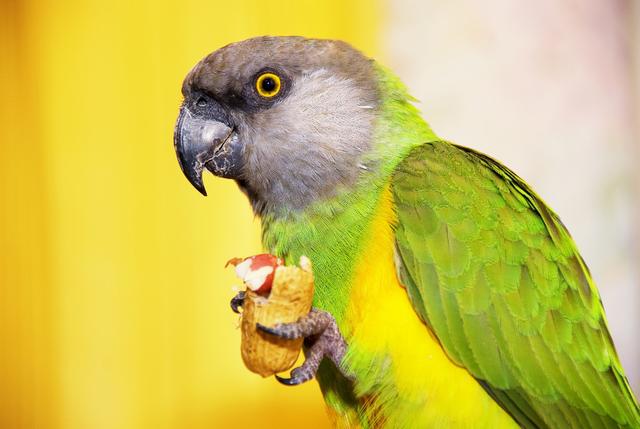
If the legs extend forward, accompany with the bending of the ankle (tibia-fibula) angle with the upper limb bending. This ankle angle is difficult to correct, but it will not make the parrot lose ability. The younger the parrot, the more likely it is to correct the ankle problem when the upper limb is extended
It is necessary to fix the glue for about two weeks, so that the muscles and tendons can support themselves without glue, so that the young parrot's legs return to normal
It is necessary to isolate the young bird in a breeding box, the parrot parents may bite the glue on the young bird's legs, the young bird will also instinctively use its hands and feet to pull the glue, out of concern for the young bird's leg health, the pet owner needs to stop this behavior immediately. Usually no surgery is needed to solve the problem, timely correction can improve the situation of the parrot's legs
- While performing the above steps, the pet owner should also take other necessary measures:
- Supplement vitamins D, calcium and phosphorus to achieve a balanced state
- Improve the incubation site or the young bird's habitat structure, to better support the young bird (suspension makes the legs extend straight)
- Use non-sticky materials with supporting structures to ensure the comfort of the young parrot
- Adjust the incubation area to prevent the parrot parents from pressing the young bird too tightly
- Adjust the temperature and humidity of the rearing box
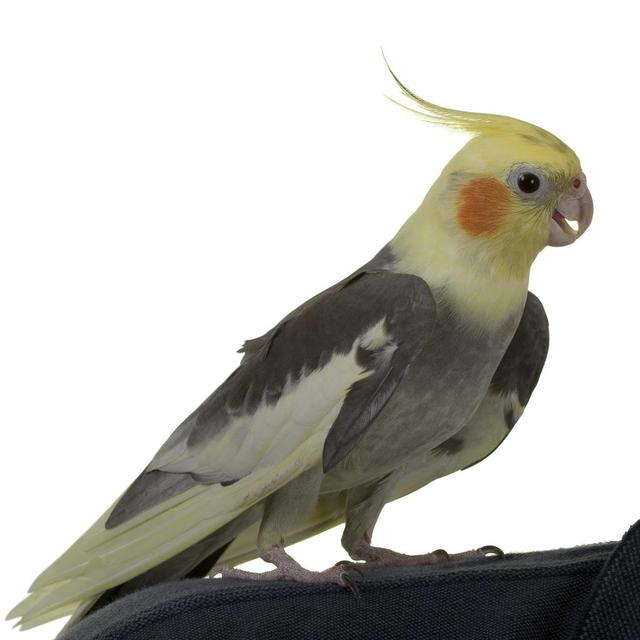
If leg developmental deformities are caused by infection and parasites, medication may be needed