12-Year-Old Boy Accidentally Discovers Red-Flanked Bluetail in Ganqiu, Xiamen – First Recorded Image in the Area
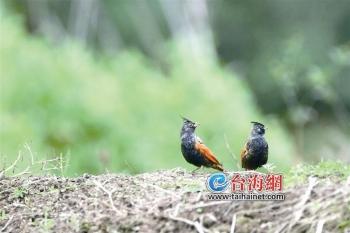
Taiwan Strait Daily, March 31st (Haikiao Bao reporter Chen YuShan/text Provided by Xiamen Bird Watching Association) With a small crown, elongated and developed feathers, a square-like tail, and a conical beak, the feathers are chestnut red. At a glance, it looks like a sparrow, but it’s more flamboyant than a sparrow. Yesterday, 12-year-old bird watching enthusiast Du Du accidentally discovered this small bird – the Red-Flanked Bluetail – in Tianou Village, Ganqiu Town. Xiamen Bird Watching Association councilor Chen Hao immediately arrived at the scene to take photos with his lens. It is reported that this is the first recorded image of the Red-Flanked Bluetail in the Xiamen area.

First recorded image of Red-Flanked Bluetail in Xiamen
Yesterday, Chen Hao was pleasantly surprised to photograph the Sulfur-winged Warbler and the Red-Flanked Bluetail, two rare bird species in Xiamen. ‘These two warblers are relatively rare in Xiamen, especially the Red-Flanked Bluetail, which has never had accurate imagery records.’ Chen Hao said, ‘He saw a total of 12 Red-Flanked Bluetails.’
It is reported that the Red-Flanked Bluetail is a bird of open and dry areas, bold and fearless, nesting in the foothills of hills and on rocky slopes, and is also common in urban and rural areas. Throughout the year, they spend most of their time in hilly and low-mountain areas, descending to the plains in winter and ascending to higher mountains in summer to breed. When resting, the Red-Flanked Bluetail will rest on wires or trees, and during the spring and summer, they often make clear and crisp calls.
Chen Hao told the Guide Reporter that in recent times, in addition to the Red-Flanked Bluetail, there are also Summer Migrants such as House Swallows, Yellow Wagtails, Black-hooded Honey Buzzards, and Black-faced Spoonbills, and Spring-migrating waterbirds such as Black-faced Spoonbills, Black-bellied Starlings, and White-throated Wagtails are appearing on the island. Next, the familiar ‘old friend’ Chestnut Honey Buzzard will also soon arrive in Xiamen.
April Migration Season Xiamen is an important refueling station
Around April is the migration season for winter migrants. The migration routes of Chinese wetland birds are divided into three main routes – East, Central, and West. The East migration route is a key part of the East Asian to Australian migration route, located along the southeastern coast of China, and Xiamen, an important link on this route.
This route involves 500 species, totaling several million, including nearly 300 migratory waterbirds, mainly including most goose and duck species and shorebirds; 13 species are included in China’s Level I Key Protection Bird List, including Oriental White Stork, White Crane, and Chinese Red-Flanked Duck; and 35 species are included in China’s Level II Key Protection Bird List, including Grey Crane, Black-faced Duck, and Black-faced Spoonbill.
Hundreds of bird species on this route will pass through Xiamen, and Xiamen’s mudflats and fields are important refueling stations for them. Resident birds like here's climate and environment, and migrants continue to migrate north along the southeastern coast of China after resting.