Climbing Fish
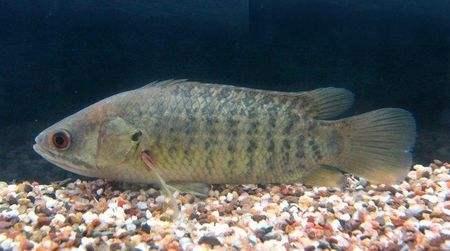
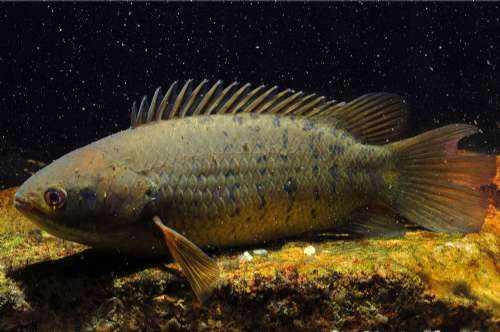
The turtle shell climbing stone's body side is slightly extended in a rectangular shape, mouth end position, upper and lower jaws have fine teeth, the tail fin is short and side-flattened, the fin is circular. The body is base grey with a slight grey-green, the body's rear has many black spots, the abdomen is slightly lighter, there are black spots on the gill cover and at the center of the tail fin, the side of the body has about ten grey-green horizontal stripes. No fins, with a parallel back edge that breaks in the middle, the lateral line and gill cover edge have sharp serrations, the body is covered with hard and thick shield scales, the dorsal fin and anal fin each have sharp spines, the dorsal fin spines 16-20; the dorsal fin soft rays 7-10; the anal fin spines 9-11; the anal fin soft rays 8-11, the body length can reach more than 25cm. The fish's color is affected by the living environment, there are silver-grey, there are also obviously golden yellow. There is an auxiliary respiratory organ inside the gills, called the gill lid or labyrinth organ, which can absorb air for breathing, can survive in hypoxic stagnant water. The turtle shell climbing stone has the most developed gill lid or labyrinth organ in the entire climbing stone family, is often considered the most primitive family member.
The turtle shell climbing stone is native to China, Malaysia, India and other countries. The climbing stone family is distributed in Asia, west to the Indochina Peninsula, south to Vietnam, the global only 2 species, in China south-east to India, is an Asian exclusive family. There is only one species in China, which is also the only one distributed in Chinese climbing stone fish. In Hong Kong, the turtle shell climbing stone is distributed in the downstream of the various rivers and streams of the Hong River and south to Hainan Island, the coastal ponds and rice fields. Inland is found in the Fujian, Guangdong, Guangxi, Taiwan (early specimen museum records, but may have been extinct due to pollution in the plains area), Macau, Hainan Island and Yunnan Province various rivers and streams downstream and nearby wetlands, rice fields, belongs to native Chinese fish. The basic character is docile, easy to raise, water quality requirements are low, can live in various freshwater to brackish water environment, but it is easy to be frightened and jumps out of the fish tank, once it is out of the water, it will immediately raise the side and gill cover spines, it is not allowed to handle it with bare hands, it is famous for its tenacious life force and ability to crawl on land. In overseas, it is a popular ornamental fish.
Due to many years of ecological environment changes and excessive human hunting, the distribution area of Hainan Province's wild turtle shell climbing stone fish has gradually shrunk and the population number has decreased sharply, it has become a endangered species. Diurnal, hides in rock holes or aquatic plants in river streams, it is very difficult to find it in the wild observation, only when it breathes on the surface of the water can be known its existence, when the heavy rain, the flood water rises, the fish will collectively climb the shore, to find a new environment to live, when the rain stops, the water level rises, the fish will collectively climb the shore, to find a new environment to live, in the hazy rainy weather, it adds a romantic element to the life of nature, each year when the rainy low-lying river and pond floods, you can appreciate many different sized turtle shell climbing stone fish in the shallow pond and ditches, scattered to neighboring waters and ponds, in the hazy rainy weather, it adds a romantic element to the life of nature. The turtle shell climbing stone is a small fish in the climbing stone family, belongs to perennial, solitary or group, diurnal, omnivorous, with a tendency to carnivorous, the adult and juvenile are all free-swimming animals near the water surface, mainly feed on small aquatic animals including earthworms, insects, small fish and water lettuce and some tender aquatic grass, it lives in still, slow-flowing, muddy water bodies.
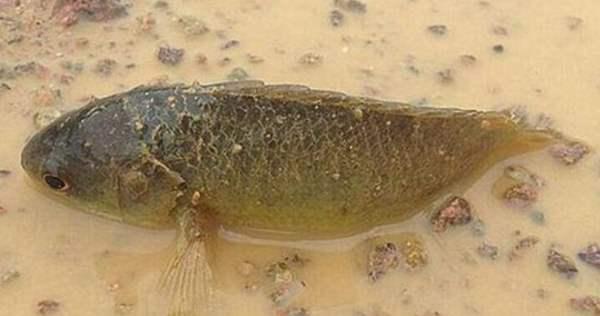
When the living environment is polluted, the water quality is deteriorated and smelly, other fish cannot survive and die one by one, this little fish still lives stubbornly, but it doesn't like to live in polluted water, when the heavy rain, the water level rises, the fish will collectively climb the shore, to find a new environment to live, in the hazy rainy weather, it adds a romantic element to the life of nature. It often relies on shaking the gill cover, chest fin, flipping over, etc. to cross the bank, the land, to migrate to new waters or hide in the mud. The turtle shell climbing stone's gill lid is very developed, can breathe air, so it doesn't die for a long time out of water, when the water is hypoxic, out of water, or in a slightly moist soil, it can live for a long time. The turtle shell climbing stone has a certain tolerance to brackish water, so it can be widely distributed in low-lying and coastal areas, in the Huainan region of South China, when the Huayu River floods, the turtle shell climbing stone will be carried to the west of Hong Kong's Big Island and Liu Feng Shan, swim to the surrounding various rivers and streams, repeatedly, it is one of the few species that can continuously replenish individuals from the mainland through secondary dispersal form. In Hong Kong's fish composition, it belongs to the middle to surface fish of the deep low-lying shallow water and wetland, mainly feed on small animals, hide in rock crevices or plant clumps. It is not very sensitive to pollution, but can reflect the severity of water pollution, it is a marker species.
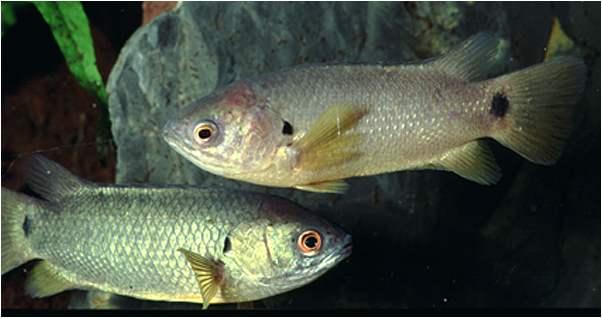
The turtle shell climbing stone symbolizes tenacity and refusal to give in, which is deeply loved by some people. But sometimes this tenacity didn't bring them good luck, even became the capital for malicious exchange of quickness for some people, the instrument for malicious exchange of quickness, The turtle shell climbing stone is about one and a half years to reach maturity, the body length of about 12cm can breed. The maximum body length can reach more than 25cm. The sexes are obviously different, the male head is slightly larger and rounder, has a darker color mating color, the female head is small and slightly pointed, the abdomen is slightly swollen. The breeding season is in May to July, it breeds in dense aquatic sinking and floating plants, the large mature individual can produce about two thousand floating eggs, with territorial and parental care behavior. Adapt to suitable: pH6-9, hardness: 36-447 PPM, growth water temperature: 18-35℃, the most suitable growth water temperature: 25-30℃, below 15℃ stop feeding, critical water temperature: 10℃, death water temperature: about 5℃, belongs to tropical and subtropical freshwater fish. The fish is paired with 1 or close to 1. Female and male: 1:1. The distinction between female and male fish: in the breeding season, the female fish's gill slit protrudes and is sharp, the abdomen is large and swollen, press the anus can squeeze out a small number of mature egg granules, the tail fin is slightly rhombic; the male fish is generally smaller, the body is longer and less plump, the gill slit is concave, the mature male fish gently squeeze the anus can squeeze out white sperm, the tail fin is slightly elliptical; the female fish is often smaller, the body is longer and less plump, the gill slit is concave, the mature female fish gently squeezes the anus can squeeze out a small number of mature egg granules, the tail fin is slightly rhombic.
The turtle shell climbing stone symbolizes tenacity and refusal to give in, which is deeply loved by some people. But sometimes this tenacity didn't bring them good luck, even became the capital for malicious exchange of quickness for some people, the instrument for malicious exchange of quickness. In some areas invaded by foreign species, such as the Egyptian catfish, tilapia, carp and other foreign species, many native fish decrease or disappear, the turtle shell climbing stone becomes one of the few native fish that can withstand it, but the number is still weak, it is often accused together with these foreign invasive species to cause the reduction of other native fish, or some water areas are only left with the tenacious turtle shell climbing stone, so it is accused of causing the disappearance and destruction of other native fish. In fact, there are many native fish that are more ferocious than the turtle shell climbing stone, such as the big-mouthed catfish, carp, etc., which coexist in the same native species, and the predation between the predatory species will not be extinguished by the prey, this is the ecological balance formed over millions of years, and more human-caused are responsible for destroying this balance. Perhaps only because the tenacious turtle shell climbing stone in some people's eyes is because of its small size, its appearance is not outstanding, it is easy to hurt hands, the scales are hard and difficult to catch, cannot meet the greed of some selfish people, they don't care whether it is a native species or not, they can eliminate anything they don't like.
“”