National Forestry and Grassland Administration: Overall Stability and Growth in China's Endangered Wild Species Populations
Source: CCTV News Client
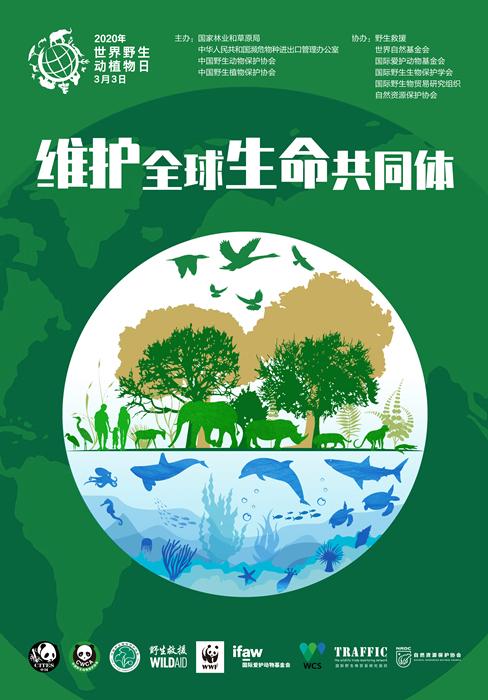
Today (3rd) is the 7th 'World Wildlife Day' of the United Nations. This year's global theme is 'Protecting All Life on Earth', and China's theme is 'Maintaining the Global Community of Life'.
According to reporters from the National Forestry and Grassland Administration, in recent years, through the systematic implementation of endangered species conservation projects, China's giant pandas, golden snipes, Asian elephants, Tibetan antelope, etc. have reversed the continuous decline, and the Deerhorn Ironwood, Huaigaomu, Baishan Zuo Lengchan, etc. wild plants have stabilized and grown in numbers.
According to a relevant official of the National Forestry and Grassland Administration, in recent years, China has strengthened the protection of wild animal habitats and the rescue and breeding of wild animals, severely cracked down on the illegal trade of wild animals and ivory, established a sound legal system, built a wild animal epidemic source and disease proactive warning and monitoring system, and continuously strengthened the protection of endangered wild animals.
As of now, China's giant panda captive breeding population has reached 600 individuals, which effectively supports the recovery and reproduction of the wild population, and the wild population of giant pandas has increased from 1114 in the 1980s to 1864. The population of Asian elephants has increased from 180 to nearly 300. The protection level of Tibetan antelope has been lowered from 'Endangered' to 'Near Threatened', and its population has increased from less than 75,000 to over 300,000. The population of golden snipes has increased from the original 7 individuals to over 4000 in the wild population and captive breeding population.
At the same time, China has taken measures such as in-situ conservation, ex-situ conservation, and returning to nature to continue protecting rare and endangered wild plants. A total of 118,000 natural protected areas have been established nationwide, providing wild plants with the natural environment they need to survive, and about 65% of China's key protected wild plants and small populations of wild plants are protected. Through the rescue protection of more than 100 small populations of wild plants such as Deerhorn Ironwood, Huaigaomu, Baishan Zuo Lengchan, Taiwan Teak, Pu Tao Teak, etc., the populations of some endangered species have gradually recovered.
In addition, China has established nearly 200 various levels and types of botanical gardens, which collect and preserve 20,000 species, accounting for 2/3 of China's plant species, and has basically completed the collection and preservation of ferns, palm germplasm resources, as well as the collection and preservation of key orchid and lily families originating in China.
China is one of the countries with the richest biodiversity in the world. Since joining the 'Convention on International Trade in Endangered Wild Fauna and Flora' (CITES) in 1981, the Chinese government has conscientiously fulfilled international obligations and taken a series of stricter measures than CITES, and has carried out a lot of work in strengthening performance management, improving regulatory law enforcement, cracking down on illegal trade, promoting collaborative performance, raising public awareness, and enhancing comprehensive performance capabilities.