Here They Are! "The 'Bird Panda' - Chinese Fall Sandpiper Arrives in Changbai Mountain!
The Chinese Fall Sandpiper belongs to the migratory birds and has migratory habits. Every year in March, they collectively migrate north. The south-northeastern area of Changbai Mountain's Lake South District along the river is one of the largest destinations for the migration of the Chinese Fall Sandpiper.
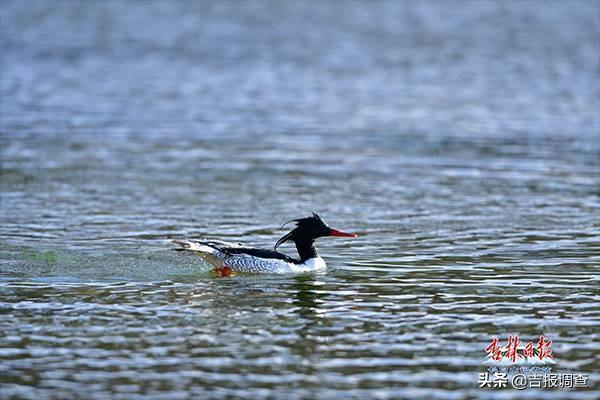
As a unique and rare species in China, the Chinese Fall Sandpiper is often called the 'bird version of the giant panda'. As a national level protected animal, the Chinese Fall Sandpiper has been living on Earth for more than a million years, and is even rarer than the alligator. It is an international endangered animal.
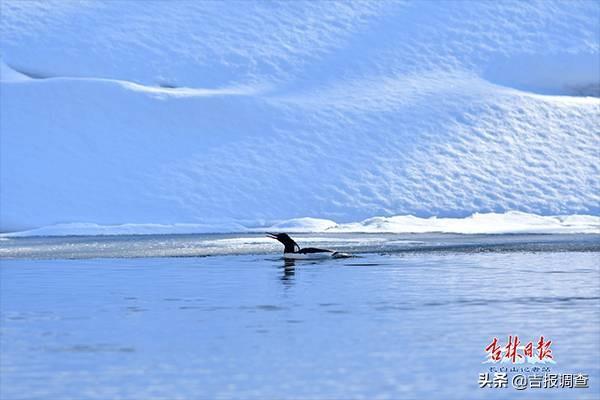
On March 12, 2020, the reporter received the news that the first batch of Chinese Fall Sandpipers had arrived this year. To record this precious scene, the reporter brought a long-range, short-range camera and spent a week following up to shoot it.

On March 15th, at 9:00 AM, we arrived at the confluence of the Old Heihe River and the river along the river, and it was suddenly snowing. Within a short time, the two banks of red willow were covered in snow. Taking off the backpack, we took out the camouflage tent prepared in advance and set it up.
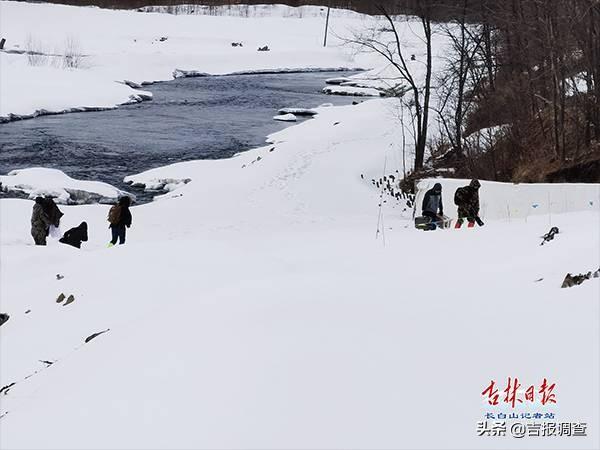
On the side, bird lover Li Guodong introduced to the reporter: 'I have observed the sandpipers for thirteen years, and I know the environment they like to live in. The scenery of Changbai Mountain's Lake South District is beautiful and picturesque, with gentle rivers and refreshing air, which satisfies all their needs. The river is one of the important habitats of the Chinese Fall Sandpiper. They migrate to here in mid-March every year, nest and breed here, and live for more than eight months. There are many artificial nests designed by government experts for us bird watchers, and we jointly installed them on trees that are more than ten meters high on both riverbanks. Although the sandpipers are timid, they are very fond of our artificial nests.'
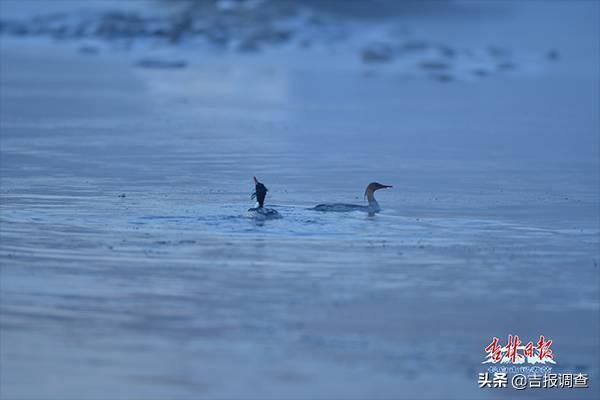
Taking advantage of the snow, we remained still by the shore in the tent. Around 2:00 PM, we finally saw the cute little cutie – the Chinese Fall Sandpiper.
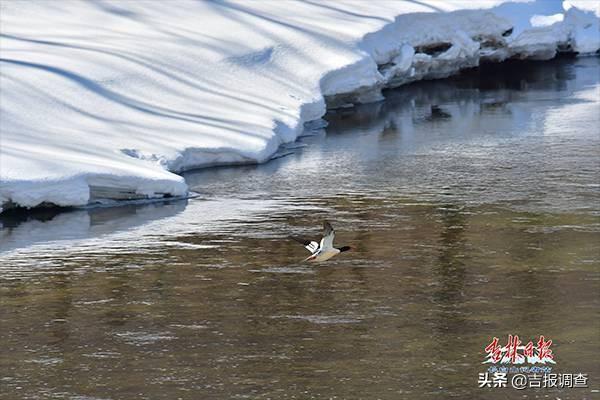
Although it is mid-March, the scene of the Changbai Mountains with snow still remains common. Although the wind and snow were strong, they couldn't cover up the spirit of the Chinese Fall Sandpipers. In the lens, it had a very fashionable hairstyle, with two black feather crowns on its head, which was very eye-catching. It swam flexibly on the water, plunged into the water suddenly, and appeared on the other side, groomed its feathers, and shook off water droplets, which was very lovable. Not long after, another sandpiper landed on the water, with brown-brown feathers on its head and neck. They played together, just like a pair of enviable couple.
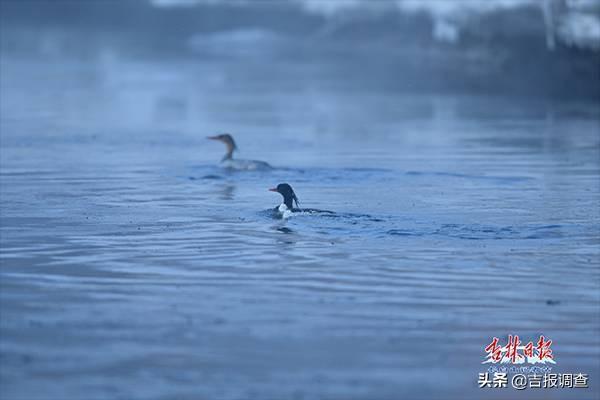
After a week of observation, the reporter has collected a lot of precious imaging materials, recording the lively and active sandpipers.
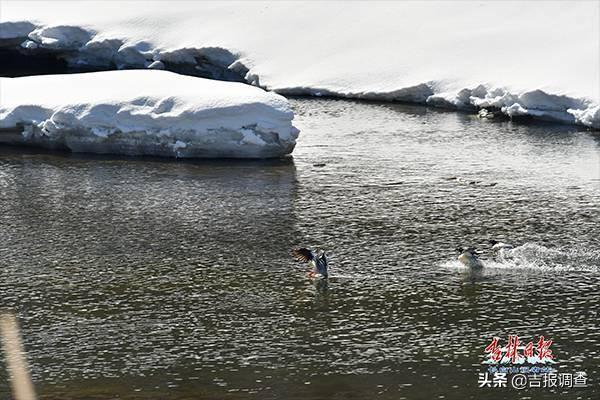
In recent years, the government has improved the management of the protected area and worked more perfectly on animal protection, creating better living conditions for animals such as sandpipers.
More than one hundred young sandpipers are born in the river along the river every year, and they finally migrate to the south with the flock.
Jilin Daily
Planning: Jiang Zhongxiao
Author: Jilin Daily All Media Reporter Han Jinxiang Cui Densen