Flying Squirrel Enters Residence, Reunited with Forest Allies
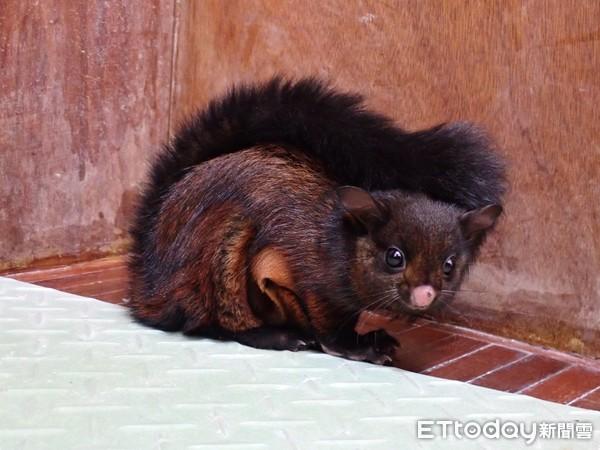
1 giant flying squirrel suspected of a flight mishap, fell into a residence. (Photo / Lin Si-min authorized to provide, same as below)
Intern reporter Chen Pe-sueh / Interview report
A giant flying squirrel invaded a residential building in Wulong Street, Taipei City. Fortunately, a volunteer specializing in treating injured wildlife learned of the incident and, after assessment, determined that it was young and likely separated from its mother, assisting in its placement and immediate release back into the wild to ensure its safe return to the forests.
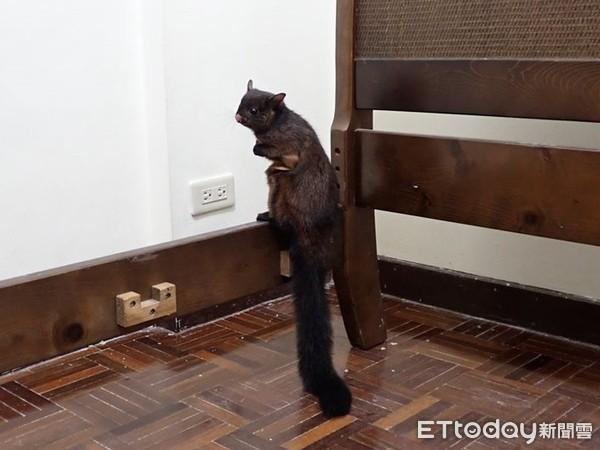
The giant flying squirrel had no obvious injuries; it was initially left alone in an empty room.
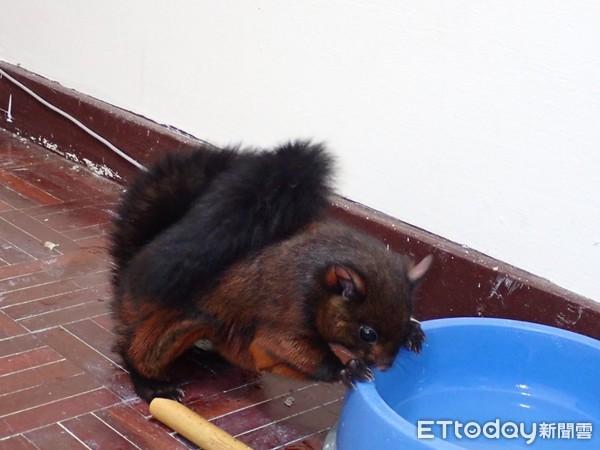
The room was equipped with simple drinking water.
Taiwan Falcon Research Association's Lin Si-min said that the giant flying squirrel had no apparent injuries. It mistakenly entered a residence on Wulong Street on the evening of December 12th. A student from the National Taiwan University Entomology Department discovered and temporarily housed it. 'Wild animals usually try to escape when they see humans; if forcibly captured to be treated, it could have an adverse effect. Simply guiding the animal into a clean cardboard box is sufficient. It's not necessary to feed or give water, as it could cause the wild animal to become more nervous and experience choking or suffocation.'
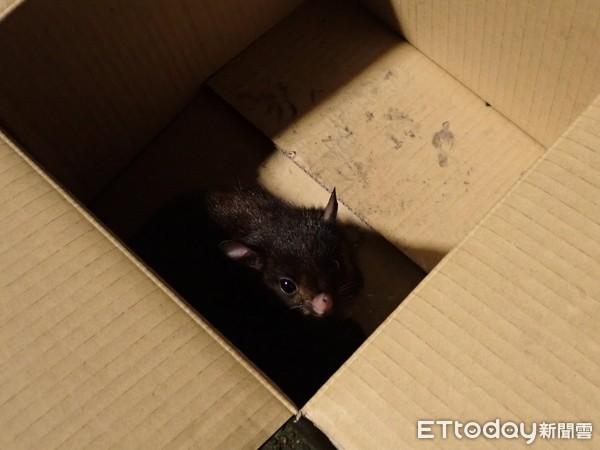
The giant flying squirrel was docile and nestled in the cardboard box.
Lin Si-min carefully examined the giant flying squirrel and concluded that it was possibly learning to fly but lacked skill, unintentionally crashing into a residential area, before choosing to release it at night. Lin Si-min said that recently, many young fledglings have left the nest, and some become separated, often reported by the public for handling. However, many of the time, their parents are nearby. It is suggested that people should first place these uninjured animals in a safe place so that their parents can take them back.
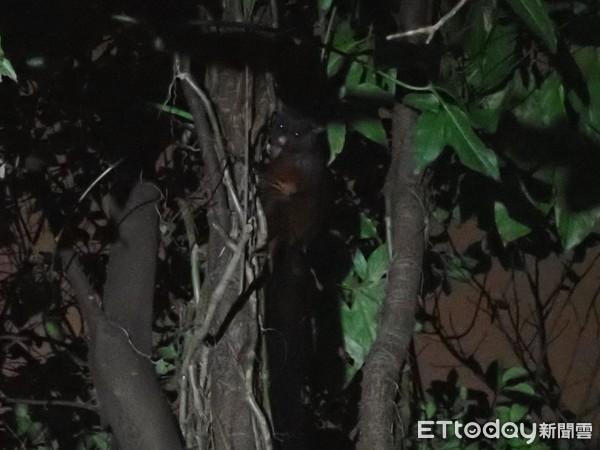
The giant flying squirrel climbed up a tree and looked back at the person who helped it.
People encountering wild animals may be initially frightened. Lin Si-min emphasized the importance of 'observing quietly.' First, confirm that the animal's activity is normal and without impairment, and allowing it to 'leave on its own' is the simplest method. Only when the animal has a wound or is trapped should you contact relevant units for emergency handling. Furthermore, when wild animals return to nature, they may become prey for stray cats and dogs because they are not yet familiar with the direction. Lin Si-min suggests that when releasing wild animals, people can stay for a while to ensure the release location is safe for the animal.
►Giant flying squirrel frantically ran into the mountains after being released.
You might also like:
►Kitchen sink 'black black cloudy gas'! Mom turned on the light and was shocked: 'What are you doing here'
►Cat owner fixes her usual spot, accidentally discovers 'color tone little life' in the corner and surprises the net.
►More extended videos.