Looks weak and wind-resistant, but a hunter of insects; Larval ants are its prey
Ant lion is a common insect, they are everywhere, widely distributed all over the world, and we can even find them in our parks or fields. Although they are very common, this is a wonderful insect. In the early 18th century, animal Levontruck in Paris studied its peculiar habits, bringing this insect into the human field of vision. The grown-up ant lion is somewhat like a young dragonfly, looking weak and fragile, ant lion adult only come out at night, so few people recognize it. In the observation of insectology in the 18th and 19th centuries, people knew very little about this insect, only the larvae became many people's research materials.
Ant killer
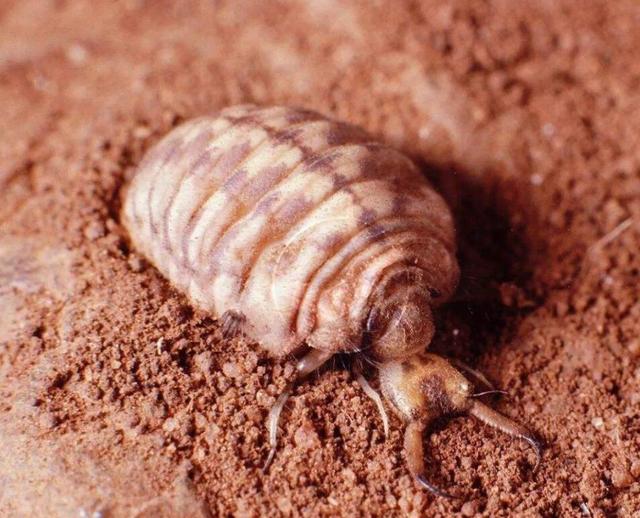
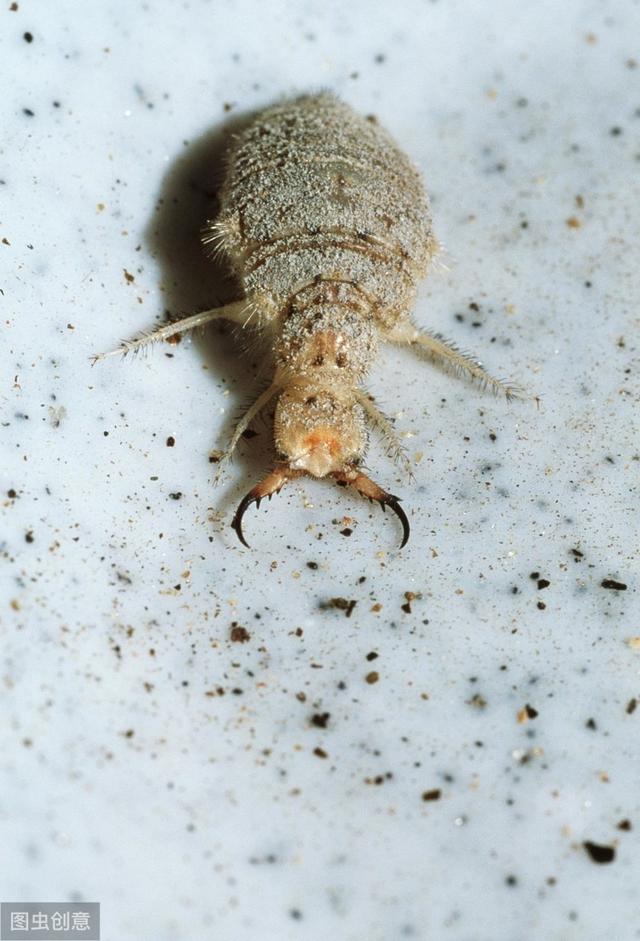
Generally in biology or entomology, when talking about ant lions, they often refer to their larvae. They often live in dry and sunny sandy soil, close to forests or dense bushes. It is not because they belong to the ant family, but because they specialize in catching ants to eat. Ant lions often live near ant nests in order to hunt ants. Ant lions grow to about half an inch long, with their hindquarters arched, a bit like a shield; the head is easy to move, the jaw is strong and powerful, a bit like pruning shears. Most colors are pale yellow, often with sand particles attached, covering the body. Many bristles on the parts of the body are dark brown or black. There is a wide stripe on the back, with red, in addition to the whole body has pigment spots, different kinds of ant lions may have color and size differences, but their morphology is basically the same.
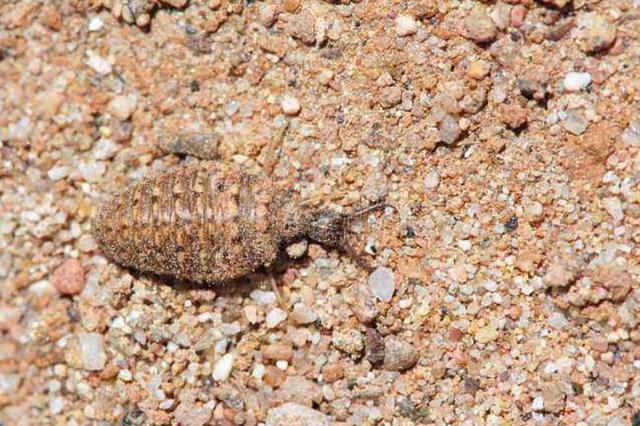
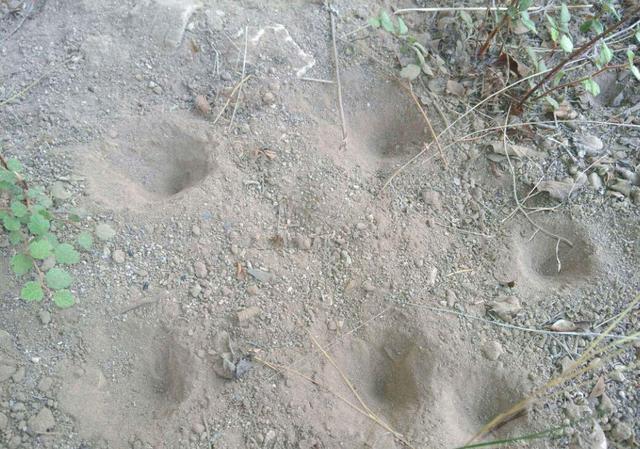
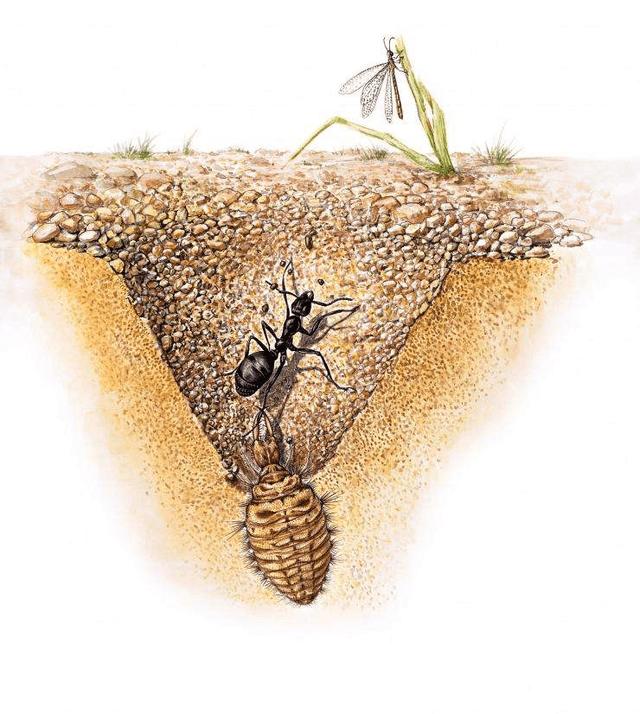
Ant lions are naturally adapted to the environment, they have a completely different appearance between eggs and adults, the larvae and adults are very different, and the larvae have little attacking ability. Facing various ants, young ant lions are accustomed to dealing with them from birth. Young ant lions are only 0.08 inches long, but they can dig. It digs funnel-shaped pits, sits in the bottom of the pit, only exposing the jaws to wait for ants that are bigger than itself to fall into the trap. In appropriate places, such as sand pits, funnel pits can be dozens, different sizes, the largest diameter is about 10 centimeters. If the funnel pit is used well, ant lions will occupy it for several months. The conditions required are soil not wet, not too hard, sunny but not windy, nearby ants and other insects.
Trap location is not picky
In the observation of insectology, most scientists think that ant lions can according to the current soil situation to determine whether they set up traps, many scientists have published such views in their notes. However, after many years of experiments, scientists gradually discovered that ant lions cannot choose suitable places by themselves, just like the literal meaning, they do not have the ability to judge whether a region is suitable. They followed a spiral route, with the rear always moving forward, like warm and sunny, dislike wet, it will eventually find a suitable place. Like some other animals, they always automatically adjust their bodies, it's like having a rotating device inside, so they accept the stimulation of the environment, just like blinking. In the dark or evenly scattered light, they are motionless, until there is uneven light, they are stimulated, they must move. Although the light and heat distribution is sometimes uneven, at least under the constraints of experiments, so they can only compromise. British entomologist Daughlaiyin professor experimented with this insect for many years in the laboratory, he has never lost an ant lion, because as long as one runs away, he can always know where it went. Ant lions always retreat behind, which is very strange, no matter how to try it, there is no exception. This is because he is a drilling master, drilling is always the tail first, no matter how to try it, there is no exception.
Insect classification is called 'insect excavator'
Ant lion larvae find a suitable place and follow a circle backward, using their rear cone to dig soil. It digs soil fragments from the inside of the circle and moves it to the top, like an explosion, it flies outside. The front of the body has a segment that looks very beautiful, it can throw soil fragments very conveniently. There are bristles arranged on the body, almost all pointing forward, which also helps it throw soil, the legs help to dig the hole, but most of the work is done by the back of the body.
During the digging process, ant lions successively dug soil in a circle and threw out soil fragments until the funnel was deep enough. It buried its lower part, only exposing the jaws. Its face is always facing away from the light. If there are ants falling into the trap, it immediately closes the upper and lower jaws to bite, and may even shoot poison. The lower side of the lower jaw has a groove, and a part of the mouth organ moves back and forth in the groove, which helps to suck in the liquid of the trapped ants. Once the ant lion sucks up the ant's body liquid, it throws out the ant's shell. Ant lion larvae have many strange eating habits, for example, the stomach cannot be opened outward. No matter how much undigested waste is, it must be excreted from the mouth.
What does ant lion throwing sand mean?
In addition to digging traps and throwing ant shells, ant lions often do throwing work. Scientists through observation found that when an ant has slid halfway down the slope and tried to stand, ant lions usually hit this struggling ant into the bottom of the funnel. At first glance, this attack seems to be a lot of hesitation. However, British Daughlaiyin professor gave another explanation, which was also recognized by people. If you carefully observe this insect, we can see that ant lions throw soil when they throw soil, they throw it towards the sides of the funnel, not aiming at ants. It's just that the sand particles sliding down the slope trigger the bristles on the body, which triggers the throwing mechanism, it's just a routine. The fact is that ant lions are low-intelligence insects, but they have several innate abilities. These abilities were born with a good effect, like we swallow, cough, sneeze or touch hot objects to retract, called reflexes. When ant lions throw soil from the top of the head, it's easy like blinking, it doesn't need to learn. This animal is a small automatic machine, specializing in doing a few kinds of work, and doing it very well. Although ant lions don't use intelligence to catch ants, we cannot conclude that when ant lions gradually completed these innate skills over millions of years, they would also help with these skills.
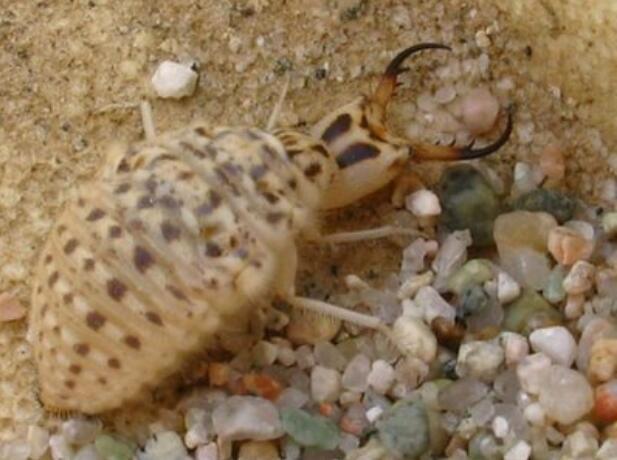
Currently, with the intensification of urbanization, the number of ants is becoming less and less, and it is difficult for us to see this wonderful animal. If you can find a secluded wild land in the suburbs, and you see a circle of small pits on the ground, be careful not to destroy them. Those are the carefully arranged traps of ant lions.