Indian Couple Plants 240 Acres of Forest to Attract Tigers
Over the past few centuries, with the growth of the population and economic development, humans' plunder of natural resources has become increasingly severe, leading to the displacement of a large number of wild animals. The 'king of the forest', the tiger, is also difficult to withstand human attacks.From the early 20th century to the present, the global wild tiger population has decreased by about 95%, which is largely due to habitat loss and poaching.
Habitat is the fundamental basis for the survival of tigers. To restore the wild tiger population,it is necessary to increase its habitat areaRecently, although the protection of wild tigers has increased significantly, it is difficult to achieve a large-scale restoration of wild tigers' habitat in practice. However, a couple in India took it upon themselves to participate in tiger conservation through practical action:They spent 20 years planting forests on the periphery of a tiger conservation area.
Ordinary couples and extraordinary dreams
Adityanath Singh and Ponaum Singh are a pair of Indian couples who love nature and animals very much. In 1998, the Singh couple left their civil service jobs and moved to the vicinity of the Lentepol Tiger Conservation Area in Rajasthan. They soon fell in love with the scenery there and bought a property with the intention of settling down.
The Lentepol Tiger Conservation Area is one of the largest tiger conservation areas in India. The Singh couple loved tigers very much, and they were also clear that wild tigers faced difficulties due to insufficient habitat area. To make the tigers in the conservation area have more living space,In 2000, the Singh couple started a long-term plan: to purchase wasteland surrounding the Lentepol Tiger Conservation Area and artificially transform it into forest.

Figure: Mr. Singh in his home, the computer desktop on which is a tiger walking in the wilderness.
These lands originally belonged to some local farmers, but due to the lack of roads and electricity, they were not suitable for farming, so they finally became a piece of wasteland. The Singh couple had the opportunity to purchase them at a relatively low price.
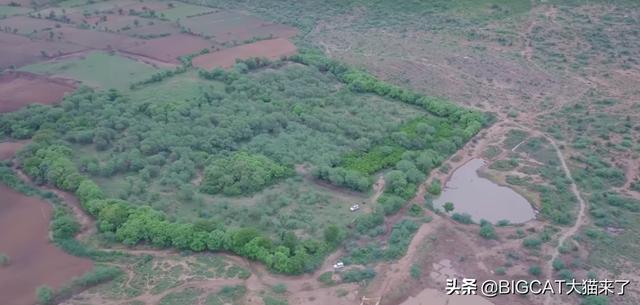
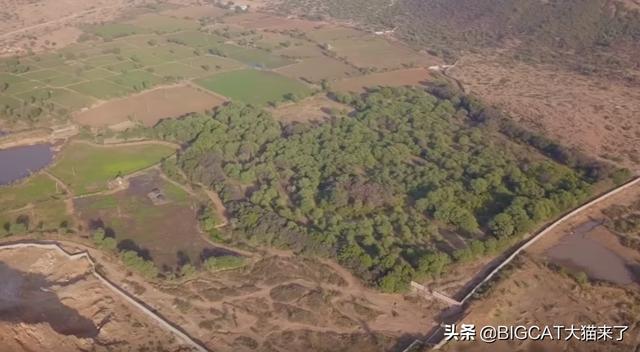
From then on, Mr. and Mrs. Singh invested almost all their energy in planting forests.20 years have passed, and now Mr. and Mrs. Singh have purchased about 40 acres (about 240 acres) of land and planted various trees and shrubs.These plants are consistent with the plants in the Lentepol Tiger Conservation Area,the purpose is to help the tigers that may appear in this forest adapt to the environment better.Through aerial photography, we can see that this land has now become lush and green, with obvious differences from the surrounding fields.
The forest attracted the tiger
The couple's efforts were not in vain. As the vegetation increased, more and more herbivores appeared in the wooded area, such as wild pigs, wild deer and antelopes, etc.The increase of vegetation and herbivores also attracted tigers to come.Over the past few years, the red-eye cameras set up in the forest have photographed at least 5 different tigers at least once, including a mother tiger carrying cubs and a tiger hunting.
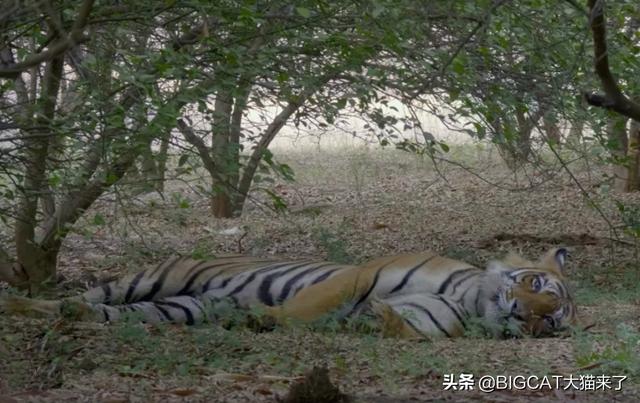
Figure: A wild tiger resting in the forest planted by Mr. and Mrs. Singh.
We know thattiger survival has three basic elements: sufficient prey, abundant vegetation, and abundant water sources.Therefore, only prey and vegetation are not enough to attract tigers to settle in, so Mr. and Mrs. Singh also built several large ponds for tigers and other wild animals to drink.
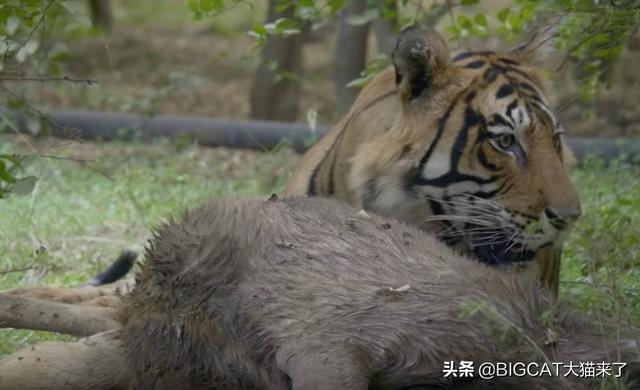
Figure: A wild tiger hunting in the forest planted by Mr. and Mrs. Singh.
Reduce human interference and avoid tigers leaving
Tigers are very cautious large cat species. The Singh couple realized that in order to prevent the tigers in this forest from leaving, there is something else that needs to be avoided, that is to reduce human interference.To this end, they built a wall about 1999 meters long, separating the renovated forest from the area frequently frequented by local villagers, and prohibited villagers from entering the forest.

In this way, the tigers and herbivores will not be startled away by humans.
In order to prevent tigers from killing livestock and causing human-tiger conflict, the Singh couple conducted propaganda in the nearby village, urging villagers to keep a close eye on their cows and not leave cows unattended outside.
Love for tigers is spreadingIn India, there are many people who love tigers and protect tigers. Seeing the great success of Mr. and Mrs. Singh through unremitting efforts and love in tiger conservation, some couples around other tiger conservation areas in India also have the intention to launch similar projects. Recently, more and more people have consulted with Mr. and Mrs. Singh for experience.
However, money is not the main factor, but rather their love for nature and wild plants and animals.
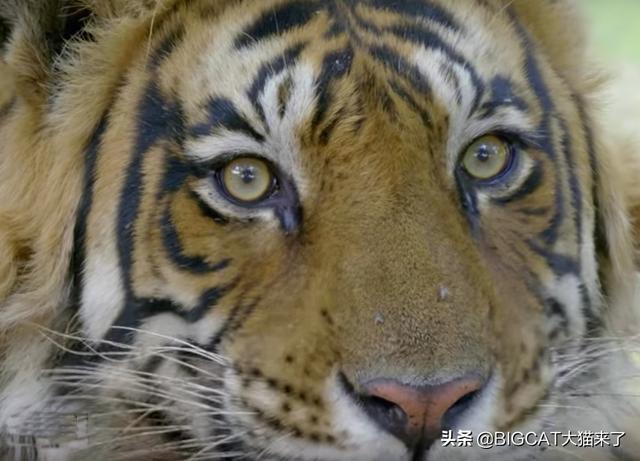
Figure: Mr. Singh took a photo of a tiger.Now, Mr. and Mrs. Singh have achieved their dream of 20 years ago,but they are not satisfiedThey will continue to purchase more land, plant more plants, and let more wild animals live happily in it. At the same time,
They also hope to spread their love for tigers and influence more people to participate in tiger conservation work…